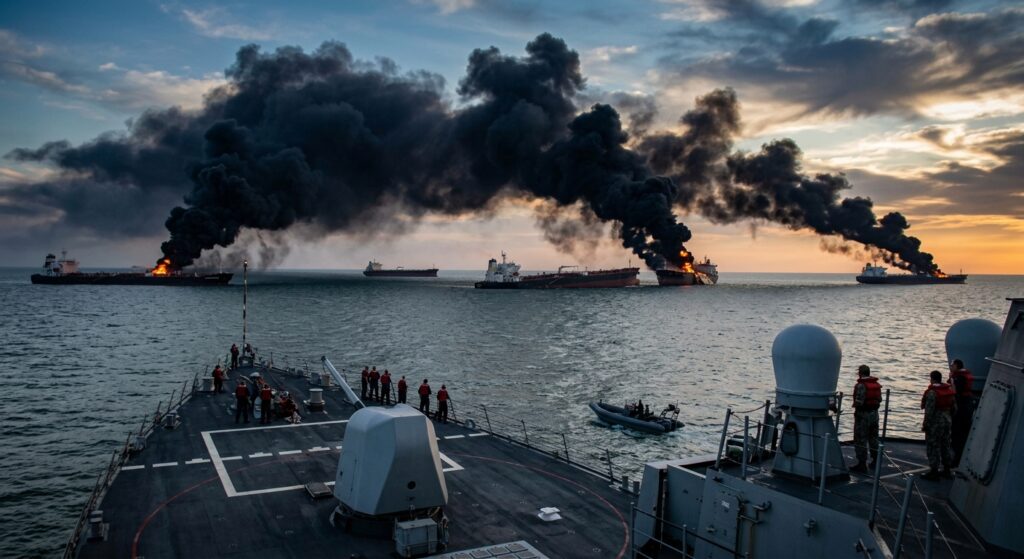
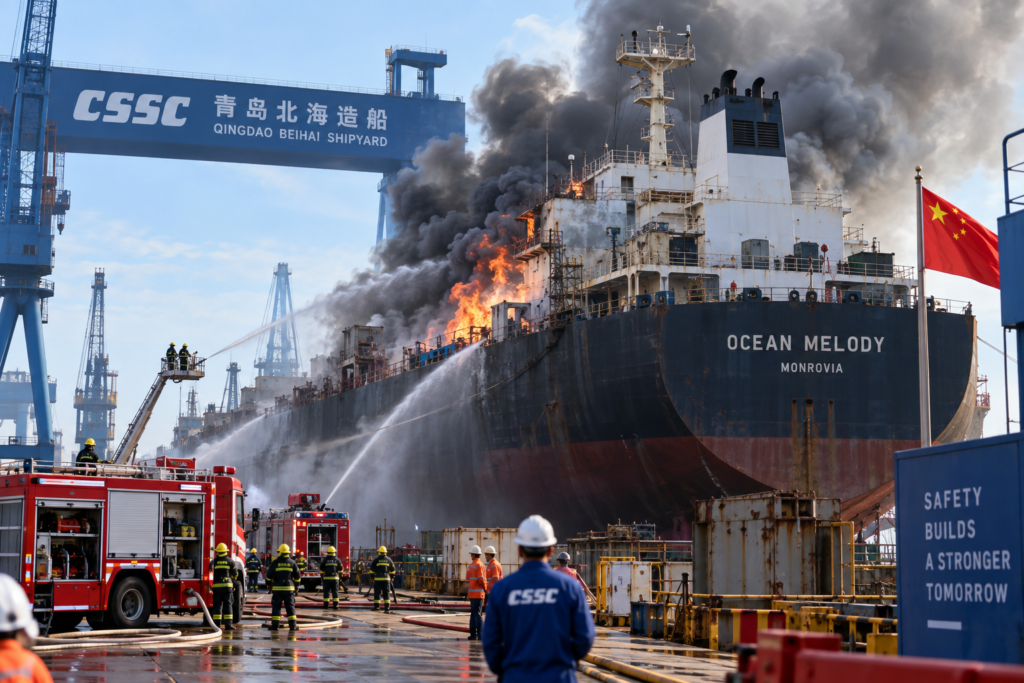
VLCC owners are currently enjoying one of the strongest tanker markets seen in recent history. Daily earnings have reached extraordinary levels as the conflict in the Middle East and restrictions around key shipping routes create major uncertainty for crude oil transportation.
For tanker owners, this is an opportunity that may not come around often. However, the big question is whether these extremely high rates can continue or whether the market will eventually return to more normal levels.
Why Are VLCC Rates So High?
The tanker market has always been known for its strong cycles. Rates can rise rapidly when demand increases or when available tonnage becomes limited, but the same market can also fall sharply when conditions change.
VLCCs, or Very Large Crude Carriers, are among the largest crude oil tankers in the world and can carry around two million barrels of oil. They are particularly important for long-distance crude oil transportation between major producing regions and large consuming markets in Asia.
As of September 2026, the global VLCC fleet consists of around 900 vessels, with an average age of approximately 13 years.
The current market, however, is being affected by much more than normal supply and demand.
The conflict in the Middle East, disruption around the Strait of Hormuz and restrictions affecting the Bab el-Mandeb route have increased both the risks and costs associated with transporting crude oil.
As a result, owners willing to operate in higher-risk areas are demanding exceptionally high freight rates.
VLCC Rates Have Reached Extraordinary Levels
The current market is unusual even when compared with previous tanker booms.
During the shipping boom in 2008, VLCC earnings approached $200,000 per day. The market then collapsed following the global financial crisis, with rates falling below $20,000 per day by the middle of 2009.
Another major spike occurred in 2020 during the beginning of the COVID-19 pandemic.
A huge oil surplus developed after the collapse in global demand, while Saudi Arabia increased production following disagreements with Russia over production cuts. Onshore storage quickly became limited, creating strong demand for floating storage and pushing VLCC earnings close to $200,000 per day.
The current market has moved considerably beyond those previous peaks.
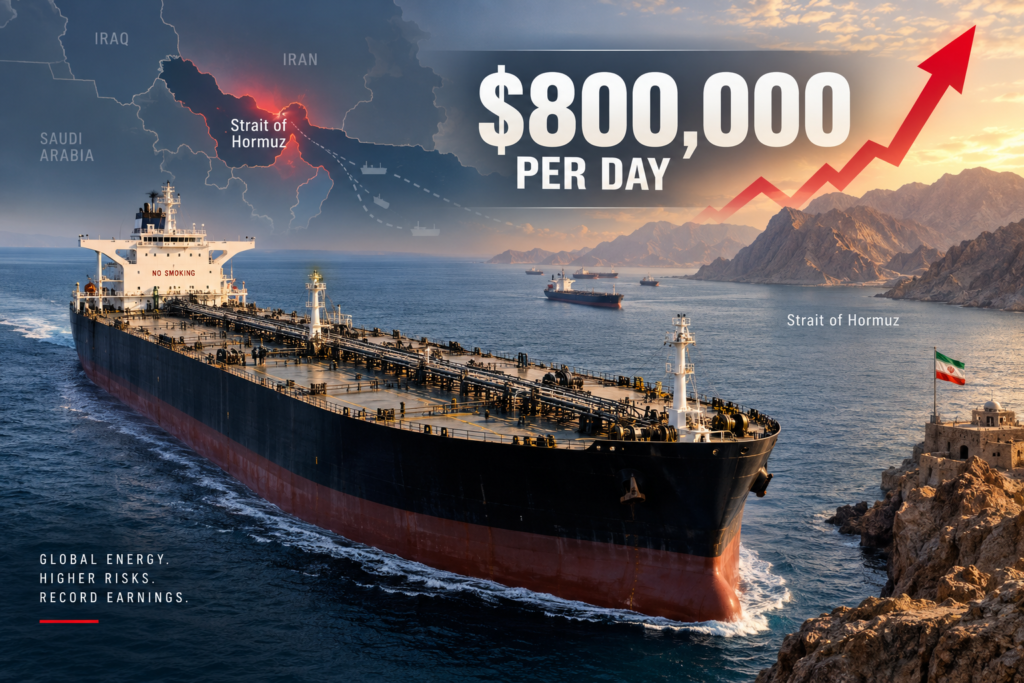
According to Poten, VLCC earnings on the benchmark Arabian Gulf–Far East route averaged around $600,000 per day in August and exceeded $800,000 per day in September so far.
These numbers are particularly significant because they are several times higher than the levels seen during many previous tanker market cycles.
Strait of Hormuz Risk Is Driving the Market
One of the main reasons for the extraordinary rates is the risk associated with vessels operating through the Strait of Hormuz.
The Strait is one of the world’s most important energy shipping routes, connecting the Persian Gulf with the Gulf of Oman and the wider Indian Ocean.
With the security situation deteriorating, many vessel owners are becoming increasingly reluctant to send their ships through the area.
This creates a simple market effect: fewer owners willing to take the risk means fewer available vessels, while demand for transportation remains high.
VLCCs loading in the Arabian Gulf are therefore commanding extremely high earnings.
But the effect is not limited to vessels entering the Gulf.
VLCCs loading in the Gulf of Oman, outside the Strait of Hormuz, can reportedly earn around $450,000 per day. Other long-haul routes are also benefiting from the tight market, with West Africa–Far East voyages reaching approximately $380,000 per day and U.S. Gulf–Asia voyages around $275,000 per day.
This shows how quickly a major geopolitical crisis in one region can influence tanker markets around the world.
High VLCC Rates Are Also Affecting Ship Values
The extraordinary spot market is also having an impact on vessel prices.
Normally, a newbuilding VLCC is expected to cost more than an older secondhand vessel. However, the current market has created an unusual situation.
A modern five-year-old VLCC can reportedly cost around $158 million, while a newbuilding may be ordered for approximately $129 million.
The reason is mainly time.
An owner buying a five-year-old VLCC can put the ship into the market almost immediately and potentially take advantage of today’s extremely high earnings.
A newbuilding, on the other hand, may require several years before delivery.
In a market where a VLCC can potentially generate hundreds of thousands of dollars per day, waiting several years for a new vessel can represent a significant opportunity cost.
Can VLCC Rates Stay This High?
This is probably the biggest question facing tanker owners today.
History shows that extremely high tanker rates rarely remain at the same level for a long period.
The market can change quickly when geopolitical tensions decrease, shipping routes reopen, oil production changes or more vessels become available.
There is also another risk for owners: ordering too many new ships.
When tanker earnings become extremely attractive, owners may start ordering large numbers of newbuildings. Several years later, these vessels enter the fleet and increase available capacity.
If demand does not grow at the same pace, freight rates can fall sharply.
This has happened repeatedly throughout the tanker market’s history.
For owners currently earning several hundred thousand dollars per day, the opportunity is therefore significant. But the same market that creates enormous profits today can create serious overcapacity tomorrow.
For now, however, VLCC owners are operating in an extraordinary market.
The combination of geopolitical risk, limited vessel availability and disrupted shipping routes has pushed VLCC rates into territory rarely seen before.
The question is no longer simply how high tanker rates can go.
It is how long this exceptional market can last.