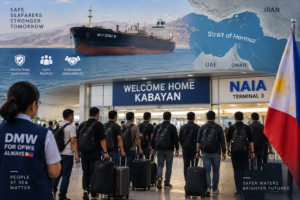
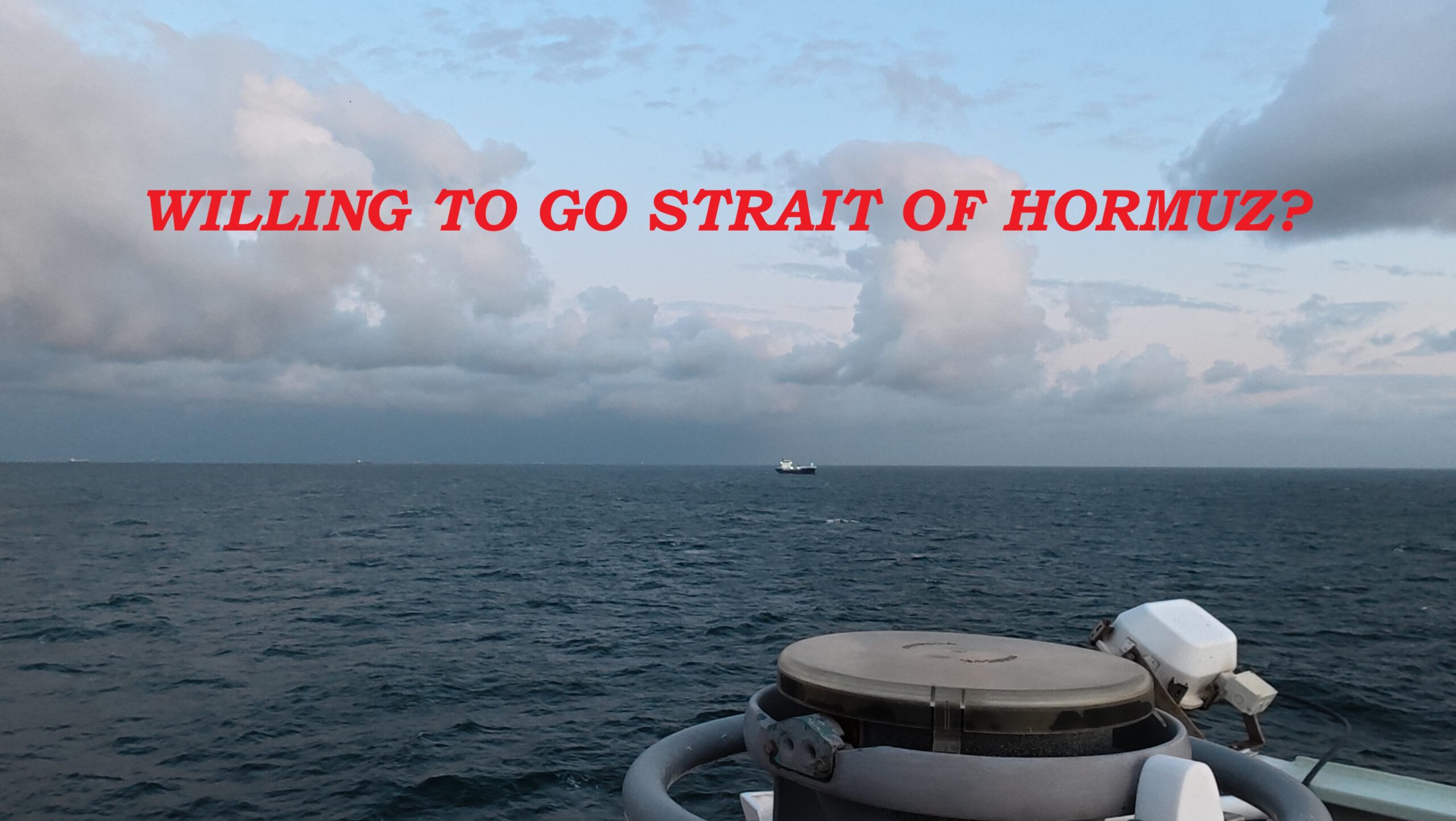
During recruitment, some tanker seafarers are now being asked a question that would have seemed unusual under normal circumstances: Are you willing to sail to the Strait of Hormuz?
The security situation around the Strait of Hormuz has created a serious dilemma for the maritime industry, particularly for tanker crews. While shipping companies are facing operational, financial and security challenges, seafarers remain the people physically onboard the vessels and therefore face the most direct consequences when a voyage enters a high-risk area.
a simple question about a seafarer’s availability or willingness to work in different trading areas. But for someone looking for employment, the answer may have much bigger consequences.
If a seafarer says “No,” could another candidate who says “Yes” be selected instead?
And if additional financial compensation is offered for entering a high-risk area, how much risk is a seafarer expected to accept for a higher salary?
These questions are becoming increasingly important for tanker crews.
The Question That Can Change a Job Interview
For tanker officers and ratings looking for their next contract, recruitment interviews usually focus on experience, certificates, tanker background, previous vessels and technical knowledge.
However, there is now another question that can enter the conversation:
“Are you willing to go to the Strait of Hormuz?”
But what exactly does the company want to know when asking this question?
Is it simply a survey to understand the availability of its crew?
Or could the answer influence the selection process?
This is where the situation becomes complicated.
I was personally asked this question by a well-known crewing company. My answer was no.
Later, I spoke with a Filipino crew member who had also been asked about his willingness to sail to the region. His answer was very different. He told me that he would say:
“Of course I would go. I would do anything for my company.”
However, he also explained that if the vessel actually entered an extremely dangerous area, he would reconsider his decision because, ultimately, nothing is more important than his life.
This raises an uncomfortable question.
What if that person is selected instead of another candidate simply because he answered “yes” during the interview?
Is that fair?
And what happens to a less experienced seafarer who has fewer employment opportunities and cannot easily choose which vessel or trading area he wants to join?
These are questions that deserve an honest discussion within the maritime industry.
What Happens If a Seafarer Says “No”?
At the moment, it is difficult for seafarers to know exactly what happens behind the recruitment process when one candidate says no and another says yes.
Does the company continue the recruitment process with the person who is willing to enter a high-risk area?
Does the candidate who refuses simply remain on standby?
Or is the question being asked only to understand how many available crew members would potentially accept such an assignment?
Without transparency from companies and crewing agencies, seafarers may naturally question how their answers are being used.
The financial aspect makes the decision even more complicated.
High-risk voyages can involve significant additional compensation, particularly when war-risk premiums and special allowances are included. For some seafarers, the financial difference can be substantial.
For a rating, the additional income could potentially be several times their normal salary, while officers may also receive significantly higher compensation depending on the vessel, company and specific voyage.
For someone with a mortgage, debts, family expenses or other financial responsibilities, turning down a highly paid contract is not necessarily an easy decision.
A seafarer may understand the risks but still think:
“I need the money.”
This is where employment pressure and personal safety begin to collide.
Saying Yes vs. Saying No
There are two obvious choices for a seafarer.
Option 1 — Say Yes
Saying yes could provide several potential advantages:
- You may remain eligible for the position.
- You may have access to more employment opportunities.
- You demonstrate flexibility to the company.
- You may qualify for additional compensation if the vessel enters a designated high-risk area.
However, there are also disadvantages:
- You are potentially accepting additional personal risk.
- The security situation can deteriorate rapidly.
- The actual circumstances of a voyage may be different from what was expected during recruitment.
- You may later decide that you are no longer comfortable entering the area.
Option 2 — Say No
Saying no can also have clear advantages:
- You are being honest about your personal safety limits.
- You avoid a voyage that you consider unacceptable.
- You may have greater peace of mind about the contract you are accepting.
But there is an obvious concern:
What if another candidate who says yes becomes more attractive to the employer?
That is the part seafarers cannot easily know.
And this leads to perhaps the most important question in this entire discussion:
Can a seafarer’s decision really be considered completely voluntary if saying “no” could potentially affect his employment?
What Should the Company Be Responsible For?
This does not mean that shipping companies should simply ignore the willingness of their crew.
Companies have legitimate operational requirements. A tanker company needs qualified crew members who can operate vessels across different trading areas, including regions where security risks may exist.
However, there should also be transparency.
If a company asks a seafarer whether they are willing to sail to the Strait of Hormuz, the seafarer should ideally understand what that answer actually means.
Is the question asking:
“Would you work for our company if our vessels trade in this region?”
Or:
“Would you personally accept a voyage into a high-risk area under the current security conditions?”
These are two completely different questions.
A seafarer might be willing to work for a tanker company without being willing to enter every high-risk area under every possible security condition.
For example, a seafarer could reasonably say:
“If the current security situation improves and the area is considered sufficiently safe for commercial shipping, I have no problem sailing there. However, under the current circumstances, I would prefer not to enter the area.”
That is very different from simply refusing to work for the company.
Can Safety Be Guaranteed?
This is perhaps the most difficult question.
Can a company guarantee that a seafarer will return home safely?
Realistically, no company can guarantee that.
Shipping has always involved risk. Weather, mechanical failures, piracy, collisions and other unexpected events can occur.
But a conflict zone creates a different level of uncertainty.
A seafarer could therefore reasonably ask the company:
- What is the current security assessment?
- What measures are being taken to protect the crew?
- Is the voyage covered by appropriate war-risk arrangements?
- What additional compensation is being offered?
- What happens if the security situation deteriorates?
- What happens if the crew member no longer considers the voyage acceptable?
- Are these conditions clearly reflected in the employment agreement?
These questions are not signs of weakness.
They are reasonable questions from someone whose physical safety depends on the decisions being made ashore.
The Same Problem Can Affect Other High-Risk Areas
The Strait of Hormuz is not the only region where this issue can arise.
The Black Sea has also demonstrated how quickly commercial shipping can become exposed to military and geopolitical risks.
For seafarers, the problem is not limited to one specific geographical location.
The larger question is:
How should the maritime industry deal with crew employment when commercial vessels are operating close to active conflict zones?
A company may have a legitimate commercial reason to operate in a particular region. A seafarer may have a legitimate personal reason to refuse.
Both sides have interests that need to be considered.
More Money Does Not Automatically Mean Less Risk
Higher salaries and additional war-risk compensation can make a dangerous voyage financially attractive.
For some seafarers, the difference may be enough to significantly improve their family’s financial situation.
But money cannot remove the physical risk.
A seafarer can calculate a salary.
He cannot calculate the value of returning home safely to his family.
This does not mean that every seafarer should refuse to sail into a high-risk area. Different people have different risk tolerances, financial circumstances and professional decisions.
The important point is that the decision should be informed and genuinely voluntary.
What Should Seafarers Ask Before Accepting a High-Risk Voyage?
Before accepting a tanker position involving potentially high-risk trading areas, seafarers should consider asking the company for clear information about the voyage and the applicable conditions.
Questions could include:
- Will the vessel actually enter the Strait of Hormuz or another designated high-risk area?
- What is the current security assessment?
- What additional compensation is provided?
- Are war-risk arrangements clearly defined?
- What security measures are available onboard?
- What happens if the security situation suddenly deteriorates?
- Are the relevant conditions included in the employment agreement?
The objective is not to create conflict between seafarers and companies.
It is to make sure that both sides understand what they are agreeing to.
The Real Strait of Hormuz Dilemma
The question is ultimately bigger than whether a seafarer says yes or no during a job interview.
It is about the pressure behind that answer.
A seafarer looking for employment may need the salary. A company may need crew members willing to operate its vessels in challenging areas. At the same time, the seafarer is the person who will physically be onboard if the security situation deteriorates.
That creates a difficult balance between employment, income and personal safety.
Perhaps the maritime industry should therefore move beyond simply asking:
“Are you willing to go to the Strait of Hormuz?”
A better question might be:
“Under what conditions would you be willing to go, and what information and protections do you need to make that decision?”
Seafarers are not simply another operational resource. They are the people who ultimately carry the physical consequences of decisions made both onboard and ashore.
And while higher compensation can recognize additional risk, it cannot eliminate that risk.
For every seafarer facing this question, the decision remains deeply personal:
How much is your safety worth, and should your employment depend on the answer?