Maritime Categories Post

Did Zuckerberg’s Yacht Ignore a Distress Call? What Maritime Law Says

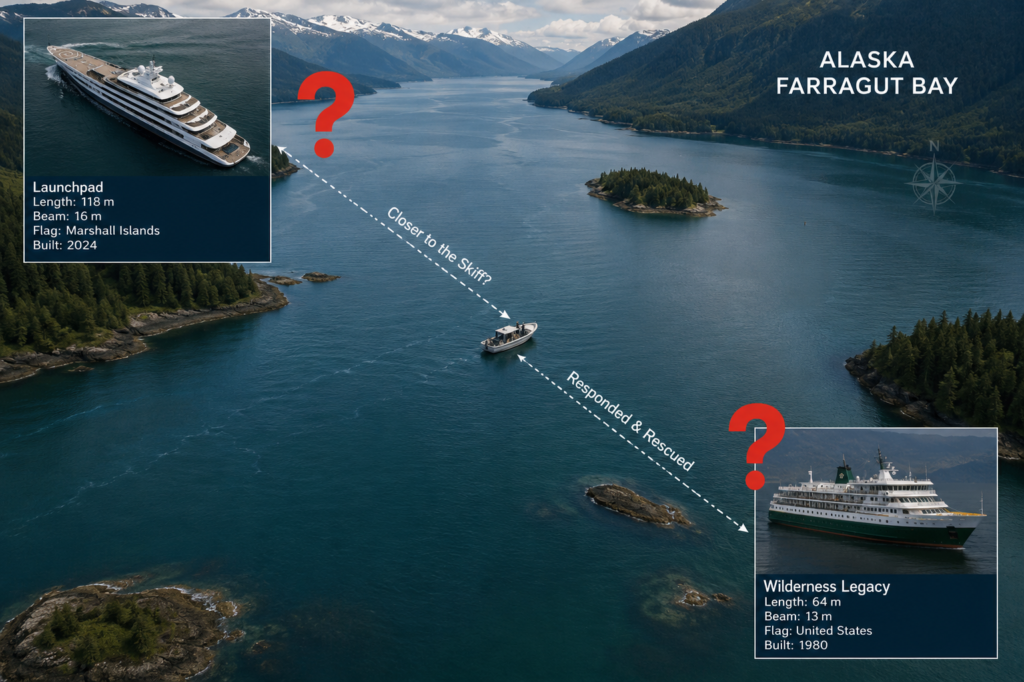
Mark Zuckerberg’s 118-meter superyacht Launchpad was reportedly closer to a small boat that ran out of fuel in Alaska, while the much smaller Wilderness Legacy cruise vessel responded and towed the boat to safety. But did Launchpad actually break maritime regulations?

Did Zuckerberg’s Yacht Ignore a Stranded Boat? A Mariner’s Look at the Alaska Rescue

The incident has attracted significant attention online after a 21-foot skiff ran out of fuel in Southeast Alaska and requested assistance from the U.S. Coast Guard.

According to reports, the skiff was operating between Petersburg and Juneau when it ran out of fuel. The nearby Wilderness Legacy, a small expedition cruise vessel, eventually responded and towed the stranded boat to Farragut Bay, where everyone was brought to safety.

The controversy began because AIS tracking reportedly showed Mark Zuckerberg’s superyacht Launchpad closer to the stranded skiff than the Wilderness Legacy.

That immediately created a simple question for the public:

If the closest vessel did not respond, did it violate maritime regulations?

From a mariner’s perspective, the answer is more complicated than the headlines suggest.

Launchpad: Mark Zuckerberg’s Superyacht

Launchpad is a 118-meter Feadship superyacht associated with Meta CEO Mark Zuckerberg.

The vessel was built in 2024 and flies the Marshall Islands flag. Available specifications list her beam at approximately 16.3 meters and her draft at approximately 4.6 meters.

Launchpad specifications

  • Name: Launchpad
  • Length: 118 meters
  • Beam: 16.3 meters
  • Built: 2024
  • Flag: Marshall Islands
  • Builder: Feadship
  • Draft: approximately 4.6 meters

However, one important detail should be made clear: Mark Zuckerberg himself was reportedly not onboard the yacht at the time of the incident. His spokesperson said that the crew did not hear the Coast Guard’s assistance request initially because they were operating on another radio channel. By the time they became aware of the situation, assistance was already underway.

The Vessel That Actually Responded

The vessel that ultimately assisted the stranded skiff was Wilderness Legacy, an expedition cruise ship operated by UnCruise Adventures.

According to reports, the vessel altered its course, reached the stranded boat and towed it into the sheltered waters of Farragut Bay. Everyone aboard the skiff was safe.

Wilderness Legacy specifications

  • Name: Wilderness Legacy
  • Length: approximately 64 meters
  • Beam: approximately 13 meters
  • Flag: United States
  • Built: 1980

The rescue itself was successful. The controversy is really about why Launchpad did not respond first.

What Do Maritime Regulations Actually Say?

This is where the story becomes particularly interesting for anyone working at sea.

Many people immediately referred to SOLAS and COLREGs, claiming that the nearest vessel was legally required to go and rescue the skiff.

That statement is too simple.

SOLAS and the duty to assist persons in distress

SOLAS Chapter V contains a general obligation concerning assistance to persons in distress at sea.

The IMO states that the master of a ship at sea that is in a position to provide assistance, after receiving information that persons are in distress at sea, should proceed with all speed to their assistance, provided that doing so is possible.

This is an important distinction.

The obligation concerns people in distress—not every vessel that needs routine assistance.

In this particular case, the U.S. Coast Guard reportedly determined that the skiff was not in distress. Instead, the Coast Guard issued a marine assistance request after determining that the people aboard were not facing an immediate emergency.

That changes the legal picture considerably.

Running Out of Fuel Is Not Automatically a Mayday Situation

From a mariner’s point of view, this is probably the most important part of the story.

A boat running out of fuel can certainly become a serious emergency.

If the vessel is drifting toward rocks, there is severe weather, people are injured, the vessel is taking on water, or there is an immediate threat to life, the situation can quickly become a genuine distress case.

But simply running out of fuel does not automatically mean that the vessel is legally in distress.

This is apparently what happened in Alaska.

The Coast Guard received the request and assessed the situation before determining that the skiff was not in immediate distress. It then sought assistance from vessels in the area.

Therefore, saying that Launchpad definitely “violated SOLAS by refusing to rescue the boat” would go beyond what the available facts establish.

What About VHF Channel 16?

There is another part of this story that needs some clarification.

VHF Channel 16 is the international distress, safety and calling channel used in maritime communications. Ships subject to the applicable GMDSS requirements have specific watchkeeping and radio obligations.

However, it would be incorrect to say that every Mayday transmission can automatically be heard by every vessel within 100 miles.

Radio range depends on factors such as antenna height, propagation conditions, equipment and the location of the vessels.

COLREG Rule 5 does require vessels to maintain a proper lookout by sight and hearing, as well as by all appropriate available means.

But that does not mean a vessel is guaranteed to hear every radio transmission in the surrounding area.

And in this case, Zuckerberg’s spokesperson specifically stated that the Launchpad crew did not hear the Coast Guard’s assistance request initially because they were monitoring another channel.

That is very different from proving that the crew heard a Mayday and deliberately ignored it.

Why Was Wilderness Legacy Able to Help?

This is where the practical side of seamanship becomes important.

The Wilderness Legacy was considerably smaller than Launchpad and was operating in the same Alaskan waters.

A 64-meter expedition vessel may have considerably more flexibility when operating in confined or shallow waters than a 118-meter superyacht with a deeper draft.

However, the size of the vessel alone does not determine whether it can perform a rescue.

The master must consider:

  • Vessel draft
  • Available depth
  • Maneuvering room
  • Weather and sea conditions
  • Towing capability
  • Crew safety
  • The condition of the disabled vessel
  • Risk to both vessels
  • The instructions of the Coast Guard or rescue coordination authority

The master always has to consider whether an operation can be performed safely.

As IMO guidance makes clear, assistance to persons in distress is an important maritime obligation, but the circumstances of the situation and the ability of the assisting vessel also matter.

So Did Zuckerberg’s Yacht Do Something Wrong?

Based on the information currently available, I would be very careful about saying that Launchpad broke maritime law.

The public story makes it sound like this:

A boat was in distress, Zuckerberg’s yacht was nearby, ignored the call and another vessel had to rescue them.

But the actual situation appears to have been more complicated.

The Coast Guard reportedly classified the incident as a marine assistance request rather than a distress situation.

Zuckerberg’s spokesperson also said that the yacht’s crew did not initially hear the request because they were working on another radio channel, and that assistance was already underway when they became aware of it.

So there is a major difference between:

“The yacht heard a distress call and refused to help.”

and

“The yacht did not initially receive the assistance request, while another vessel responded.”

Those are two completely different situations from a maritime regulatory perspective.

The Bigger Problem With the Story

As someone working in the maritime industry, I think the most interesting part of this story is not necessarily Zuckerberg himself.

It is how quickly a normal maritime assistance operation can become a worldwide news story when a famous billionaire’s name is involved.

The rescue was successful.

The Wilderness Legacy responded.

The stranded boat was towed to safety.

Nobody was injured.

And the Coast Guard was involved in coordinating the assistance.

Yet the story became:

“Zuckerberg’s yacht ignored a boat in distress.”

That headline is much more dramatic.

It is also why mariners should be careful when reading viral maritime stories.

There is a significant difference between a MAYDAY, a PAN-PAN, a routine request for assistance and a situation where the Coast Guard is coordinating a response.

Those distinctions matter.

My Opinion as a Mariner

Personally, I would not compare this incident to a vessel knowingly ignoring people who are in immediate danger.

If there had been people in the water, a sinking vessel, fire, collision or another immediate threat to life, the situation would be completely different.

In that case, the obligations under international maritime law are much clearer.

But if a recreational boat simply runs out of fuel, contacts the Coast Guard and is assessed as not being in distress, the situation becomes much closer to a towing or assistance operation than a conventional search-and-rescue emergency.

In fact, the situation is somewhat similar to running out of fuel on a highway.

Imagine running out of gasoline on a highway and a famous billionaire driving past without stopping.

You could certainly criticize the person for not helping.

But that does not automatically mean they have broken a law.

Maritime law and maritime courtesy are not always the same thing.

A professional mariner may still choose to help when it is safe and practical to do so—and in this case, the crew of Wilderness Legacy deserves credit for doing exactly that.

But turning the incident into proof that Zuckerberg’s yacht violated international maritime regulations would be premature based on the information currently available.

The Alaska incident is a good reminder that maritime stories need to be examined from a mariner’s perspective, not just through viral headlines.

Launchpad was reportedly closer. Wilderness Legacy responded. The stranded skiff was safely assisted. But the available evidence does not establish that Launchpad deliberately ignored a distress call or violated SOLAS.

The most important question is therefore not:

“Why didn’t Zuckerberg save the boat?”

It is:

“Was the boat actually in distress, did Launchpad receive the assistance request, and was Launchpad legally and operationally required to respond?”

Based on the information currently available, the answer appears to be no clear violation has been established.

And perhaps that is the real lesson from this story: before judging a ship’s crew, understand the difference between a distress situation, a safety call and a request for assistance.
Alternative Sea Route Already in Progress Between Russia and China

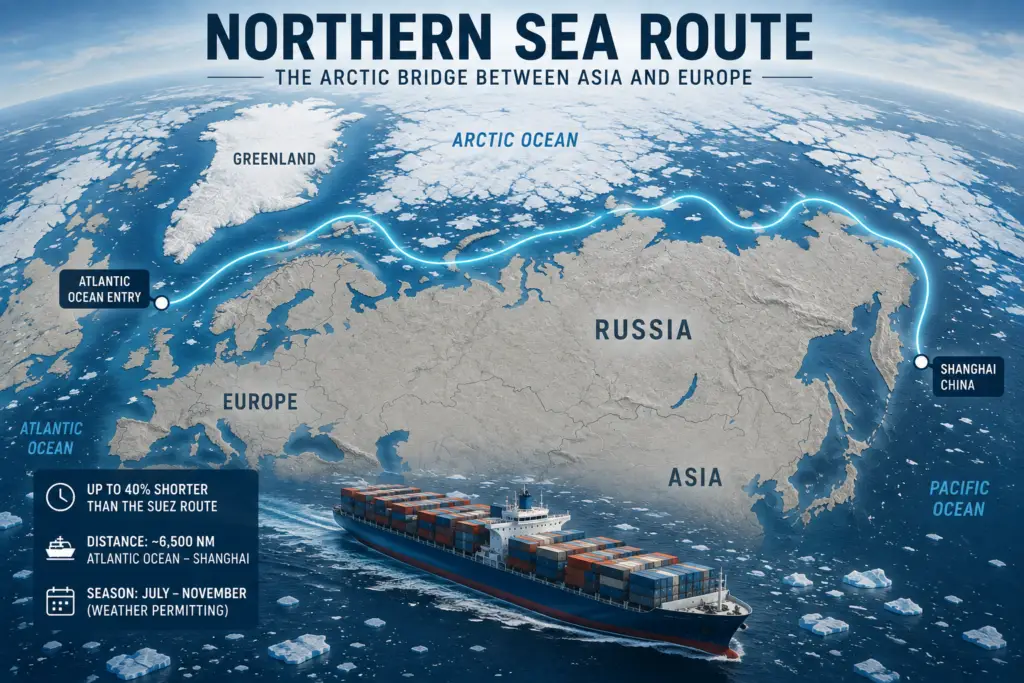
Russia and China are expanding shipping activity along the Northern Sea Route as Arctic trade grows and the route becomes an alternative between Asia and Europe.

Russia and China Increase Shipping Activity in the Arctic

Russia and China are increasing their cooperation on the Northern Sea Route (NSR) as the Arctic shipping route becomes more important for international trade.

The route runs along Russia’s Arctic coastline and connects the Pacific and Atlantic sides of the Arctic. Russia has been trying to develop the NSR as an alternative shipping route between Europe and Asia, while China sees it as an important part of its plans for Arctic trade.

According to shipping data, China has become the main foreign trading partner using the route since Russia’s invasion of Ukraine. Much of this trade involves Russian oil and LNG cargoes moving toward China.

China Expands Its Arctic Shipping Operations

Chinese shipping companies are now becoming more active on the Northern Sea Route.

At least six Chinese shipping companies are expected to make more than 50 voyages along the route during the current season, using container ships, bulk carriers and multipurpose vessels. Most of these voyages are between China and Russia.

One of the companies, Sea Legend, is also preparing regular seasonal container services between China and Europe. The company is advertising a transit time of around 20 days, which could be significantly shorter than traditional routes through the Suez Canal.

This development is important because the Northern Sea Route has mainly been used for Russian energy exports in the past. Now, China is starting to use the route more directly for international container shipping.

Why Is the Northern Sea Route Important?

The Northern Sea Route can provide a shorter connection between Asia and Europe, but it is very different from normal commercial shipping routes.

Ice conditions can change quickly and the navigation season is still limited. Ships may also require ice-class capabilities and, in some areas, support from icebreakers. Russia controls access to the route through its Arctic infrastructure and regulations.

At the same time, the changing Arctic climate is creating longer periods when some parts of the route can be navigated.

For Russia, the NSR could bring more cargo, port activity and investment into its Arctic region.

For China, it offers another possible route to Europe and access to Russian energy resources.

A New Route for Global Shipping?

The Northern Sea Route is still very small compared with major routes such as the Suez Canal. However, 2026 is becoming an important year for Arctic shipping.

Recent data indicates that cargo volumes on the NSR could exceed 40 million tonnes in 2026, while China-Russia cargo traffic has also increased.

The question now is whether the Northern Sea Route can develop from a mainly seasonal and Russia-focused route into a regular international shipping corridor.

For Russia and China, the answer appears to be yes. For the global shipping industry, however, the Arctic still comes with major challenges including ice, weather, safety, environmental risks and geopolitical uncertainty.

Seafarer Killed After Second Drone Strike Hits Rescue Vessel in Black Sea

A Turkish seafarer was killed after the rescue vessel Ural was hit by a drone strike in the Black Sea, days after he survived an attack on Necibe.

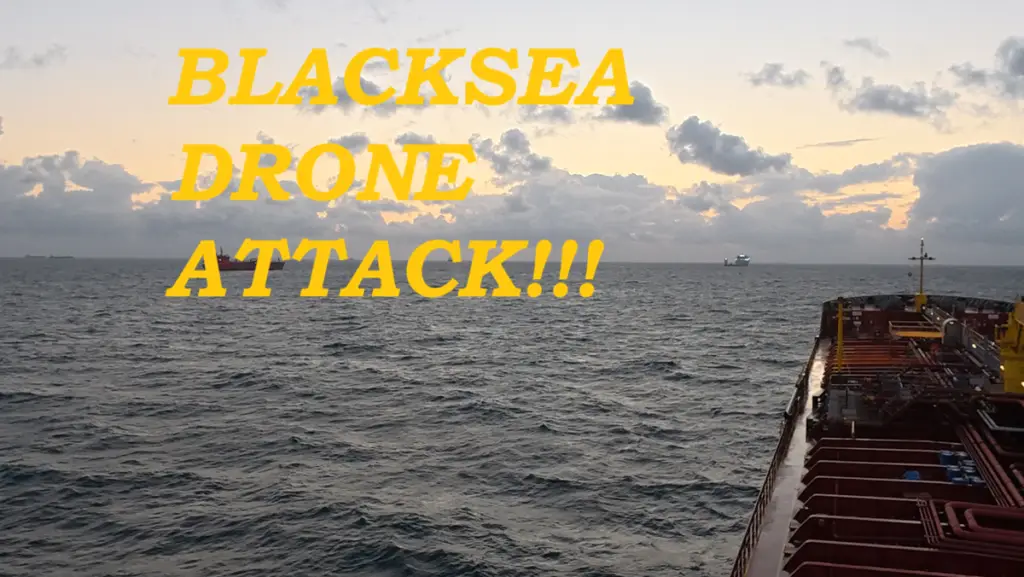
A Turkish seafarer who survived a drone attack on a cargo vessel was killed three days later when the ship that rescued him came under a separate drone strike in the Black Sea.

The incident highlights the growing risks faced by merchant vessels and seafarers operating in areas affected by the Russia-Ukraine conflict.

Vessel Details: Ural

SpecificationDetails
Vessel NameUral
IMO Number7725386
Vessel TypeRo-Ro Cargo Ship
Year Built1980
FlagCameroon
Length Overall105.6 metres
Beam18.8 metres
Deadweight3,573 tonnes
Gross Tonnage4,994

Ural is a Ro-Ro cargo vessel built in 1980. Vessel databases list her at 105.6 metres in length, with a beam of 18.8 metres and a deadweight of 3,573 tonnes.

Vessel Details: Necibe

SpecificationDetails
Vessel NameNecibe
IMO Number9548732
Vessel TypeBulk Carrier / Dry Bulk
Year Built2009
FlagSan Marino
Length OverallApproximately 167.5–168 metres
Beam23 metres
Deadweight21,461 tonnes

Necibe, IMO 9548732, is a 2009-built dry bulk vessel with a deadweight of approximately 21,461 tonnes and an overall length of around 168 metres. Current vessel records identify San Marino as the vessel’s flag.

Necibe Attacked While Loading Wheat

The first incident occurred on August 18, 2026, when the Turkish-owned, San Marino-flagged Necibe came under a reported Ukrainian drone attack while loading wheat near Tuapse, Russia.

The vessel, IMO 9548732, was carrying 18 crew members at the time of the attack. According to reports, the crew abandoned the vessel and was subsequently rescued by the Turkish-owned Ro-Ro cargo ship Ural.

Among those rescued was 47-year-old Turkish seafarer Ilker Lazoglu, who was working as the chief cook aboard Necibe.

After the attack, Lazoglu and the other rescued crew members were transferred to Ural.

Rescue Vessel Ural Attacked Three Days Later

The situation took a tragic turn on August 21, when Ural itself came under another reported drone attack while operating in the region.

The attack left eight people injured and killed one seafarer. The fatality was identified as Ilker Lazoglu, who had survived the initial attack on Necibe only three days earlier.

According to reports from Turkish media, Lazoglu had contacted his family after the first attack and told them that he was safe and expected to be rescued. He was subsequently transferred to Ural along with the other members of Necibe’s crew.

The attack on Ural therefore turned a rescue operation into another deadly incident for the merchant crew.

Growing Risks for Merchant Shipping in the Black Sea

The two incidents demonstrate the increasing dangers faced by commercial vessels operating close to conflict-affected areas.

Merchant ships are not directly involved in military operations, yet vessels calling at or operating near ports, offshore terminals and major shipping routes can still become exposed to drone and missile attacks.

The case of Ural is particularly significant because the vessel had been involved in rescuing seafarers from another ship that had already been attacked.

For the crew members aboard Necibe, Ural initially represented a place of safety. Just three days later, however, the rescue vessel itself became the target of another strike.

A Reminder of the Risks Facing Seafarers

The death of Ilker Lazoglu is a stark reminder that seafarers can remain exposed to the consequences of armed conflict even when they are operating aboard civilian merchant vessels.

In this case, Lazoglu survived the first attack, was rescued from the damaged vessel and transferred to another ship. The vessel that provided assistance was then attacked itself, resulting in his death.

The sequence of events highlights one of the most serious challenges facing commercial shipping in conflict-affected waters: a vessel that provides a temporary place of safety can quickly become another danger zone.

For seafarers operating in the Black Sea and other high-risk maritime regions, the incident once again raises questions about routing, port operations, emergency response and the protection of civilian merchant shipping.

The case also underlines a difficult reality of modern commercial shipping: seafarers can become casualties of a conflict even when their vessels have no role in military operations.

Greek-Owned Aframax METRO VENETIAN Hit in Strait of Hormuz

Greek-owned Aframax tanker METRO VENETIAN was hit by an unidentified projectile in the Strait of Hormuz, damaging its engine room and disabling the vessel.

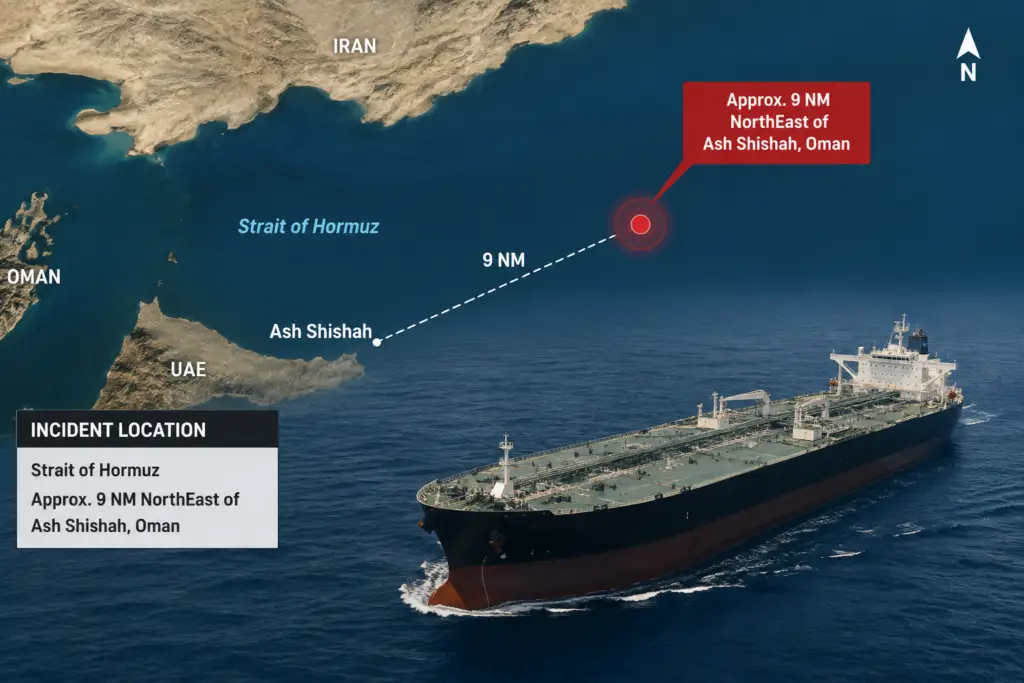
A Greek-owned LR2/Aframax tanker, METRO VENETIAN, was struck by an unidentified projectile in the Strait of Hormuz on 24 August 2026, leaving the vessel disabled after damage to its engine room.

According to information reported by the UK Maritime Trade Operations (UKMTO), the incident occurred approximately 9 nautical miles northeast of Ash Shishah, Oman. The vessel’s master reported that an unknown projectile struck the tanker, causing damage in the engine room and resulting in a loss of propulsion.

No injuries to crew members or marine pollution had been reported following the incident.

METRO VENETIAN Vessel Particulars

SpecificationDetails
Vessel NameMETRO VENETIAN
IMO Number1013391
Vessel TypeLR2 / Aframax Tanker
Year Built2025
FlagLiberia
Length Overall249.99 metres
Beam42.4 metres
Deadweight114,934 tonnes
ClassificationDNV
Ship ManagerMetrostar Management Corp.

The vessel is part of the Greek-managed Metrostar fleet. Metrostar’s own fleet information identifies METRO VENETIAN as an LR2 tanker, built in 2025 at Hyundai Vietnam, with a deadweight of approximately 115,000 tonnes.

Engine Room Damage Leaves Tanker Without Propulsion

The projectile reportedly struck the vessel’s engine room, causing damage that left the tanker unable to maneuver under its own propulsion.

For a large commercial tanker, damage to the machinery space can be particularly serious because the main engine and associated systems are essential for propulsion, maneuvering and safe navigation.

The vessel was subsequently moved toward a safe location while authorities and maritime security organizations continued to monitor the situation. At the time of initial reporting, there were no reported casualties or marine pollution.

Another Warning for Commercial Shipping in the Strait of Hormuz

The attack highlights once again the risks faced by commercial vessels operating in and around the Strait of Hormuz.

The waterway is one of the world’s most strategically important shipping routes, carrying a significant share of global oil and energy shipments. Continued attacks and security threats in the region are forcing shipowners, operators and crews to consider increasingly difficult decisions regarding routing, insurance, security measures and operational costs.

The METRO VENETIAN incident is particularly notable because the vessel was built only in 2025. Its relatively young age demonstrates that modern construction and significant investment in a vessel cannot eliminate the risks associated with operating in a conflict-affected maritime region.

For shipowners, an attack can create costs far beyond the immediate physical damage. Possible expenses can include emergency response, towing, repairs, dry-docking, machinery inspections, class surveys, insurance claims, loss of earnings and potential disruption to the vessel’s commercial schedule.

What Happens to METRO VENETIAN Now?

The full extent of the damage will only become clear after a detailed inspection.

Because the reported damage involves the engine room, engineers and surveyors will need to determine the condition of the main propulsion machinery, auxiliary systems, electrical equipment and surrounding structures.

Depending on the extent of the damage, the vessel could require significant repairs and potentially dry-docking before returning to normal commercial service.

At this stage, however, it would be premature to speculate about the vessel’s long-term operational future. The final repair requirements will depend on technical inspections and assessments by the shipowner, class society, insurers and repair specialists.

Voyage From Mombasa Toward India

Available vessel-tracking information has linked METRO VENETIAN with voyages involving Mombasa, Kenya, and Sikka, India. Vessel databases identify the ship as a 2025-built, Liberia-flagged crude oil tanker with a deadweight of 114,934 tonnes.

The latest attack adds another serious incident to the growing security concerns surrounding commercial shipping in the region.

A Difficult Period for the Shipping Industry

The METRO VENETIAN incident is another reminder that maritime security can have a direct financial impact on the global shipping industry.

A modern tanker can represent an investment of hundreds of millions of dollars when the vessel itself, financing, cargo commitments, insurance and associated commercial costs are considered. Yet an attack can suddenly place the vessel, its crew and its commercial operation at risk.

For seafarers, the consequences are even more immediate. A routine voyage can quickly become a serious emergency when a commercial ship enters an area affected by armed conflict.

The METRO VENETIAN attack therefore represents more than damage to a single tanker. It is another warning for shipowners, operators and seafarers that the security environment around the Strait of Hormuz remains highly challenging.

As investigations continue, the condition of the vessel and the full extent of the damage will become clearer. For now, the most important outcome is that the crew was reported safe and no marine pollution was reported following the attack.

Merchant Cargo Ship Attacked Near Odesa: One Ukrainian Seafarer Killed

Another merchant cargo vessel operating in the Black Sea has been caught in the ongoing conflict between Russia and Ukraine, resulting in the death of a Ukrainian seafarer.

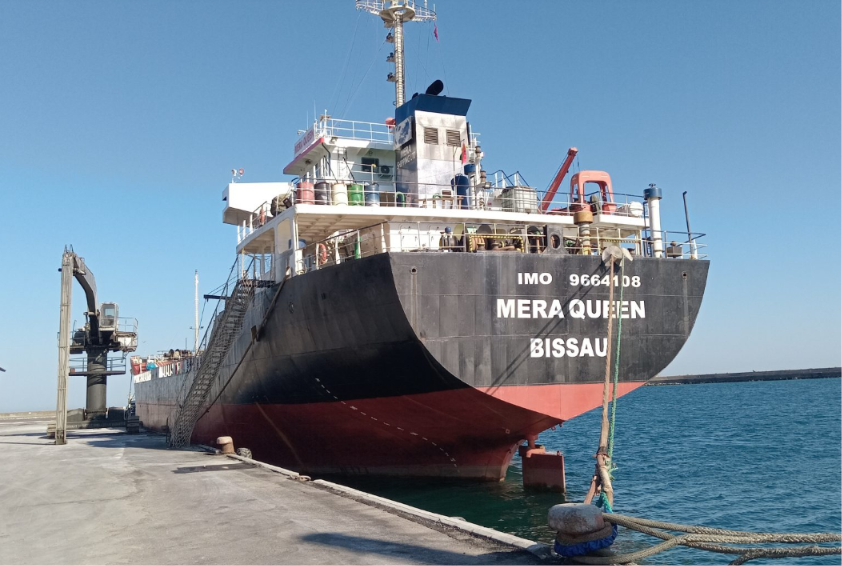
The Mera Queen, a 5,195 DWT cargo vessel built in 2014, sails under the Guinea-Bissau flag and has an overall length of 91 meters. The vessel was reportedly operating on the Ukrainian grain corridor, preparing to load wheat for export when the attack occurred.

According to available information, the vessel was struck while sailing near the Port of Odesa during the night of August 5. The impact hit the ship’s hull, causing a fire on board. One Ukrainian seafarer lost their life, while three other crew members were injured and transported to a local hospital for medical treatment.

By the early hours of August 6, the crew had been safely evacuated, and the vessel was brought alongside the berth. Emergency teams and remaining personnel continued efforts to contain the fire and assess the extent of the damage.

Since the outbreak of the war, normal anchorage operations in the region have been severely disrupted. On the Ukrainian side, merchant vessels often remain close to port rather than waiting at traditional anchorage areas due to security concerns. On the Russian side of the Black Sea, ships are generally not permitted to anchor until shortly before their scheduled berthing time. These operational changes have become part of the new reality for commercial shipping in the conflict zone.

According to Ukrainian officials, this latest incident brings the reported number of seafarers killed in the Black Sea region since July to 24. Despite continued international concern over the safety of merchant shipping, the security situation remains highly volatile, with no lasting de-escalation measures ensuring safe passage for civilian vessels and their crews.

The incident serves as another reminder of the increasing risks faced by merchant seafarers operating in one of the world’s most dangerous maritime regions. As attacks continue, concerns are growing within the global shipping industry over the protection of civilian crews carrying essential cargo through the Black Sea.

Two Greek-Managed Tankers Damaged in Separate Drone Incidents Near Russia’s Black Sea Oil Terminal

Two Greek-managed crude oil tankers were reportedly struck in separate drone-related incidents near Russia’s Black Sea port of Novorossiysk, raising fresh concerns over the safety of commercial shipping operating in the region. Fortunately, no injuries or pollution have been reported in either incident.

Despite ongoing international sanctions against Russia, crude oil loading operations continue at several export terminals. Some oil producers remain outside the scope of certain sanctions, allowing international tanker traffic to continue under existing regulations.

Nissos Sifnos Damaged While Loading at CPC Terminal

The first incident involved the Marshall Islands-flagged crude oil tanker Nissos Sifnos, managed by the Greek shipping company Dynacom Tankers Management.

Vessel particulars

  • Built: 2020
  • Length: 274 m
  • Beam: 48 m
  • Deadweight: 157,447 DWT
  • Flag: Marshall Islands
  • Owner/Manager: Dynacom Tankers Management (Greece)

According to preliminary reports, the vessel was alongside the Caspian Pipeline Consortium (CPC) offshore terminal near Novorossiysk when a drone struck the ship in the vicinity of the cargo manifold during loading operations.

The resulting fire was quickly extinguished through the combined efforts of the vessel’s crew and terminal emergency teams. Authorities reported no injuries, no oil spill, and no environmental pollution.

Loading operations were subsequently suspended while the vessel underwent structural and safety inspections.

The cargo was reported to originate from Tengizchevroil, a Kazakhstan-based oil venture in which US energy company Chevron is one of the major shareholders.

Marathi Also Reportedly Targeted

A second Dynacom-managed tanker, Marathi, was reportedly involved in a separate incident approximately 6 nautical miles (around 10 km) from the CPC terminal while proceeding to load cargo.

Vessel particulars

  • Built: 2018
  • Length: 274 m
  • Beam: 48 m
  • Deadweight: 149,992 DWT
  • Flag: Malta
  • Owner/Manager: Dynacom Tankers Management (Greece)

Initial information indicates that the vessel sustained limited damage. The Caspian Pipeline Consortium confirmed the incident but did not provide details regarding the extent of the damage.

No injuries among the crew or pollution have been reported. The vessel’s current operational status remains under assessment.

Security Risks Continue for Commercial Shipping

The latest incidents highlight the growing security risks facing merchant vessels operating in the Black Sea as the conflict between Russia and Ukraine continues along with Strait of Hormuz conflict.

Although commercial shipping remains active in the region, attacks involving drones and missiles continue to pose significant threats to civilian vessels and seafarers. In many cases, merchant crews find themselves operating in high-risk waters despite having no involvement in the ongoing conflict.

Dynacom Tankers Also Involved in Earlier Hormuz Strait Incidents

The Black Sea incidents come only weeks after Dynacom Tankers was involved in separate security incidents in the Middle East.

Two vessels managed by the Greek shipping company, Kavomaleas and Acheloos, were struck by projectiles while transiting near the Strait of Hormuz off the coast of Oman.

According to Dynacom Tankers, all crew members on both vessels were safely accounted for. The master of Kavomaleas ordered the crew to evacuate after onboard fire suppression systems were activated, and Omani authorities later transferred the seafarers safely ashore. The Acheloos also sustained damage but proceeded to a safe anchorage for inspections. No pollution was reported in either incident.

LPG Carrier Gas Lisbon Hit by Russian Drone Attack Near Romania, One Seafarer Dies

Black Sea — July 19, 2026

An LPG carrier sailing toward the Ukrainian port of Reni was reportedly struck by Russian drones near Romania’s Sulina Channel on July 19, according to Romanian authorities and international reports.

The vessel, Gas Lisbon, was carrying approximately 3,800 metric tons of propane and was reportedly attacked around 20 nautical miles (37 km) from Romanian territorial waters while proceeding toward Reni, Ukraine.

Following the attack, a fire broke out onboard the vessel. The ship had 20 crew members on board at the time of the incident. Initial reports indicated that 17 crew members were in good condition, while three others sustained serious injuries.

One Filipino Seafarer Dies From His Injuries

The injured crew members were evacuated and brought ashore in Romania, where they were transferred to Tulcea County Hospital for medical treatment.

According to the hospital director, a 45-year-old Filipino seafarer later died from complications caused by severe burns, including injuries to his respiratory tract.

Two other injured crew members remain in intensive care and are reported to be in stable condition.

The incident highlights the continuing risks faced by commercial vessels and seafarers operating in and around the Black Sea, where the war in Ukraine has increasingly affected maritime trade and navigation.

Gas Lisbon: Vessel Details

  • Vessel: Gas Lisbon
  • Type: LPG Carrier
  • Flag: Liberia
  • Year Built: 2002
  • DWT: 8,064 tonnes
  • Previous Name: Gas Fidelity
  • Registered Owner: Gas Lisbon Inc., Istanbul, Türkiye
  • Cargo: Approximately 3,800 metric tons of propane
  • Voyage: Alexandria, Egypt → Reni, Ukraine

The vessel reportedly changed its name from Gas Fidelity after 2024.

Fire Continued After Crew Evacuation

The fire reportedly continued for an extended period after the crew had been evacuated from the vessel.

According to reports cited by AFP, the ship remained too hot to safely board for inspection even several days after the incident, making an immediate assessment of the vessel’s damage difficult.

The full extent of the structural and cargo-related damage has yet to be established.

Growing Concerns for Black Sea Shipping

The attack has renewed concerns over the safety of commercial shipping operating in the Black Sea and approaches to Ukrainian ports.

For merchant seafarers, the threat is particularly serious. Unlike military personnel, commercial crews are operating vessels primarily engaged in transporting energy products, agricultural commodities and other essential cargoes.

The incident involving Gas Lisbon demonstrates how quickly a routine commercial voyage can turn into a life-threatening situation.

Bridge teams operating in high-risk areas are increasingly required to remain alert to the possibility of drone and missile attacks, even when navigating outside the immediate conflict zone.

Romanian authorities have also expressed concern over the spillover effects of the war and the increasing risks posed to shipping close to the country’s maritime borders.

A Growing Threat to Maritime Trade

The Black Sea remains an important route for regional and international trade, connecting ports in Ukraine, Romania, Türkiye and other countries with global markets.

Repeated attacks and security incidents involving commercial vessels can have consequences far beyond the individual ships involved. They can increase insurance costs, disrupt port operations, affect freight rates and discourage shipowners and seafarers from operating in high-risk areas.

The international maritime community faces increasing pressure to establish and maintain effective safety measures and reliable maritime corridors for commercial shipping.

The death of a seafarer aboard Gas Lisbon is another reminder that behind every commercial vessel are crews who face the consequences of geopolitical conflicts despite having no role in them.

Further investigations are expected to determine the precise circumstances of the attack, the extent of the vessel’s damage and the full impact on its cargo and crew.

Missile Attack on Merchant Ship Golden Leo in Blacksea Kills 10 Crew Members

Missile Strike on Merchant Ship Golden Leo in Odesa Claims 10 Lives

Published: July 2026

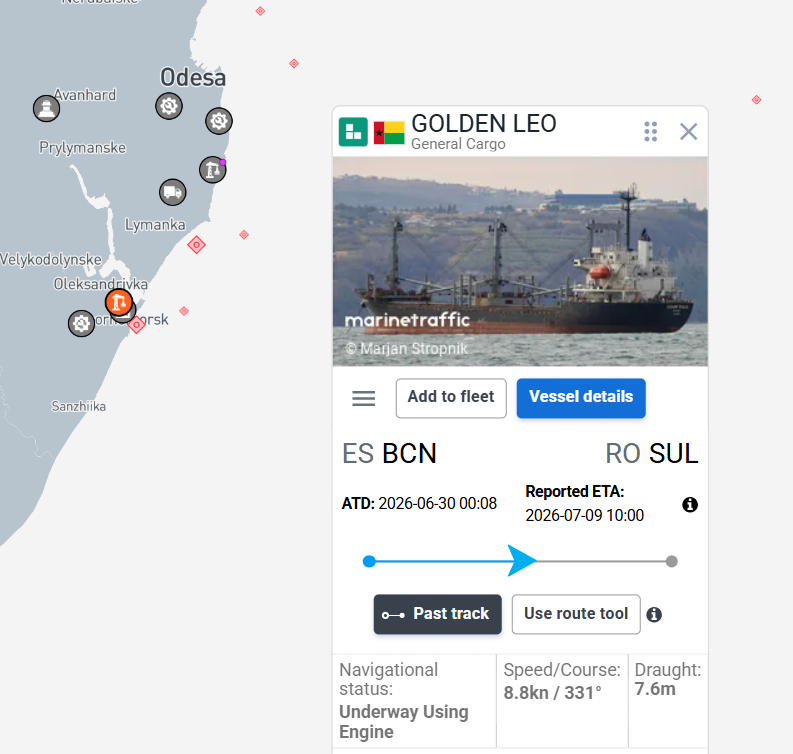
Source: MarineTraffic AIS data

Merchant Ship Hit by Missile During Cargo Operations in Odesa

A merchant vessel has reportedly been struck by a missile while conducting cargo operations at the Port of Odesa, Ukraine, resulting in the deaths of 10 people, including crew members and a Ukrainian sea pilot.

The incident highlights the continuing risks faced by commercial shipping in the Black Sea despite ongoing diplomatic efforts and agreements intended to safeguard merchant vessels transporting civilian cargo.

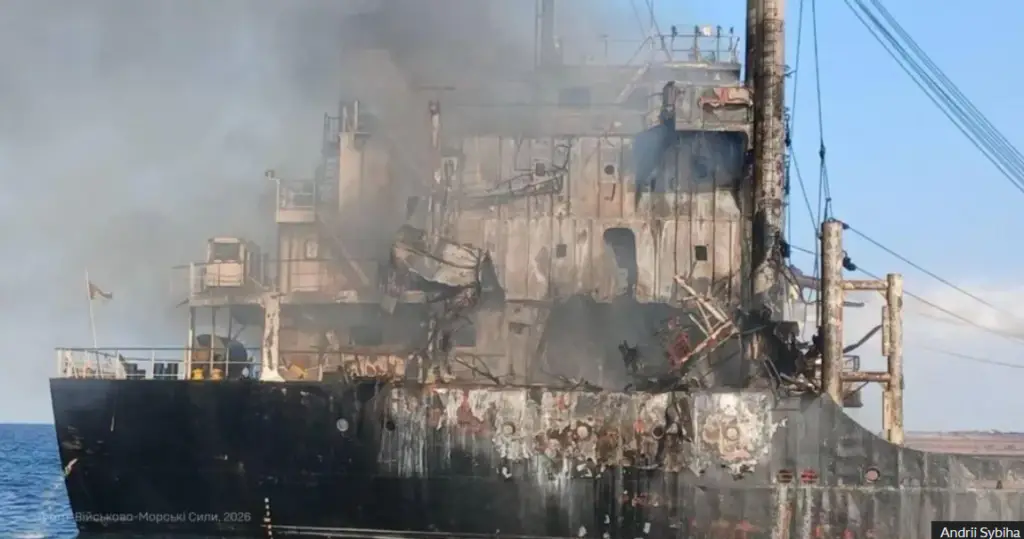
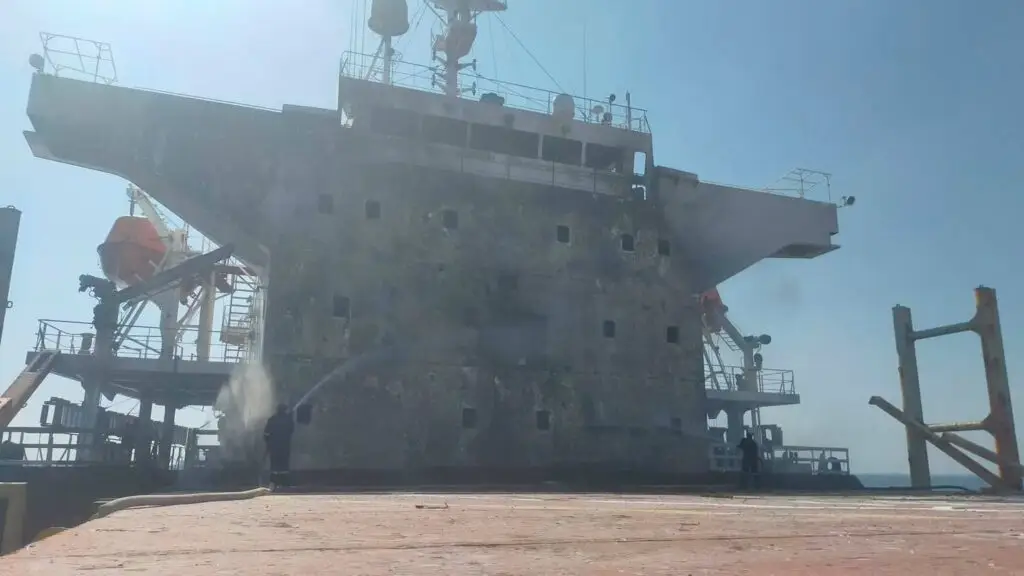
According to initial reports, the vessel Golden Leo was alongside in Odesa when it was hit. The missile reportedly struck the accommodation block on the starboard side, triggering a major fire that rapidly spread through the superstructure.

Emergency response teams and search-and-rescue units worked throughout the night to extinguish the fire and rescue survivors.

Casualties

At the time of the attack, 17 Syrian and Indian crew members were on board together with one Ukrainian sea pilot.

Authorities reported:

  • 10 fatalities, including the Ukrainian sea pilot.
  • 8 survivors, who were rescued and transferred to hospitals in Odesa for medical treatment.

The identities of the victims have not yet been officially released.

Vessel Information

ParticularDetails
Vessel NameGolden Leo
Vessel TypeGeneral Cargo Ship
Deadweight (DWT)7,334 tonnes
FlagGuinea-Bissau
Year Built1998
OwnerReportedly operated by Turkish shipping company Ocean Grace

Merchant Shipping Continues to Face Black Sea Risks

The attack occurred despite international efforts to maintain safe navigation for merchant shipping in the Black Sea. Although agreements have been reached in recent years to facilitate the movement of commercial cargo, attacks affecting civilian vessels continue to raise serious concerns within the maritime industry.

Commercial ships entering Ukrainian ports transport essential commodities that support global trade and food security. These vessels are civilian assets and are crewed by professional seafarers whose primary mission is the safe transportation of cargo.

Growing Safety Concerns for Seafarers

The latest tragedy once again demonstrates the increasing dangers faced by merchant seafarers operating in conflict zones.

Over the past few years, shipping companies and crews have encountered elevated security risks in several regions, including the Black Sea, the Red Sea, and the Strait of Hormuz. These routes remain critical to international trade but have become increasingly hazardous due to military conflicts and attacks on commercial vessels.

For thousands of seafarers, working at sea now involves risks that extend far beyond storms and mechanical failures. Many crews spend months away from their families while ensuring that global supply chains continue to operate.

Maritime organizations and industry stakeholders continue to call for stronger measures to protect civilian shipping and to ensure that merchant vessels can operate safely in conflict-affected regions.

Drone Attack Reported on Bulk Carrier MV INASE in Ukraine: Filipino Seafarers Injured

18 July 2026

A merchant vessel operating in Ukraine has reportedly been caught up in the ongoing conflict after an alleged drone or missile strike damaged the bulk carrier MV INASE while the ship was alongside at Port of Pivdennyi (Odessa region), Ukraine.

At the time of writing, the exact nature of the weapon involved has not been officially confirmed, and authorities have yet to release a formal statement regarding the incident.

What Happened?

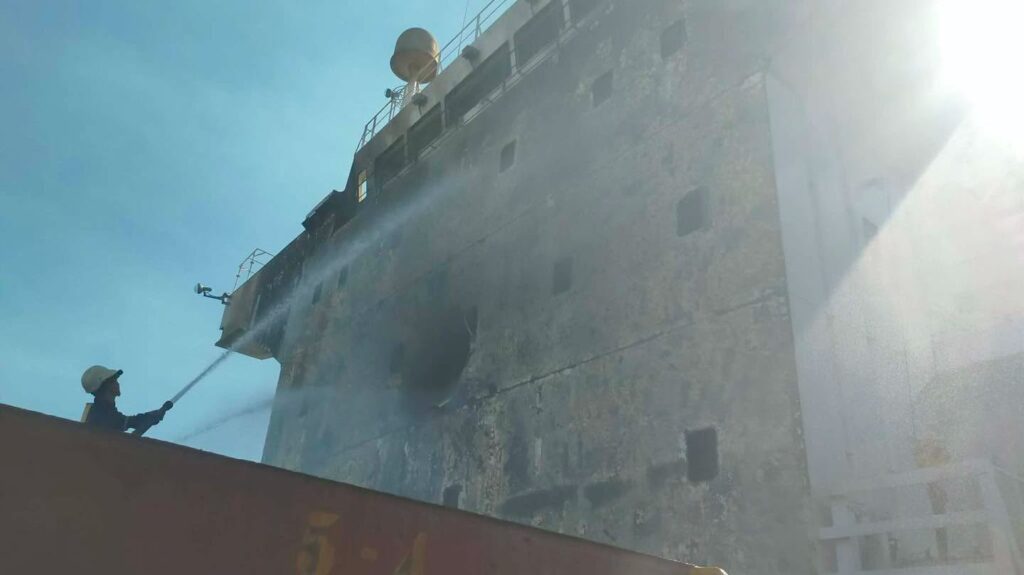
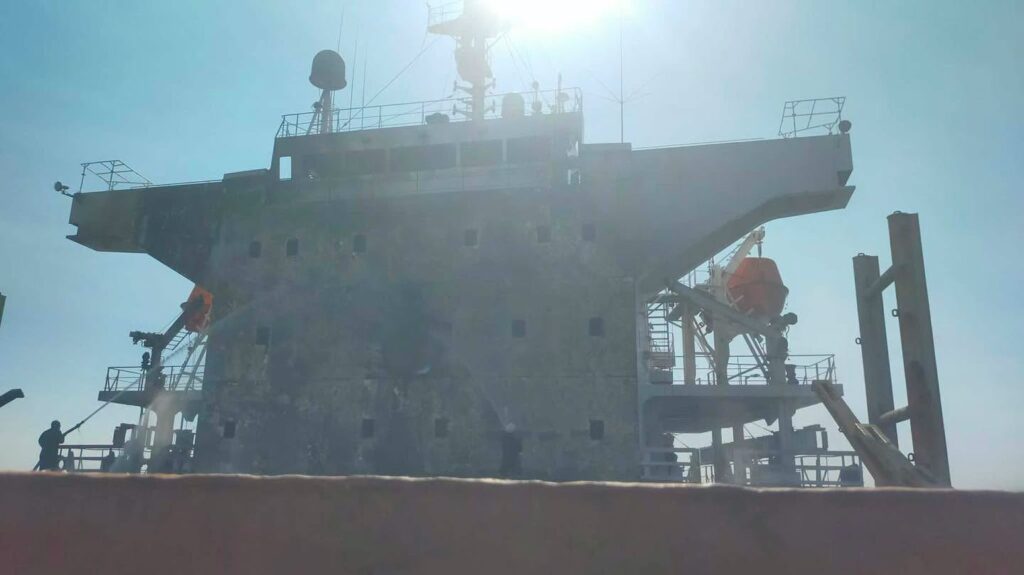
According to reports from a seafarer familiar with the incident, MV INASE was allegedly struck while berthed at the Port of Pivdennyi on 18 July 2026. The impact reportedly damaged the vessel’s accommodation block on B Deck, highlighting once again the growing risks faced by merchant ships operating in conflict zones.

Initial information indicates that the vessel’s entire crew of 22 Filipino seafarers was on board during the incident.

Reported Crew Casualties

Preliminary and unconfirmed reports state that two Filipino crew members sustained injuries:

  • Able Seaman (AB): Reportedly suffered a head injury.
  • Second Officer: Reportedly sustained an injury to one hand.

As of publication, the names of the injured seafarers and the severity of their injuries have not been officially released. Maritime authorities and the vessel’s management company have not yet issued an official statement.

Vessel Information

MV INASE

  • Vessel Type: Bulk Carrier
  • Built: 2008
  • Flag: Antigua & Barbuda
  • Length Overall: 169 metres
  • Deadweight (DWT): 28,450 tonnes
  • Cargo Configuration: 5 cargo holds / 4 deck cranes
  • Last Reported Port: Sulina, Romania

The vessel is a geared bulk carrier commonly employed in transporting dry bulk commodities such as grain, coal, steel products, fertilizers, and other general bulk cargoes.

Growing Risks for Merchant Shipping

This latest reported incident serves as another reminder that commercial shipping continues to face significant risks while operating in or near conflict areas. Although merchant vessels are civilian assets, they remain vulnerable to collateral damage during military operations.

For seafarers, these events highlight the dangers of maintaining global trade under increasingly challenging conditions. Even while carrying essential cargoes, crews may find themselves exposed to threats beyond their control.

IMO Updates

Keep up with the latest announcements, regulations, and policy changes from the International Maritime Organization (IMO). Discover updates on SOLAS, MARPOL, STCW, environmental compliance, decarbonization initiatives, greenhouse gas reduction targets, digital shipping standards, and maritime safety requirements affecting ship owners, operators, and seafarers worldwide.

This website uses cookies

We use cookies to personalize content, provide social media features, and analyze our traffic. We also share information about your use of our site with our analytics partners. You can change your preferences at any time.