In maritime transportation, one of the most fundamental concepts is navigation. At its core, good navigation means getting a vessel from its departure point to its destination as safely and efficiently as possible.
In conventional voyage planning, this usually means finding the most efficient route between the port of departure and the destination while maintaining an acceptable level of safety. For shipowners, charterers and operators, every additional nautical mile can translate into higher fuel consumption, longer voyage duration, additional crew costs and increased exposure to operational risks.
This becomes even more important on long-distance trades connecting Asia with Europe and North America. When a vessel spends several weeks at sea, even a small change in voyage duration or routing can have a significant financial impact.
For decades, the Suez Canal has been one of the most important shortcuts connecting Asia and Europe. However, geopolitical instability, attacks on commercial shipping, the Houthi threat in the Red Sea and wider tensions across the Middle East have fundamentally changed the economics of this route.
As a result, some shipping companies have chosen to avoid the Red Sea and instead sail around the southern tip of Africa via the Cape of Good Hope.
The decision seems obvious.
The Cape route is much longer.
The vessel consumes more fuel.
The voyage takes more days.
So why would any shipowner voluntarily choose it?
The answer is much more complicated.
Suez Canal vs Cape of Good Hope: The Basic Question
Imagine a tanker sailing from Hong Kong to Rotterdam.
Should the vessel:
Sail through the Suez Canal and Red Sea, or
Avoid the Red Sea and sail around the Cape of Good Hope?
The answer cannot be determined by distance alone.
A professional voyage comparison needs to consider:
Sailing distance
Voyage duration
Fuel consumption
Bunker prices
Suez Canal transit fees
Charter hire
Crew costs
Additional operational expenses
Insurance
War-risk exposure
Security risks
Waiting time
Cargo delivery requirements
This is where the economics of maritime transportation become particularly interesting.
Our Example: A 32,000 DWT Oil/Chemical Tanker
For this comparison, let’s use 32,000 DWT oil/chemical tanker with the following characteristics:
Vessel Parameter
Assumption
Length overall
180 m
Beam
28 m
Deadweight
32,000 DWT
Average speed
12.5 knots
Fuel consumption
22 MT/day
Fuel type
VLSFO
Departure
Hong Kong
Destination
Rotterdam
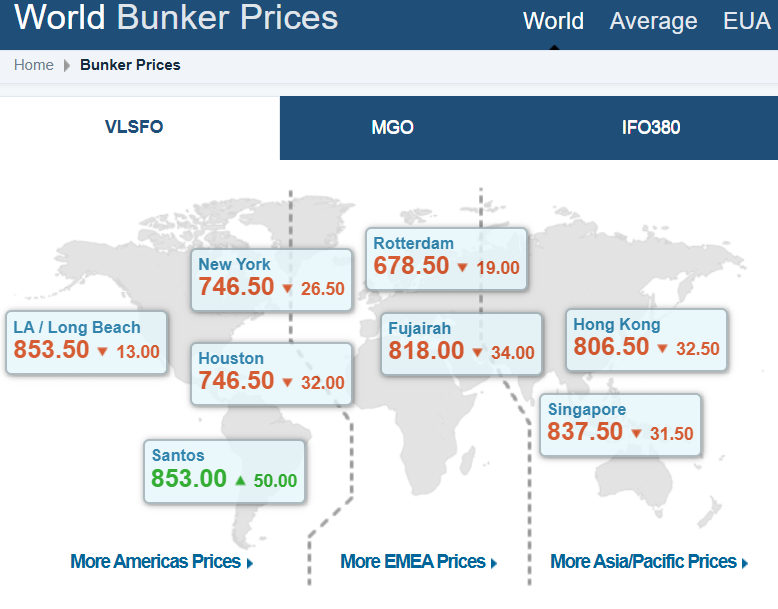
VLSFO price assumption
$806/MT
The vessel has two realistic routing options.
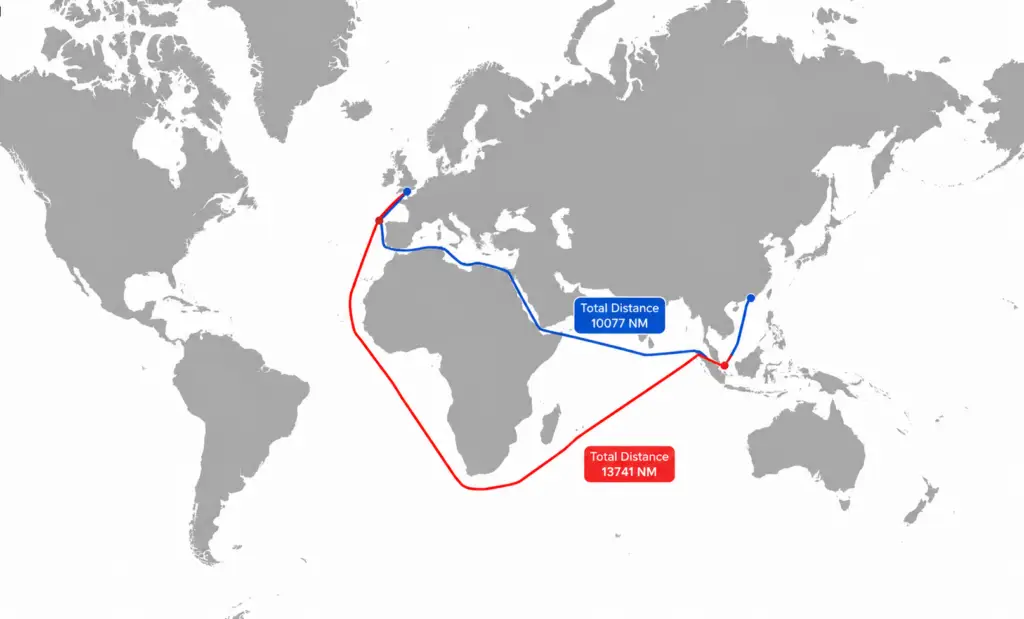
Route 1 — Via Suez Canal
Hong Kong → Indian Ocean → Red Sea → Suez Canal → Mediterranean → Rotterdam
Approximate distance:
10,077 nautical miles (18,662 km)
Route 2 — Via Cape of Good Hope
Hong Kong → Indian Ocean → Cape of Good Hope → Atlantic Ocean → Rotterdam
Approximate distance:
13,741 nautical miles (25,448 km)
That means the Cape route adds approximately:
3,664 nautical miles
or about 36% more distance than the Suez route in this scenario.
Voyage Duration: Suez Has a Major Advantage
At an average speed of 12.5 knots, our vessel would require approximately:
Suez route
33 days 14 hours
Cape of Good Hope route
45 days 18 hours
That creates a difference of approximately:
12 days 4 hours
In other words, using the Suez Canal could theoretically get the cargo to Rotterdam almost 12 days earlier.
That is a huge advantage.
But time is not the only variable.
Fuel Consumption: How Much Does the Cape Route Cost?
Our tanker consumes approximately 22 metric tonnes of VLSFO per day.
Using the voyage durations above:
Suez route
33.58 days × 22 MT/day
≈ 739 MT of fuel
Cape route
45.75 days × 22 MT/day
≈ 1,007 MT of fuel
Using the assumed bunker price of $806 per metric tonne:
Cost Item
Suez
Cape of Good Hope
Voyage duration
33.6 days
45.8 days
Fuel consumption
~739 MT
~1,007 MT
Fuel price
$806/MT
$806/MT
Fuel cost
~$595,000
~$812,000
So the Cape route consumes approximately:
268 additional tonnes of fuel
or roughly:
$217,000 more in bunker costs
That sounds like a strong argument for Suez.
But we haven’t included the biggest variable yet.
The Suez Canal itself.
Note: the $806/MT figure is retained as the article’s scenario assumption. Actual bunker prices vary significantly by port and date; recent Hong Kong VLSFO assessments have been around the $800+/MT range.
The Hidden Cost of the Suez Canal: Transit Fees
The Suez Canal is not a free shortcut.
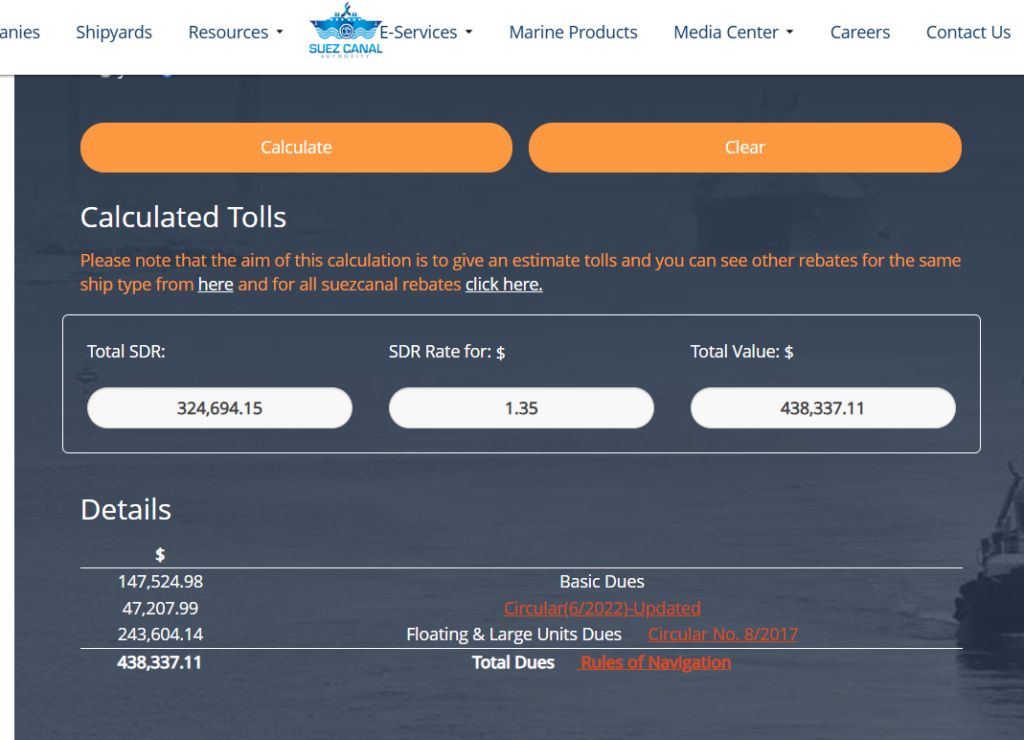
The Suez Canal Authority (SCA) charges vessels for transit, with normal dues calculated primarily according to the vessel’s Suez Canal Net Tonnage (SCNT) and vessel type. The SCA also maintains an official toll calculator and updates its toll structure periodically.
For our hypothetical tanker, we can use an estimated Suez transit charge of approximately:
$438,000
This changes the calculation totally.
Before the canal fee, the Suez route appeared cheaper by approximately $217,000 in fuel.
After adding the canal transit fee:
$595,000 + $438,000 = ~$1.033 million
Suddenly, the financial advantage is much smaller.
And we still haven’t considered the cost of the additional 12 days required by the Cape route.
The Cost of Spending 12 Extra Days at Sea
A vessel does not operate for free.
Every additional day at sea generates costs.
For our scenario, let’s assume:
Additional crew-related costs: ~$30,000
Additional operating expenses: ~$50,000
Additional charter hire: ~$300,000
That gives the Cape route approximately:
$380,000 in additional non-fuel voyage costs
Add this to the Cape route’s bunker bill:
$812,000 + $380,000 = ~$1.192 million
At this point, it appears that Suez is still cheaper.
But this is where the modern Red Sea shipping environment changes the equation.
The Biggest Variable: Security and War-Risk Insurance
The problem with the Suez route is not simply the canal.
A vessel sailing from Asia to Rotterdam through Suez must also enter the Red Sea and pass through the Bab el-Mandeb region.
That creates an entirely different category of risk.
In normal circumstances, insurance is simply another operating cost.
In a high-risk war zone, however, the cost of insurance can change dramatically.
Recent market conditions demonstrate how quickly this can happen. In July 2026, Reuters reported that war-risk premiums for vessels operating in the southern Red Sea had increased sharply following attacks on commercial tankers, with some quoted rates reaching several percent of vessel value depending on the voyage and risk exposure.
The wider Middle East situation has also pushed marine war-risk costs substantially higher, with S&P Global reporting in July 2026 that additional war-risk premiums for some voyages through the Strait of Hormuz had reached 7.5–10% of hull value.
This is why simply comparing fuel consumption is no longer enough.
Why Insurance Can Change the Entire Calculation
Let’s use a simplified scenario.
Suppose the additional security and insurance exposure associated with the Suez/Red Sea route adds approximately:
$500,000
to our voyage economics.
This is not intended as a universal insurance quote. Actual war-risk premiums depend on vessel value, flag, ownership, charterer, cargo, route, security conditions, insurer and the precise area entered.
But for our scenario, adding $500,000 makes the comparison much more interesting.
Suez Route
Cost
Approximate Amount
Fuel
$595,000
Suez Canal transit
$438,000
Additional security/insurance exposure
$500,000
Total
~$1.533 million
Cape Route
Cost
Approximate Amount
Fuel
$812,000
Additional crew costs
$30,000
Additional operating costs
$50,000
Additional charter hire
$300,000
Total
~$1.192 million
If we then assume approximately one day of waiting time associated with Suez and deduct around $25,000 from the Cape route’s incremental time-related cost, the Cape option remains around:
~$1.17 million
That produces a difference of roughly:
$360,000 in favour of the Cape of Good Hope route.
So, Should Every Ship Avoid Suez?
Not necessarily.
And this is the most important lesson from this comparison.
A route cannot be judged solely by:
“Which route is shorter?”
The real question is:
Which route provides the best combination of cost, time, safety and reliability for this particular cargo and vessel?
For a tanker carrying relatively time-insensitive cargo, accepting an additional 10–14 days at sea may be economically rational if it substantially reduces exposure to war risk and unpredictable insurance costs.
For a container ship carrying high-value or time-sensitive cargo, the calculation can be very different.
Why Do Container Ships Still Care About Transit Time?
Imagine a container ship carrying:
Smartphones
Computers
Tablets
Cars
Machinery
Spare parts
Clothing
Consumer electronics
Industrial components
Perishable goods
The cargo inside a container ship can represent an enormous amount of economic value.
For many of these products, time has a financial value.
A retailer waiting for a shipment does not necessarily care that a vessel saved $200,000 in bunker costs.
They care about receiving their inventory on time.
A manufacturer may be waiting for a critical component.
A supermarket may need perishable products.
An automotive plant may need spare parts.
This creates a completely different economic equation.
The Cost of a Longer Route Eventually Reaches the Consumer
This is where maritime transportation becomes directly connected to everyday life.
When a shipping company chooses the Cape of Good Hope instead of Suez, it may have to pay for:
More fuel
More crew time
More vessel operating days
More charter hire
Additional maintenance exposure
Additional port and scheduling complexity
Higher inventory costs
Longer cargo transit times
Those costs do not simply disappear.
They are distributed throughout the supply chain.
A shipping company may increase freight rates.
A freight forwarder may adjust its charges.
An importer may increase its landed cost.
A distributor may adjust its pricing.
And eventually, part of that additional transportation cost can reach the final consumer.
This is one of the reasons why disruptions to major maritime chokepoints can have economic consequences far beyond the shipping industry itself.
Research on maritime chokepoint disruptions has shown that rerouting can create wider network effects because longer voyages delay vessels and reduce effective shipping capacity elsewhere in the network.
So when consumers notice that imported goods are becoming more expensive, the explanation may sometimes be much further away than the local shop.
It may begin thousands of nautical miles away.
Suez Canal vs Cape of Good Hope: The Real Winner
Our 32,000 DWT tanker produces an interesting result.
Factor
Suez Canal
Cape of Good Hope
Distance
10,077 nm
13,741 nm
Voyage time
33.6 days
45.8 days
Fuel consumption
~739 MT
~1,007 MT
Fuel cost
~$595k
~$812k
Canal fee
~$438k
$0
Additional time-related costs
Lower
Higher
Security exposure
Higher
Lower
War-risk exposure
Higher
Lower
Estimated total in our scenario
~$1.53M
~$1.17M
Best advantage
Speed
Predictability & security
So, despite being almost 3,700 nautical miles longer, the Cape of Good Hope route can become economically attractive when the cost of security, insurance and geopolitical risk is included.
That is the real lesson.
The shortest route is not always the cheapest route.
And in modern shipping, the safest route can sometimes be the most economical route—even when it takes nearly two weeks longer.
A note on the calculations
The figures in this article are illustrative voyage-planning assumptions, not a commercial quotation. Actual results will vary according to vessel particulars, SCNT, draft, cargo, weather, speed, fuel consumption, bunker prices, canal tariffs, charter terms, insurance conditions, waiting time and geopolitical risk.
The Suez Canal Authority itself states that canal dues are calculated using the vessel’s SCNT and that its toll calculator provides an estimate; therefore, an actual vessel’s official Suez invoice may differ from the simplified figure used in this example.
As the entire world continues to expand digitalization, the maritime industry has also entered the digital age. With the younger generation becoming increasingly dependent on social media and the internet, one of the most important questions for people considering a career at sea today is whether they will have internet access onboard.
So, do modern ships really have internet access? If so, how fast is it? Is it good enough for everyday use? And are there any data limits?do you have to pay for it ?
In the past, when seafarers began a voyage, they could generally only receive messages through satellite communication systems in emergencies or communicate through radio waves. Once a ship left port, staying connected with the outside world was extremely limited.
Today, however, modern merchant ships can provide internet access through satellite communication systems, allowing seafarers to remain connected even when they are thousands of miles away from land.
How Common Is Internet Access Onboard?
The popularity of internet access at sea began to increase significantly after 2015 and has now reached a very high level.
According to the 2019 ICS/ECSA survey, which covered 11,655 ships, approximately 85% of the vessels surveyed provided internet access for crew use. Those vessels represented around 14% of the global fleet at the time.
Today, this figure is believed to be considerably higher, with some estimates suggesting that around 95% of merchant vessels may now provide internet access to their crews.
I personally know hundreds of seafarers working in different ships of companies including European,Asian and American based companies, and based on my experience, only around 2–3 out of every 100 seafarers I know are currently working on ships without crew internet access.
These vessels tend to be older, smaller-tonnage ships, often operating under flags or in regulatory environments where requirements for crew welfare and connectivity may be less demanding.
If we assume that there are approximately 70,000 merchant vessels above 1,500 gross tonnage worldwide, this could mean that around 66,000 ships may now have some form of internet access onboard.
For a newly graduated maritime student preparing for their first contract, or a cadet about to begin their sea training, probably will have internet access onboard.
But having internet access is only one part of the story.
How fast is it? How reliable is it? How much data are you allowed to use? And is it actually good enough for everyday life?
How Fast Is Internet at Sea?
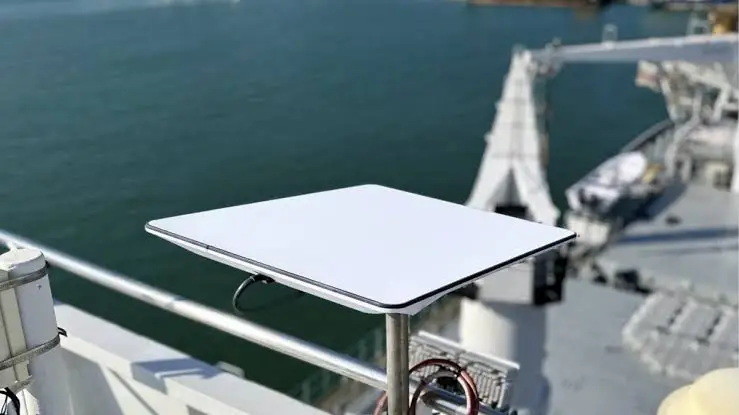
Looking at the world’s merchant fleets, Starlink has become one of the most widely discussed and increasingly popular connectivity solutions.
Satellite internet existed long before Starlink entered the maritime market. However, Starlink has extremely changed the competitive landscape by making high-speed satellite internet considerably more accessible.
For example, older satellite internet systems could cost around $25 for a very limited amount of data up to 100 Mb, while modern Starlink-based systems can provide higher speeds and much greater data allowances.
This can be seen as one of the major changes Starlink has brought to the maritime industry.
As competition increased, seafarers gained access to much better connectivity at a significantly lower cost compared with traditional satellite communication systems.
Today, Starlink is operational across a large part of the world’s oceans and, depending on the vessel’s location, service configuration and network conditions, can provide speeds that are more than sufficient for normal social media and communication.
TikTok, Facebook, Instagram, WhatsApp and many other apps can generally be used without the frustrating experience that was common with older satellite systems.
However, there is one major problem.
Fast internet can make your data allowance disappear extremely quickly.
How Much Internet Do Seafarers Get?
There is no single standard across the maritime industry.
Every shipping company can have a different policy regarding crew internet. Some companies provide extremely generous or even unlimited access, while others impose strict daily or monthly limits.
For comparison, if you purchase a residential Starlink service for your home, plans such as those available in Europe can offer unlimited data.
🏠 Starlink Residential
Plan
Speed
Data
Monthly Price*
Residential 100 Mbps
Up to 100 Mbps
Unlimited
$55/month
Residential 200 Mbps
Up to 200 Mbps
Unlimited
$85/month
Residential Max
400+ Mbps
Unlimited
$130/month
*Prices are provided for comparison and may vary depending on country and service conditions.
On ships, however, the situation can be very different.
🚢 Starlink Maritime – Global Priority
Plan
Monthly Data
Starting Price*
Typical Use
Global Priority 50 GB
50 GB
$250/month
Small usage / backup
Global Priority 500 GB
500 GB
$650/month
Small crew / moderate usage
Global Priority 1 TB
1 TB
$1,150/month
Higher usage
Global Priority 2 TB+
2 TB+
Higher
Large vessels / heavy crew usage
*Prices are indicative and may vary depending on the service configuration, country and commercial agreement.
However, shipping companies do not necessarily purchase a plan and simply divide the entire allowance equally among crew members.
Most companies need a significant portion of the available bandwidth for operational purposes. Ships continuously exchange reports, emails, documents and other information with their offices, charterers, agents and other parties.
Therefore, assuming a vessel has a 1 TB monthly allowance, a company might reserve approximately 500 GB for operational and business communications.
If there are 20 crew members onboard, this would leave approximately:
500 GB ÷ 20 crew members = 25 GB per person per month.
Some companies manage this through an IT-controlled system where each crew member receives a daily allowance.
For example, a company could provide 1 GB per day, with the allowance resetting every 24 hours.
This is actually a very effective system because even if a seafarer accidentally consumes their entire daily allowance, they do not lose their entire monthly quota. They simply wait for the next daily reset.
What Can You Do With 1 GB Per Day?
Based on my own experience at sea, 1 GB per day can actually provide a reasonable level of connectivity if it is managed properly.
Depending on video quality and network conditions, you could potentially:
Make several hours of WhatsApp video calls every day.
Spend hours browsing X, Reddit or LinkedIn, where video consumption is generally lower.
Use Instagram for roughly 30–45 minutes.
Watch around 20 minutes of YouTube in Full HD.
Stay connected with friends and family through messaging apps.
The important point is to make sure that there are no large background downloads or automatic updates running on your device.
If you disable automatic app updates, cloud backups and other background data-heavy services, 1 GB per day can be surprisingly useful.
Some Companies Offer Unlimited Internet
Of course, there are also highly competitive shipping companies that provide unlimited Starlink access to their crews.
In these cases, a single seafarer can consume more than 100 GB per month without paying anything extra.
With such a connection, you can download and upload videos, use social media freely and, during periods when relatively few people are online, you may even be able to play online games such as Counter-Strike 2 or League of Legends.
For seafarers, this is an enormous improvement compared with the internet experience of previous generations.
Not Every Company Provides Free Internet
Unfortunately, some companies also see crew internet as an additional source of revenue.
Instead of providing internet as part of the crew welfare package, they may sell data to their employees.
In some cases, seafarers can be charged as much as $10 per GB.
This means that the company may pay for the Starlink service while recovering part of the cost directly from the crew through individual data charges.
Because there are thousands of shipping companies operating different types of vessels under different management structures, the range of policies is extremely wide.
You can find everything from almost no internet at all to completely unlimited high-speed Starlink access.
Does Internet Access Have Any Disadvantages?
Despite all of its advantages, onboard internet connectivity also has a negative side.
Some companies have introduced restrictions on internet use on the bridge because of concerns that excessive connectivity could increase the risk of distraction and accidents.
A bridge is a workplace where situational awareness and concentration are critical. Social media notifications, video calls or messages from shore can easily become distractions if they are not managed properly.
There is also another problem.
Having high-speed internet onboard means that a ship’s crew can potentially remain in constant communication with the company’s shore-based office.
Instead of waiting until the next port or communicating only through scheduled reports, crew members can now receive messages, requests and instructions almost instantly.
For seafarers, this can sometimes feel like having the office sitting in your pocket 24 hours a day.
And that is certainly not always a good thing.
The New Reality of Life at Sea
When we consider all of these factors, one thing is clear: being completely disconnected from the outside world is no longer a normal part of modern seafaring.
For today’s seafarers, social media, video calls and instant messaging have become a normal part of life onboard.
A cadet joining their first vessel today is far more likely to be able to speak with their family regularly than a seafarer from previous generations.
This is particularly important for seafarer welfare.
Being able to see your family, speak with your children, follow world events and maintain relationships while working thousands of miles from home can have a significant positive impact on life at sea.
However, internet access should be treated as a tool rather than something that controls your life.
Modern ships need to adapt to the digital world, and internet connectivity is now one of the most important aspects of modern seafarer welfare.
But like everything else onboard, balance is essential.
The internet can help us stay connected with the world, communicate with our loved ones and improve our quality of life at sea.
At the same time, we should never allow it to make us forget why we are onboard in the first place: to work safely, fulfill our responsibilities and return home safely.
The Chief Officer, also known as the Chief Mate, is the senior deck officer and second-in-command on a merchant ship.
While the Master has overall command and ultimate responsibility for the safety and security of the vessel, the Chief Officer is heavily involved in the ship’s day-to-day deck operations. Cargo handling, deck maintenance, crew supervision, training, safety, inspections and many aspects of shipboard planning fall within the Chief Officer’s area of responsibility.
On tankers, the role becomes even more demanding because cargo operations involve dangerous and sometimes highly toxic products, complex tank systems, inert gas, cargo pumps, tank cleaning, gas monitoring and strict safety procedures.
The international STCW framework defines the Chief Mate role at the management level and requires competence in areas including navigation, cargo handling and stowage, ship operations, maintenance and repair. It also requires a Chief Mate to be capable of assuming the Master’s responsibilities when necessary.
But what does a Chief Officer actually do during a normal day onboard?
The answer is much more than simply supervising the deck crew.
Who Is the Chief Officer?
The Chief Officer is the senior deck officer immediately below the Master in the ship’s command structure.
A simple way to understand the position is this:
The Master has overall command of the ship, while the Chief Officer manages a major part of the vessel’s daily deck, cargo, maintenance and safety operations.
The Chief Officer normally coordinates the deck department and works closely with the Master, Second Officer, Third Officer, Bosun, Able Seafarers and other crew members.
The position also carries significant responsibility for cargo operations. Under the STCW management-level standards, Chief Mates must be competent to plan and ensure safe loading, stowage, securing, care during the voyage and unloading of cargo.
On a tanker, this can involve thousands or tens of thousands of tonnes of petroleum or chemical cargo.
That means a Chief Officer must understand not only how to operate equipment, but also how cargo operations affect:
Ship stability
Hull stress
Trim and draft
Tank pressure
Cargo temperature
Cargo segregation
Pollution prevention
Personnel safety
Terminal requirements
Loading and discharge rates
What Does a Chief Officer Do?
The exact responsibilities vary according to the ship type, company procedures, Safety Management System (SMS), flag-state requirements and the vessel’s equipment.
However, the Chief Officer commonly has responsibility for the following areas.
1. Cargo Operations
Cargo operations are among the most important responsibilities of a Chief Officer.
Depending on the vessel, this can include:
Cargo planning
Loading and discharge
Ballasting and deballasting
Cargo tank monitoring
Cargo pump operations
Tank cleaning
Cargo line and valve management
Cargo temperature monitoring
Cargo documentation
Communication with terminals
Coordination with cargo surveyors
Cargo calculations
Stability and stress considerations
On tankers, cargo planning must also consider segregation requirements, cargo compatibility, tank condition, inert gas requirements and the vessel’s maximum permissible loading conditions.
The STCW Code specifically requires management-level competence in planning and executing cargo operations safely and in accordance with applicable regulations and procedures.
2. Deck Maintenance
The Chief Officer is normally responsible for planning and supervising maintenance of the vessel’s hull, deck machinery, cargo equipment and associated systems.
This doesn’t mean the Chief Officer personally repairs every piece of equipment.
Instead, the Chief Officer plans the work, assigns responsibilities, supervises the crew, checks the condition of equipment and ensures that maintenance is properly recorded in the vessel’s Planned Maintenance System (PMS).
A routine maintenance program may include inspections of:
Pilot ladders
Mooring ropes
Mooring winches
Windlasses
Anchors and cables
Cargo cranes
Cargo hoses and connections
Cargo pipelines
Cargo valves
Tank cleaning systems
Cargo pumps
Tank monitoring equipment
Tank coatings
Ballast tanks
Deck fittings
Safety equipment
3. Crew Management and Training
A Chief Officer is also a manager.
The deck crew needs clear instructions about what has to be done, how it should be done and what safety precautions are required.
The Chief Officer may organize:
Daily deck work
Maintenance teams
Cargo operation teams
Mooring operations
Tank cleaning teams
Safety drills
Familiarization
Training for junior officers and ratings
Toolbox meetings
Risk assessments and work permits
Good leadership is extremely important.
A Chief Officer who knows everything technically but cannot communicate clearly with the crew can still create serious operational problems.
4. Safety and Accident Prevention
Safety is integrated into almost everything a Chief Officer does.
The Chief Officer may be involved in:
Risk assessments
Permit-to-work systems
Enclosed-space entry
Hot work
Working aloft
Mooring safety
Cargo safety
Tank cleaning safety
Gas testing
Emergency preparedness
Near-miss reporting
Accident investigation
Corrective actions
The Chief Officer also needs to keep the Master informed about important operational issues, deficiencies, accidents, near misses, cargo problems and safety concerns.
5. Ship Security
On many merchant ships, the Chief Officer may also be designated as the Ship Security Officer (SSO), depending on the company’s organization and the vessel’s approved security arrangements.
The ISPS Code requires ships to have appropriate security officers and personnel, but the appointment of the SSO is a company/flag-state matter rather than a universal requirement that the Chief Officer must hold the position. The Master retains ultimate responsibility for ship safety and security.
Security-related duties can include:
Controlling access to the vessel
Monitoring visitors
Checking identification
Stowaway prevention
Security rounds
Security drills
Searches when required
Implementing the Ship Security Plan
Reporting security incidents
What Does a Chief Officer Do on an Oil or Chemical Tanker?
The tanker environment makes the Chief Officer’s job particularly technical.
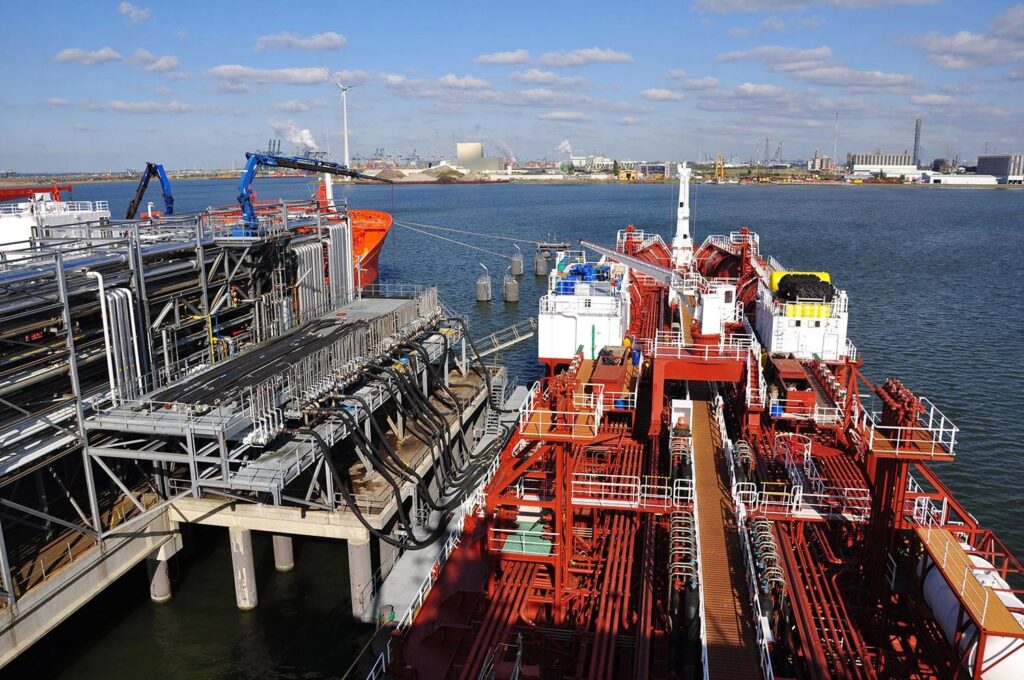
An oil or chemical tanker can have sophisticated cargo systems that need continuous monitoring and maintenance.
Here are some examples of the equipment and systems a Chief Officer may be responsible for supervising.
Pilot Ladder Inspection
Pilot ladders are critical equipment because pilots may use them when boarding or leaving the vessel.
They are exposed to seawater, weather and mechanical wear, so their condition must be regularly inspected according to applicable requirements and company procedures.
The Chief Officer may check:
Steps
Side ropes
Spreader arrangements
Fastenings
Chafing
General deterioration
A damaged pilot ladder is not something that can simply be ignored until the next port.
Cargo Cranes
Many tankers have deck cranes for handling cargo hoses, provisions, stores, equipment and other heavy items.
The Chief Officer may supervise inspections of:
Hydraulic systems
Oil leakage
Wire ropes
Limit switches
Hooks
Greasing
Brakes
General structural condition
The exact equipment varies between vessels, so the inspection requirements should follow the manufacturer’s instructions, PMS and company procedures.
PV Breaker and Tank Pressure Systems
On oil tankers, pressure/vacuum protection is a critical part of safe cargo operations.
The Chief Officer needs to ensure that relevant pressure/vacuum protection systems are maintained and operational according to the vessel’s procedures.
Depending on the vessel’s design, this may involve monitoring liquid levels in a PV breaker and checking associated valves and systems.
These systems are particularly important because cargo tanks must be protected from excessive pressure or vacuum during loading, discharge and other operations.
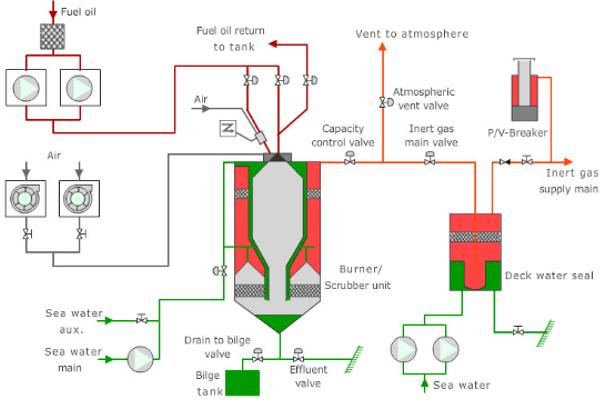
Inert Gas System
Many oil tankers use an inert gas system to reduce oxygen concentration and prevent the formation of a flammable atmosphere inside cargo tanks.
The Chief Officer is closely involved in monitoring the system during cargo operations.
This can include:
Inert gas pressure
Oxygen content
Tank pressure
Deck water seal or equivalent protection
Non-return arrangements
Inert gas main valves
Alarms and shutdowns
The exact system configuration depends on the vessel.
Cargo Tank Monitoring Systems
Modern tankers normally use fixed tank monitoring equipment to measure cargo levels and other parameters.
The Chief Officer relies on this information during:
Loading
Discharging
Cargo calculations
Stability calculations
Cargo monitoring
Tank inspections
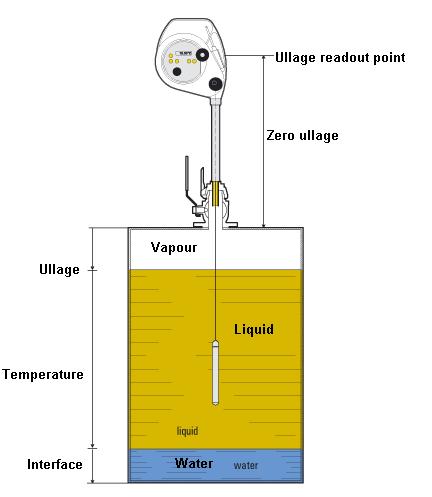
The fixed equipment may be supplemented by portable instruments, such as an approved UTI, depending on the vessel and terminal requirements.
Emergency Bilge or Suction Arrangements
On vessels fitted with a pump room, emergency suction arrangements can be an important part of the ship’s emergency preparedness.
These systems need to be maintained and tested according to the ship’s PMS and procedures.
The Chief Officer needs to know where these systems are located, how they operate and how they would be used during an emergency.
Tank Cleaning
Tank cleaning is another major responsibility on tankers.
A fixed tank cleaning system can use seawater or fresh water supplied through a pump and delivered to tank cleaning machines.
Depending on the cargo and cleaning procedure, hot water may be required.
Some vessels therefore have tank cleaning heaters that use steam from the ship’s boiler system to heat the cleaning water before it reaches the tank cleaning machines.
The Chief Officer has to consider:
Previous cargo
Next cargo
Tank coating compatibility
Cleaning temperature
Cleaning chemicals
Washing duration
Sludge generation
Ventilation
Gas measurements
MARPOL requirements
Crew safety
Tank cleaning is not simply a matter of spraying water into a tank. It is a carefully planned operation involving cargo compatibility, safety and environmental considerations.
Gas Detection and Calibration
Gas detection is particularly important on oil and chemical tankers.
Portable and fixed gas detection equipment may be used to monitor parameters such as:
Oxygen
Hydrocarbon gases
Carbon monoxide
Carbon dioxide
Other toxic gases, depending on the cargo and equipment fitted
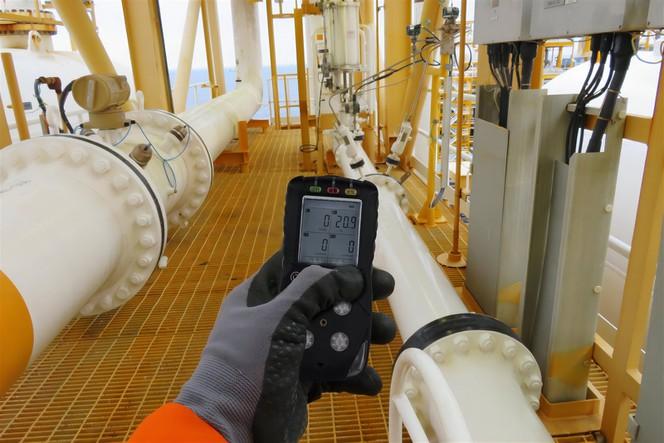
The Chief Officer may be responsible for ensuring that portable gas meters are properly maintained, tested and calibrated according to the manufacturer’s instructions and company procedures.
Fixed gas detection systems also need to be maintained and tested.
This equipment can literally determine whether an atmosphere is safe to enter or work in.
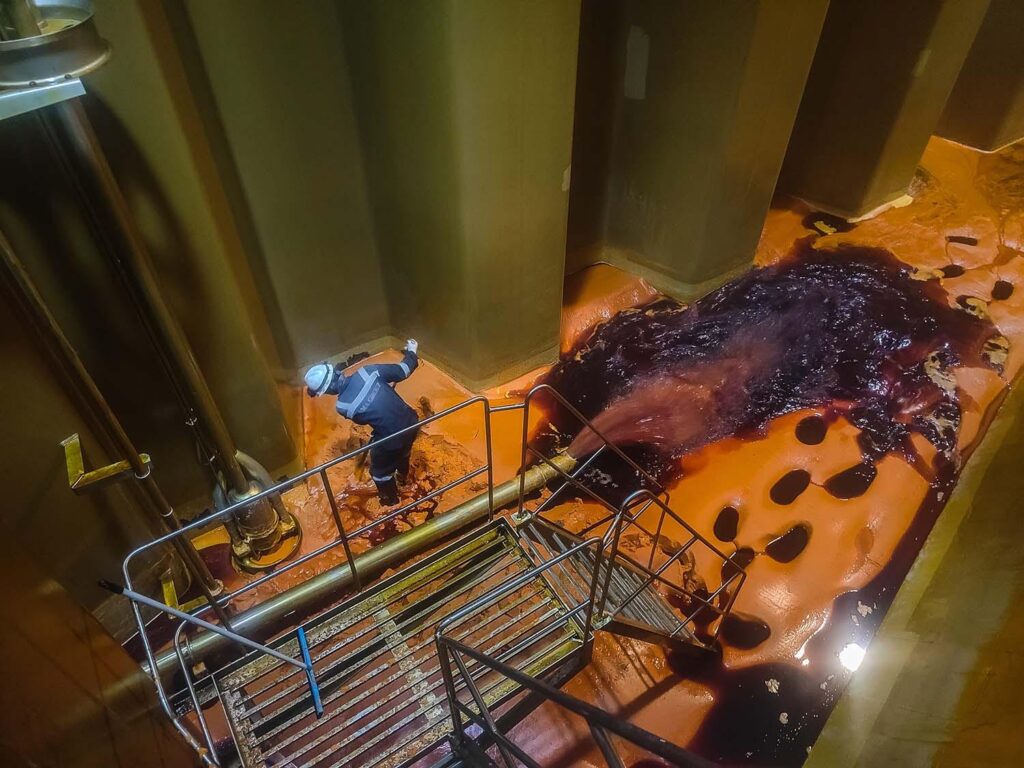
Cargo Tank and Ballast Tank Inspections
Cargo tanks need regular inspection to identify problems such as:
Coating damage
Corrosion
Cracks
Deformation
Structural deterioration
Leakage
Damaged fittings
Tank coatings can be extremely expensive to repair or replace, particularly on older tankers.
For this reason, early identification of coating damage and corrosion is important.
Ballast tanks also require inspection because they are exposed to seawater and can experience corrosion and structural deterioration over time.
The exact inspection frequency and scope depend on the vessel’s PMS, class requirements, company procedures and applicable regulations.
Cargo Pipelines, Valves and Pumps
Cargo must travel through the vessel’s cargo piping system during loading, discharge and internal transfer operations.
The Chief Officer therefore needs to ensure that cargo lines, valves and related equipment are maintained and free from unacceptable leakage or defects.
Cargo pumps also need regular monitoring and maintenance.
On some vessels, the Chief Officer works closely with the engine department because cargo pumps may be hydraulically driven or otherwise connected to systems maintained by the engineering team.
Mooring Ropes, Winches and Windlasses
Mooring equipment is another important part of the Chief Officer’s responsibilities.
A merchant ship can carry numerous heavy mooring lines, each of which can be expensive and subject to considerable loads during berthing.
The Chief Officer and deck crew need to monitor:
Rope condition
Chafing
Broken strands
Deformation
Mooring winches
Hydraulic systems
Brakes
Fairleads
Rollers
Windlass condition
Anchoring equipment also requires proper maintenance.
The important point is that the Chief Officer does not simply “check the ropes.” The Chief Officer must understand how the entire mooring system behaves under load and ensure that the crew operates it safely.
Does the Chief Officer Stand a Navigation Watch?
Yes.
Although the Chief Officer’s management responsibilities are extensive, the position remains part of the deck officer structure.
On many merchant ships, the Chief Officer stands a 0400–0800 and 1600–2000 navigation watch, although watch schedules can vary according to the vessel’s manning arrangement and company procedures.
During a navigation watch, the Chief Officer is responsible for carrying out the duties of the Officer of the Watch in accordance with the Master’s standing orders, the vessel’s procedures and applicable regulations.
This means that the Chief Officer can move from cargo planning and deck maintenance during the day to navigating a vessel during the night.
That combination is one reason the job is so demanding.
A Realistic Example: A Chief Officer Loading Diesel and Gasoline
Let’s imagine you are the Chief Officer of an oil/chemical tanker proceeding to Hamburg to load approximately 30,000 metric tonnes of cargo, consisting of diesel and gasoline.
The cargoes require proper segregation and a carefully prepared loading plan.
Before Arrival
Before arriving at the terminal, the Chief Officer needs to prepare the cargo plan.
This involves checking:
Cargo quantities
Tank allocation
Cargo segregation
Stability
Trim
Hull stress
Loading sequence
Ballast sequence
Maximum permissible loading rates
Tank capacities
Cargo compatibility
The terminal may request vessel information such as manifold dimensions, manifold height, vessel length, parallel body length and inert gas arrangements.
Before cargo operations begin, the Chief Officer also needs to ensure that the relevant cargo equipment is ready.
This can include:
High-level alarms
High-high-level alarms
Tank radar systems
Cargo valves
Ballast valves
Cargo pipelines
Scuppers
Manifold arrangements
Gas detection equipment
Inert gas systems
At the Loading Terminal
After berthing, the Chief Officer and deck team inspect the vessel and prepare for cargo operations.
The Chief Officer normally meets the terminal representative or loading master.
Together, they establish an operational agreement covering matters such as:
Loading rate
Maximum manifold pressure
Communication procedures
Emergency shutdown arrangements
Cargo sequence
Expected completion time
Special terminal requirements
The vessel’s Notice of Readiness and other documentation are also handled as required.
A cargo surveyor may then board the vessel.
Depending on the cargo operation, the surveyor may check tank condition and documentation and request information such as:
Vessel particulars
Previous cargoes
Vessel Experience Factor (VEF)
Tank calibration tables
UTI information
Cargo documents
Previous dry-dock information
Slop quantities
Once the vessel and terminal are ready, loading can begin.
Starting Cargo Loading
Loading normally begins at an agreed initial rate.
There is a good reason for starting slowly.
At the beginning of a cargo operation, the ship and terminal need to confirm that:
The correct valve is open
The correct tank is receiving cargo
There are no unexpected leaks
Communication is working
Pressure is within limits
Cargo is flowing as planned
Once everything is confirmed, the loading rate may be increased according to the agreed operational limits.
At the same time, the Chief Officer manages the ballast operation according to the loading plan.
This is where cargo planning becomes a real operational task.
The ship is gaining weight in some tanks while losing ballast from others, and stability, trim and hull stresses must remain within safe limits.
Measuring the Cargo
After loading is completed, the ship’s tanks are measured.
Although fixed tank monitoring systems can provide highly useful readings, cargo surveyors may also use portable equipment such as a UTI according to their procedures.
The ship and terminal figures are compared.
Once the cargo quantities and documentation are agreed, paperwork may include:
Bill of Lading
Cargo Manifest
Quantity Certificate
Analysis Certificate
Ullage Report
Time Sheet
Other terminal and cargo documents
If there is an operational disagreement, such as a significant quantity discrepancy, unexpected delay or operational restriction, the Master may issue an appropriate protest or reservation.
The exact documentation depends on the cargo, terminal, charterer and contractual arrangements.
Sailing to the Discharge Port
Once loading is completed and all departure requirements are satisfied, the vessel sails toward the discharge port.
But the Chief Officer’s work does not stop.
Before arrival at the next terminal, cargo equipment is checked again.
The Chief Officer may verify:
Cargo pumps
Cargo valves
Cargo lines
Overfill alarms
Tank monitoring systems
Inert gas arrangements
Ballast systems
Manifold condition
The vessel then arrives at the discharge port.
Discharging the Cargo
At the discharge terminal, the Chief Officer again meets the terminal representative or loading master.
The ship and terminal agree on operational parameters such as:
Maximum discharge rate
Maximum manifold pressure
Communication methods
Emergency contacts
Cargo sequence
Ballast requirements
After the relevant checks and measurements are completed, discharge begins.
Cargo is discharged while ballast operations may take place simultaneously, depending on the vessel’s cargo plan and stability requirements.
The Chief Officer continuously monitors the operation.
Stripping the Cargo Tanks
One of the final parts of a tanker discharge operation is stripping.
The objective is to remove as much remaining cargo as reasonably possible from the tanks and cargo system.
Some vessels are fitted with highly effective stripping systems that can recover very small quantities of remaining cargo.
On other vessels, cargo may need to be stripped toward a designated tank and then discharged through the cargo system.
This is particularly important on tankers because the remaining cargo can affect:
Cargo quantity
Tank cleanliness
Next cargo compatibility
Tank inspection
Environmental compliance
Commercial claims
Once discharge is complete, the surveyor may inspect the tanks and issue the relevant documentation confirming their condition.
The Chief Officer then prepares the vessel for the next operation.
And eventually, after hours of cargo operations, inspections, documentation and supervision, it is time to return to the bridge or finally get some rest.
Chief Officer Salary in 2026
Chief Officer salaries vary considerably depending on the vessel type, company, flag, nationality, experience, trading area and contract conditions.
There is no single global Chief Officer salary.
However, current 2026 job advertisements provide a useful indication of the market.
Recent listings include:
Vessel / Position
Average Monthly Salary
Chemical tanker Chief Officer
$10,800–$11,550
Oil/Chemical tanker, 38,000 DWT
$7,000–$12,000
Crude oil tanker, 120,000 DWT
$10,500–$11,000
Crude oil tanker fleet
Around $12,000
Chemical tanker vacancy
Around $11,300
These are examples from current 2026 vacancies rather than a universal industry salary scale.
A 2026 salary analysis from Maritime Zone reports an average Chief Officer salary of approximately $10,204 per month for June 2026 in its dataset, while also showing that some tanker and gas-sector positions can reach significantly higher levels.
For an experienced Chief Officer on an international tanker, a practical 2026 expectation is therefore often around $10,000–$14,000+ per month, with some specialized vessels and markets paying more.
For example, a current vacancy for a Chief Officer on a 110,000–150,000 DWT crude tanker advertises $12,000 per month, while another current oil/chemical tanker vacancy for a 38,000 DWT vessel advertises $11,000–$12,000 per month.
However, salary alone does not tell the complete story.
A seafarer should also check:
Contract duration
Paid leave
Leave pay
Bonus
Tank cleaning allowance
Overtime
Insurance
Pension
Repatriation
Travel arrangements
Tax obligations
Whether salary is paid only while onboard or continuously
Two Chief Officers earning the same monthly amount can therefore have very different overall compensation packages.
Chief Officer Working Hours
One of the biggest misconceptions about the job is that a Chief Officer simply works a normal “office day” onboard.
In reality, the working day can change dramatically depending on the operation.
During a quiet sea passage, the Chief Officer may have a predictable navigation watch combined with planned maintenance, inspections, paperwork and crew management.
During cargo operations, however, the situation can be completely different.
A Chief Officer may be dealing with:
Pre-arrival preparation
Cargo calculations
Terminal meetings
Loading or discharge
Ballasting
Tank inspections
Cargo surveys
Documentation
Maintenance problems
Crew supervision
Safety meetings
Emergency situations
Port operations can therefore create very long and demanding days.
The Chief Officer also needs to manage rest carefully because international watchkeeping and hours-of-rest requirements apply to seafarers.
Chief Officer vs Captain
The Chief Officer and Master have different responsibilities, although they work closely together.
Master
The Master has overall command and ultimate responsibility for the safety and security of the vessel, crew, cargo and the protection of the marine environment. The STCW framework explicitly recognizes the Master’s ultimate responsibility while requiring the Chief Mate to be able to assume that responsibility when necessary.
Chief Officer
The Chief Officer is the senior deck officer and generally manages a large part of the ship’s daily deck and cargo operations.
In simplified terms:
Master = overall command
Chief Officer = senior deck management and cargo operations
But the Chief Officer is not simply “the person who does everything after the Captain.”
The role is management-focused.
The Chief Officer plans, supervises, coordinates, checks and makes decisions within the area of responsibility while keeping the Master properly informed.
How Do You Become a Chief Officer?
The exact career path depends on the country and flag administration, but the general merchant-navy pathway is:
Deck Cadet → Third Officer → Second Officer → Chief Officer → Master
A mariner normally needs:
Approved sea service
Appropriate Certificate of Competency
Required STCW training
Medical fitness certification
Required examinations
Relevant tanker or ship-type training where applicable
Experience appropriate to the certificate
The STCW Convention establishes international minimum standards for training, certification and watchkeeping, while individual administrations determine how those requirements are implemented nationally.
Becoming a Chief Officer is therefore not simply a matter of accumulating sea time.
The officer must demonstrate competence at management level.
Is Being a Chief Officer Difficult?
Yes—but the difficulty isn’t only physical.
The biggest challenge is responsibility.
Imagine being responsible for a cargo operation involving tens of thousands of tonnes of petroleum product.
A Chief Officer needs technical knowledge, practical experience, leadership, communication skills and the ability to make decisions under pressure.
The Chief Officer Does Not Work Alone
Despite everything described in this article, there is one important point that should never be forgotten:
The Chief Officer does not perform all of these jobs alone.
There is a deck team behind the Chief Officer.
The officers, Bosun, Able Seafarers and other crew members perform maintenance, inspections, mooring, cargo operations, cleaning and many other tasks.
The Chief Officer’s job is not to personally do every piece of work.
It is to plan the work, organize the team, supervise the operation, identify risks and make sure the job is completed safely and correctly.
That is what makes the Chief Officer a management-level position.
Final Thoughts
The Chief Officer is one of the most demanding positions in the merchant navy.
From the outside, a large tanker may look like nothing more than a huge steel structure carrying cargo across the ocean.
From the Chief Officer’s perspective, however, every part of the ship requires attention.
Cargo tanks need to be inspected.
Pumps need to work.
Valves need to operate.
Mooring ropes need to be maintained.
Tank cleaning systems need to be ready.
Gas detection equipment needs to be reliable.
Ballast needs to be controlled.
Cargo needs to be planned.
The crew needs to be trained.
And when the ship arrives at the terminal, the Chief Officer may be responsible for coordinating an operation involving thousands of tonnes of dangerous cargo.
That is why the Chief Officer’s job is much more than a title.
It is a combination of cargo manager, deck manager, safety leader, supervisor, planner, navigator and decision-maker—all while working as part of a team under the overall command of the Master.
For anyone considering a career at sea, becoming a Chief Officer can be one of the biggest milestones in a deck officer’s career.
And for those already working onboard, they know the reality:
The ship may belong to the company, the cargo may belong to the charterer, but when the operation starts, the Chief Officer has a lot of responsibility on his shoulders.
Seafarers Are Paying the Price While the World Watches: Why Maritime Safety Can No Longer Wait
The global economy depends on maritime transportation. Nearly 85% of international trade by volume is carried by sea, making merchant shipping one of the most essential components of global commerce. Every day, thousands of merchant vessels transport crude oil, LNG, grain, food, raw materials, vehicles, and manufactured goods across the world’s oceans.
Yet despite this critical role, commercial ships are increasingly becoming targets in geopolitical conflicts.
During the past two months alone, dozens of security incidents have been reported in and around the Strait of Hormuz. In the Black Sea, the ongoing war between Russia and Ukraine has also exposed commercial shipping to repeated attacks, with more than 50 merchant vessels reportedly affected since June 2026. These incidents have resulted in the deaths and injuries of numerous seafarers whose only mission was to transport cargo—not participate in war.
Once again, the maritime industry has witnessed a troubling reality: civilian seafarers continue to bear the consequences of conflicts they have no part in.
IMO Condemns the Attacks, But Practical Solutions Remain Limited
Following the recent escalation in the Strait of Hormuz, the International Maritime Organization (IMO) convened its 137th Council Session to address the growing threat to international shipping.
The Council strongly condemned attacks on civilian commercial vessels operating in and around the Strait of Hormuz and called for an immediate de-escalation of regional tensions.
In its adopted resolution, the IMO reaffirmed that the right of transit passage through international straits must not be threatened, obstructed, or suspended. The Council also stressed that any measures affecting navigation should remain fully consistent with international law and the International Convention for the Safety of Life at Sea (SOLAS).
Furthermore, the IMO requested its Secretary-General to work with coastal states, member governments, and the shipping industry to explore practical measures that would support the safe and uninterrupted movement of commercial vessels through the Strait.
While these statements reaffirm important legal principles, many seafarers continue to ask a simple question:
Who will protect the crews sailing through active conflict zones today?
Fear Is Changing the Shipping Industry
The impact is no longer limited to damaged vessels.
Across the maritime industry, many seafarers are becoming increasingly reluctant to accept contracts on ships trading to high-risk areas. Reports from within the industry indicate that some shipowners have struggled to recruit crews willing to sail through the Strait of Hormuz despite significantly increased wage offers.
No amount of additional salary can fully compensate for the possibility of becoming the next civilian casualty of a missile or drone attack.
A similar situation is developing in the Black Sea.
Commercial vessels operating near Ukrainian ports have repeatedly been exposed to missile, drone, and explosive attacks. Regardless of flag, nationality, or cargo, merchant ships navigating near conflict areas now face unprecedented risks. Civilian shipping has effectively become caught in the middle of geopolitical confrontation, leaving innocent seafarers to pay the highest price.
The Human Cost Behind Global Trade
Behind every merchant vessel are ordinary people.
Captains, officers, engineers, ratings, cooks, and cadets leave their families for months at a time to ensure that fuel reaches power stations, grain reaches countries in need, and global supply chains continue functioning.
These men and women are not soldiers.
They are civilians performing one of the world’s most essential professions.
Yet they continue to sail through regions where missiles, drones, and armed attacks have become increasingly common.
What Should Be Done?
The international community should move beyond statements of concern and begin implementing practical protective measures.
One possible solution would be the establishment of internationally coordinated maritime safety corridors in both the Strait of Hormuz and the Black Sea. Such corridors, supported by coastal states and protected through coordinated naval security arrangements under international law, could significantly reduce the risks faced by commercial shipping while preserving freedom of navigation.
Without meaningful action, the consequences will extend far beyond the maritime industry.
Disruptions to oil exports, grain shipments, LNG deliveries, and raw material transportation could drive up energy prices, food costs, insurance premiums, and freight rates, affecting economies and consumers around the world.
The World Cannot Afford to Ignore Seafarers
Seafarers are the invisible workforce behind global trade.
Every day they keep supply chains moving despite increasingly dangerous conditions. Yet many within the maritime community believe that their safety has not received the level of international attention it deserves.
Organizations, governments, industry leaders, and international institutions all have a role to play in ensuring that civilian merchant ships remain protected under international law.
Freedom of navigation is more than a legal principle—it is the foundation of global commerce.
Protecting commercial shipping means protecting the people who make global trade possible.
If the international community fails to act decisively, the next victims of geopolitical conflict may once again be innocent seafarers simply doing their jobs.
Sources
International Maritime Organization (IMO) – Council Resolution on the Strait of Hormuz and Freedom of Navigation.
SOLAS Convention.
UKMTO Security Advisories.
Public reporting from Reuters and other maritime news organizations on attacks affecting commercial shipping.
Many people imagine a ship captain standing on the bridge, giving orders while sailing across the ocean also movies often show captains as the absolute authority on board who make every decision independently.
The reality is quite different.
Modern merchant shipping has changed dramatically over the past two decades. Today, a captain remains the highest authority on board, but many decisions are closely monitored by shipping companies through strict Safety Management Systems (SMS), regulations, and shore-based management. In many situations, the captain acts as the link between the vessel and the company’s office, ensuring that every operation complies with international regulations and company procedures.
Although the captain is the person ultimately responsible for the vessel, a ship operates because of the teamwork of every crew member on board.
In this article, we will explore the real responsibilities of a merchant ship captain, what a typical working day looks like, and how much captains earn in today’s shipping industry.
What Are the Duties of a Ship Captain?
The captain (also called the Master) is the highest-ranking crew on board and carries ultimate responsibility for the vessel, its crew, cargo, and the protection of the marine environment.
1. Leading the Crew
A captain is responsible for leading everyone on board, from deck officers and engineers to ratings and catering staff.
Leadership is far more than simply giving orders. A good captain creates discipline, maintains morale, resolves conflicts, and ensures that every crew member understands their responsibilities.
Ultimately, the captain is responsible for creating a safe and professional working environment.
2. Supervising Voyage Planning
Although the navigation officers prepare the voyage plan, the captain reviews and approves it before departure.
The captain must verify that:
Navigation routes are safe
Weather conditions have been considered
Environmental regulations are followed
Required publications are updated
The voyage complies with company policies
If an accident occurs, the captain is responsible for the decisions made during the voyage.
3. Communication with the Company
A captain is the official representative of the shipowner.
Every important matter involving cargo operations, crew issues, port authorities, inspections, or emergencies is normally communicated through the captain.
Accurate communication is essential because incorrect information can lead to delays, financial losses, or legal problems.
4. Implementing the Safety Management System (SMS)
Every merchant vessel operates under an approved Safety Management System.
The captain ensures that company procedures are followed correctly and that all required documentation is completed.
This includes:
Maintenance records
Safety meetings
Risk assessments
Permit-to-work systems
Emergency drills
Internal audits
In many ways, a modern merchant ship functions like a floating company office.
5. Improving Safety Procedures
A captain does not simply follow company procedures.
If a procedure is ineffective or creates unnecessary risks, the captain can recommend improvements through safety reports or the Master’s Review.
These recommendations help shipping companies improve safety across their entire fleet.
6. Reporting Accidents and Emergencies
Any accident, near miss, pollution incident, equipment failure, or security issue must be reported immediately to the Designated Person Ashore (DPA).
The captain works closely with shore management to resolve emergencies while protecting the crew, vessel, cargo, and environment.
7. Monitoring Planned Maintenance
Every vessel follows a Planned Maintenance System (PMS).
The captain oversees maintenance activities carried out by deck and engine departments, ensuring that critical equipment remains operational.
Typical maintenance includes:
Crane greasing
Winch inspections
PV valve overhauls
Lifeboat servicing
Firefighting equipment inspections
Navigation equipment testing
The captain monitors maintenance progress and explains any overdue jobs to the company.
8. Training the Crew
A well-trained crew can prevent accidents and save lives.
The captain ensures that all crew members participate in regular training, including:
Fire drills
Abandon ship drills
Oil spill response
Enclosed space rescue
Lifeboat launching
Emergency generator operation
Modern inspections such as SIRE 2.0 place significant emphasis on crew competence, making continuous training more important than ever.
9. Ship Security
The captain is also responsible for implementing the Ship Security Plan in accordance with the ISPS Code.
This includes:
Controlling visitor access
Monitoring restricted areas
Preventing unauthorized boarding
Conducting security drills
Preparing for piracy risks
Responding to security threats
Nowadays vessels also carry security alert systems that can notify authorities in emergency situations.
10. Safe Navigation and Maneuvering
The captain has overall responsibility for the safe navigation of the vessel.
Although local pilots assist during port arrivals and departures, the captain remains responsible for the vessel’s safety throughout the maneuver.
Good communication between the bridge team, pilot, tugboats, and port authorities is essential.
11. Cargo Documentation
The captain signs numerous legal documents during cargo operations, including:
Bills of Lading
Cargo Manifest
Notice of Readiness (NOR)
Letters of Protest
Statements of Facts
Time Sheets
These documents have significant commercial and legal importance.
A Typical Day in the Life of a Ship Captain
Imagine your vessel is arriving in Rotterdam to load cargo.
The day begins around 0900 when the captain takes command on the bridge during the final approach. After contacting Vessel Traffic Services (VTS)in that case Maas Approach, the vessel is instructed to proceed to the anchorage because no berth is currently available.
Once the ship reaches the anchorage, the captain completes the End of Sea Passage Checklist and submits the Notice of Readiness (NOR) to the charterers, confirming that the vessel has arrived and is ready to load cargo.
Several hours later, the berth becomes available.
The anchor aweigh, the vessel proceeds to the pilot station, embarks the pilot, and safely berths alongside.
Cargo loading begins after all inspections and documentation are completed.
During loading, officers monitor cargo operations while the captain communicates continuously with the terminal, agents, charterers, and the shipping company.
After loading is completed, cargo calculations are verified, documents are signed, and the vessel departs for Southampton UK.
Upon arrival, the entire process is repeated for cargo discharge before the voyage is officially completed.
While this appears easy on paper, the captain spends the entire voyage making decisions, answering emails, communicating with the office, supervising operations, solving crew issues, preparing for inspections, and ensuring compliance with international regulations.
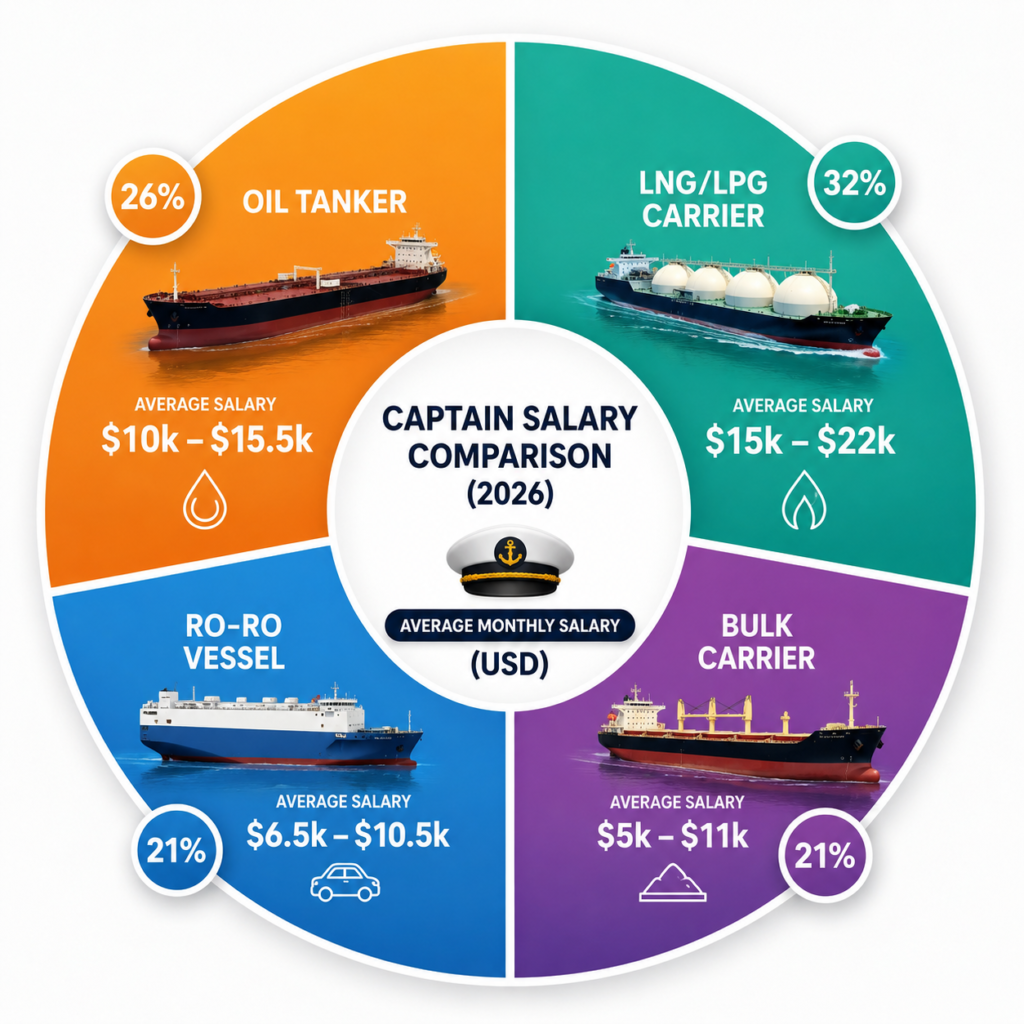
How Much Does a Ship Captain Earn?
Average monthly salaries in 2026 vary depending on vessel type, company, trading area, and experience.
Vessel Type
Average Monthly Salary
Bulk Carrier
USD 5,000–11,000
Ro-Ro Vessel
USD 6,500–10,500
Oil & Chemical Tanker
USD 10,000–15,500
LNG/LPG Carrier
USD 15,000–22,000
These figures are approximate industry averages.
Why Do Captain Salaries Differ So Much?
Many people wonder why captains performing the same rank receive very different salaries.
Several factors influence a captain’s earnings:
Type of vessel
Cargo carried
Trading area
Size of the vessel
Company reputation
Years of experience
English proficiency
Specialized training
Difficulty of recruitment
For example, captains working on LNG carriers or large chemical tankers usually earn significantly more than those working on small coastal cargo vessels. This is because these ships require advanced technical knowledge, stricter safety procedures, and experience operating in highly regulated environments.
Shipping companies compete for experienced captains who have demonstrated strong leadership, excellence
Although the profession offers attractive salaries, it also carries enormous responsibility and pressure. In today’s shipping industry, captains are expected not only to navigate safely but also to manage people, comply with international regulations, communicate effectively with shore management, and make critical decisions under challenging conditions.
Behind every successful voyage is a captain who balances experience, leadership, and responsibility to ensure that both the ship and her crew arrive safely at their destination.
Learn what merchant shipping is, how commercial ships work, different vessel types, cargo operations, navigation systems, and why shipping is the backbone of global trade.
Every product we use in our daily lives has a journey behind it.
The fuel that powers our cars, the food we consume, the raw materials used to build our homes, and even the devices we use every day all depend on one of the oldest industries in human history: merchant shipping.
For thousands of years, humans have searched for the easiest, safest, and most efficient ways to transport goods from one place to another. Among all transportation methods, ships have always provided the greatest advantage: the ability to carry enormous quantities of cargo over long distances with the lowest cost and energy consumption.
Ancient civilizations already understood the power of maritime transportation. The Egyptians used boats on the Nile River thousands of years ago to transport massive stones used in the construction of pyramids. Even with primitive technology, waterways provided the most efficient method to move heavy materials.
Today, this same principle continues on a global scale.
Modern merchant ships transport approximately the majority of global trade by volume, carrying billions of tons of cargo every year across oceans. Without shipping, international trade as we know it would not exist.
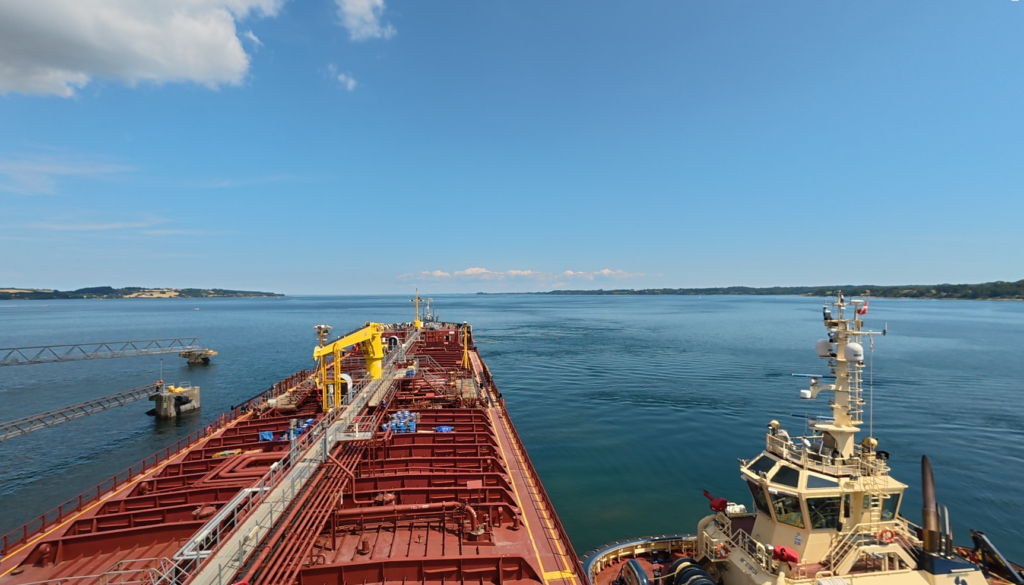
A single large tanker can carry hundreds of thousands of tons of crude oil in one voyage. A large container ship can transport tens of thousands of containers connecting continents. Bulk carriers deliver raw materials that keep factories operating around the world.
Shipping is not just an industry.
Shipping is the foundation of the global economy.
Why Is Merchant Shipping So Important?
Many people see ships only as large vessels moving on the ocean, but their real purpose is much bigger.
A ship is essentially a floating transportation system designed to move massive amounts of cargo with maximum efficiency.
For example, a large oil tanker may carry around 300,000 tons of crude oil.
To understand this capacity:
Density of crude oil: approximately 0.85 tons per cubic meter
300,000 tons of oil equals around 350,000 cubic meters
This represents approximately 350 million liters of oil
If one car fuel tank holds around 60 liters, this amount could theoretically fill 5,8 millions of vehicles at the same time which means can fill all tanks of cars in Los Angeles,United States.
Transporting this amount of cargo by air or road would be practically impossible and extremely expensive.
Aircraft are fast, but their carrying capacity is limited. Trucks are flexible, but they cannot compete with ships in terms of volume and cost.
A ship can travel thousands of miles carrying hundreds of thousands of tons while consuming relatively low energy per ton of cargo.
This is why maritime transportation remains the most economical and environmentally efficient method for international cargo movement.
What Is a Merchant Ship?
A merchant ship is a commercial vessel designed specifically to transport cargo or passengers for economic purposes.
Unlike naval vessels or private yachts, merchant ships operate as businesses. Their purpose is simple:
Carry cargo from one location to another safely, efficiently, and profitably.
Modern merchant ships are designed around one main principle:
Maximum cargo capacity with minimum operating cost.
As ships become larger, they can carry more cargo with fewer voyages, reducing the transportation cost per unit.
A simple comparison:
Instead of using your own car to transport one bag, imagine using a bus that can carry thousands of bags at the same time.
The bus requires more fuel than your car, but the cost is shared between thousands of passengers.
Ships work with the same logic.
How Big Are Modern Ships?
Ship sizes today are beyond what most people imagine.
The largest container ships can carry more than 20,000 TEU (Twenty-foot Equivalent Units).
A single voyage can transport:
Cars
Electronics
Machinery
Clothing
Food products
Industrial materials
These ships connect manufacturing centers in Asia with consumers in Europe, America, and other regions.
Large bulk carriers can transport around 200,000 tons or more of raw materials such as:
Iron ore
Coal
Grain
Fertilizers
These materials are essential for industries such as steel production, agriculture, and energy.
Oil tankers transport the energy resources that keep cities, factories, and transportation systems operating.
Without merchant ships, modern civilization would stop functioning.
Why Are Ships More Efficient Than Other Transportation Methods?
The biggest advantage of ships comes from physics.
Ships use buoyancy to stay afloat. The water supports a huge portion of the vessel’s weight, meaning the energy required to move cargo is much lower compared with land transportation.
A plane carrying cargo must overcome the full force of gravity throughout its flight.
A truck must overcome road friction and carry its own weight.
A ship mainly needs propulsion power to overcome water resistance.
This allows ships to transport enormous quantities of cargo with relatively low fuel consumption.
For example:
An aircraft may burn tens of tons of fuel during a flight while carrying only a limited amount of cargo.
A commercial ship may travel thousands of nautical miles carrying tens of thousands of tons of cargo with similar fuel consumption.
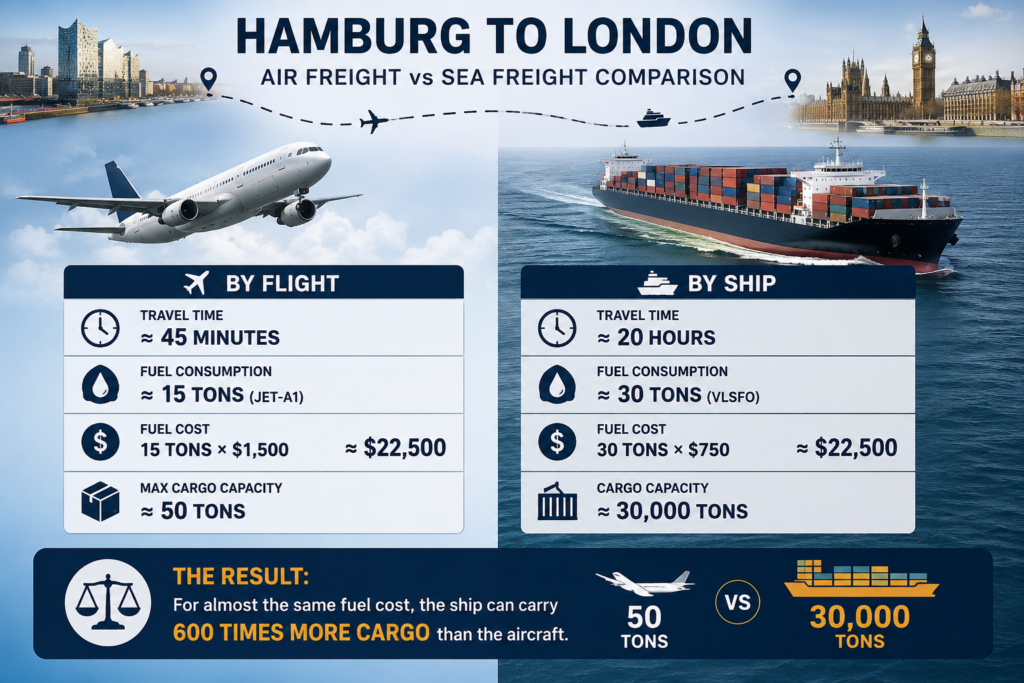
For an example from Hamburg to London it takes around 45 minutes by flight and total consumption of 15 tons of Jet-A1 , per ton appr. 1500 usd,same destination can take 20 hours by ship with cost of 30 tons of fuel ,per ton appr.750 usd, so flight can carry max 50 tons but vessel can carry 30.000 tons of cargo with almost same amount of consumption.
This efficiency is the reason shipping will remain the backbone of global trade for generations.
The Different Types of Merchant Ships
Because global trade involves thousands of different products, the shipping industry developed many specialized vessel types.
Each ship is designed according to the cargo it carries.
The main categories include:
Bulk carriers
Oil tankers
Chemical tankers
Container ships
Ro-Ro vessels
General cargo vessels
Gas carriers
Specialized vessels
Every vessel has a specific purpose, and choosing the correct ship type is critical for safe and economical transportation.
Bulk Carriers: The Giants Carrying the World’s Raw Materials
Bulk carriers are among the most important vessels in global trade because they transport the raw materials required for modern civilization.
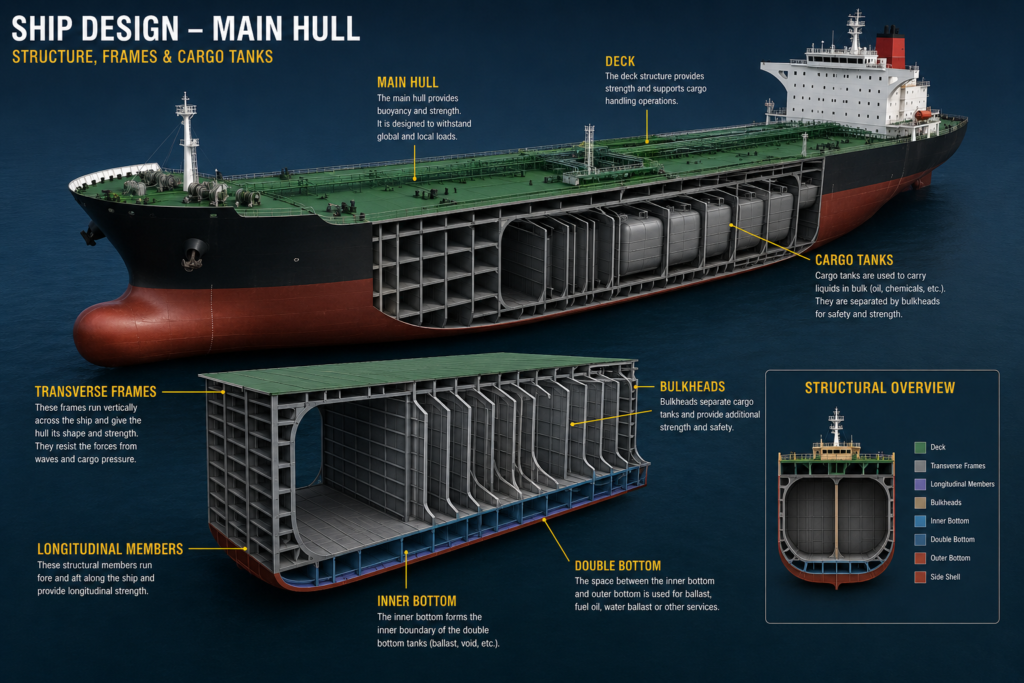
Unlike container ships that carry packaged goods, bulk carriers transport cargo directly inside large cargo holds.
Typical bulk cargo includes:
Coal
Iron ore
Grain
Wheat
Sugar
Fertilizers
Copper concentrate
Aluminum products
Scrap metal
These materials may not look valuable individually, but they are the foundation of industries worldwide.
For example:
A steel factory cannot operate without iron ore and coal. Agricultural production depends on fertilizers transported by bulk carriers. Food industries rely on grain shipments arriving from different continents.
Bulk carriers are categorized according to their size:
Handysize: Smaller vessels designed for ports with draft limitations
Supramax: Medium-sized vessels with flexible trading capability
Panamax: Ships designed to fit through the original Panama Canal dimensions
Capesize: Large vessels that transport massive quantities of raw materials
Very Large Ore Carriers (VLOC): Specialized vessels carrying extremely large amounts of iron ore
Depending on size, age, and condition, a bulk carrier can cost anywhere from several million dollars to over 100 million dollars.
Oil Tankers: Transporting the World’s Energy
Oil tankers are designed to transport petroleum products from production areas to refineries and consumers.
Since oil is one of the most important energy sources in the world, tanker ships play a critical role in maintaining global energy supply.
However, not all tankers are the same.
Different cargoes and trade routes require different ship designs.
The main tanker categories include:
VLCC
Suezmax
Aframax
MR Tankers
Chemical Tankers
VLCC (Very Large Crude Carrier)
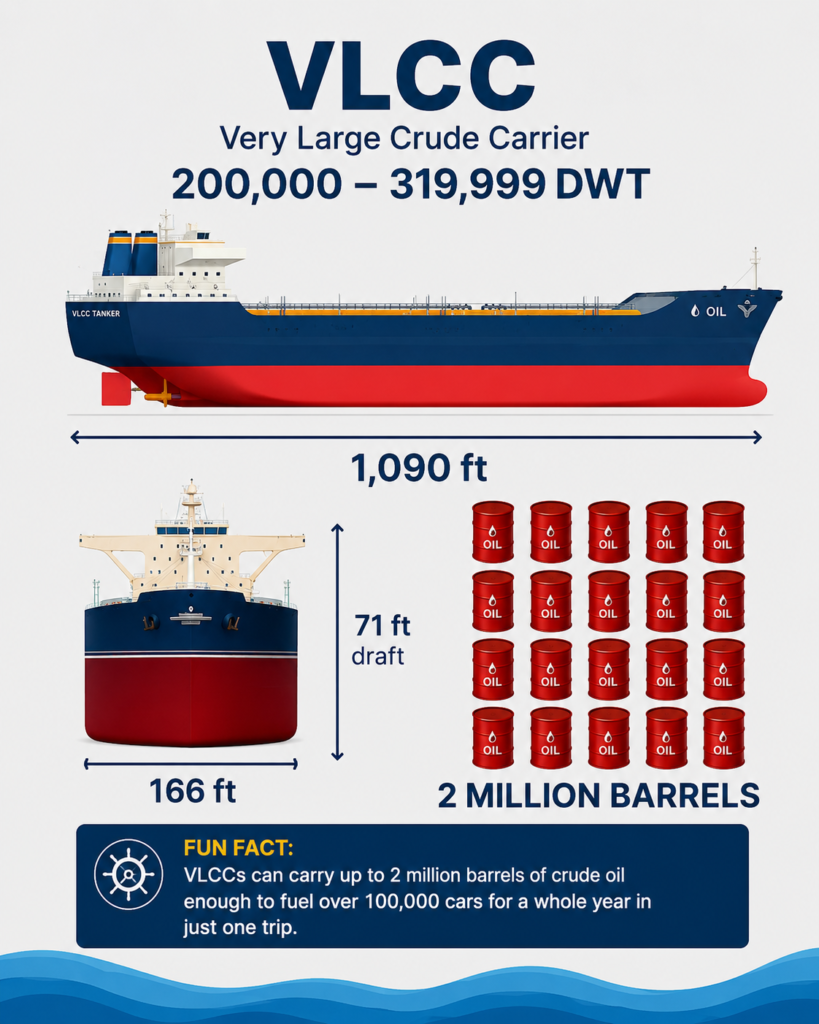
VLCCs are among the largest commercial vessels ever built.
Their main purpose is transporting crude oil from oil-producing countries to large refineries.
Typical characteristics:
Capacity: approximately 200,000–320,000 tons of cargo
Length: around 300 meters or more
Mainly used for long-distance international voyages
These vessels usually carry unrefined crude oil, which is later processed inside refineries to produce:
Gasoline
Diesel
Jet fuel
Lubricants
Other petroleum products
Because of their enormous capacity, VLCCs provide one of the lowest transportation costs per ton of oil.Since the hormuz strait crisis increased daily rate of these tankers massively increased in 2026 February to May, now on the market highest rate is 400.000 usd for a day of renting price of VLCC tanker.
Suezmax and Aframax Tankers
Not every port can accept the largest tankers.
Many terminals have limitations regarding:
Water depth
Loading equipment
Port infrastructure
For this reason, smaller tanker categories were developed.
Suezmax Tankers
The name comes from the Suez Canal.
These ships are designed to carry the maximum size allowed through the canal.
Typical capacity:
Around 120,000–200,000 tons of cargo
They are commonly used for crude oil transportation between major oil-producing and consuming regions.
Aframax Tankers
Aframax vessels are smaller than Suezmax tankers.
Typical capacity:
Around 70,000–120,000 tons
Their advantage is flexibility.
They can access more ports compared with larger vessels, making them valuable for regional oil transportation.Generally a VLCC brings cargo from UA to US and can not enter to port due to draft restriction then these tonnages go to anchorage conduct STS operation with VLCC then come to discharge in port.
MR Tankers: The Flexible Workhorses of Petroleum Transportation
MR stands for Medium Range tanker.
These vessels are among the most common and versatile ships in the tanker industry.
Typical capacity:
Approximately 30,000–50,000 tons
Unlike crude oil tankers, MR tankers often transport refined petroleum products such as:
Diesel oil
Gasoline
Jet fuel
Fuel oil
Vegetable oils
Biofuels
Their size provides a major advantage:
They can access thousands of ports around the world where larger tankers cannot operate.
This makes them extremely valuable for charterers and cargo owners.
For example, an MR tanker can transport fuel from Europe to Africa, Asia to Europe, or South America to China.
Their flexibility makes them one of the most important ship types in modern petroleum logistics.To be honest these are the best tankers you can work on, firstly worload is less compare to bigger or smaller ones and your system is not so complex , pumps are framo and all lines on deck , less technical issues , if you like port visits and less problems with long stay compare to chemical tankers and less job including tank washing,this is the vessel you should work on.
Chemical Tankers: The Specialists of the Maritime Industry
Chemical tankers are some of the most technically advanced vessels in shipping.
Their purpose is transporting liquid chemicals safely across oceans.
Unlike crude oil, chemical cargoes often have:
Higher value
Greater risks
More complex handling requirements
Chemical cargoes include:
Alcohols
Acids
Solvents
Fertilizer products
Paint materials
Additives
Pharmaceutical chemicals
Industrial raw materials
Examples include:
Methanol
Ethanol
Styrene Monomer
Fatty Acid Methyl Ester (FAME)
Vegetable oils
Various chemical derivatives
Why Are Chemical Tankers Smaller?
A common question is:
“If chemicals are valuable, why not transport them on huge tankers?”
The answer is efficiency.
Chemical products are usually produced in smaller quantities compared with crude oil.
A refinery may produce millions of tons of crude oil products, but specialized chemicals are often manufactured in smaller batches for specific industries.
Therefore, using a 300,000-ton tanker would be inefficient.
Chemical tankers usually range from:
2,000 DWT
10,000 DWT
20,000 DWT
Some chemical tankers can earn higher revenue than much larger vessels because they transport extremely valuable cargoes.
For example:
A tanker carrying 30,000 tons of fuel oil may transport cargo worth millions of dollars.
However, a chemical tanker carrying only a few thousand tons of a specialized chemical product may carry an equal or higher cargo value.
This is why chemical shipping requires advanced knowledge, strict procedures, and highly trained crews.
Ro-Ro Vessels: Floating Car Parks
Ro-Ro means Roll-On/Roll-Off.
These ships are designed to transport vehicles with wheels.
Instead of loading cargo using cranes, vehicles simply drive onto the vessel through large ramps.
Ro-Ro vessels carry:
Cars
Trucks
Buses
Construction machinery
Agricultural equipment
Military vehicles
Inside the ship are multiple vehicle decks with different heights.
Some decks are designed for:
Passenger cars
SUVs
Trucks
Heavy machinery
A large car carrier can transport thousands of vehicles during one voyage.
For example, transporting a luxury SUV internationally may generate significant revenue per vehicle, and thousands of vehicles together create a highly profitable voyage.
Because of their specialized design and complex internal structure, Ro-Ro vessels are expensive to build but essential for the global automotive industry.
General Cargo Vessels: The Flexible Transporters
General cargo vessels are designed to transport a wide variety of goods that do not fit into standard categories.
They may carry:
Machinery
Railway equipment
Industrial components
Project cargo
Large construction materials
Many industries depend on these vessels because some cargoes are too large, heavy, or unusual for container transportation.
For example:
Aircraft components, including parts manufactured for major aviation companies, may be transported by specialized general cargo vessels.
Their flexibility allows them to serve ports that larger ships cannot reach.
Specialized Ships: When Cargo Requires a Unique Solution
The shipping industry constantly changes according to global demand.
As new industries develop, new vessel designs appear.
Examples include:
LNG carriers for liquefied natural gas
LPG carriers for liquefied petroleum gas
Livestock carriers
Fruit carriers
Banana carriers
Wine carriers
Heavy-lift vessels
Every cargo has different requirements.
The ship must be designed around the cargo, not the other way around.
This is one of the reasons merchant shipping remains such a complex and fascinating industry.
Understanding Ship Design: How Is a Ship Built?
Although ships have different purposes, most vessels share the same fundamental components:
Hull
Machinery spaces
Deck areas
Accommodation
Cargo spaces
Bridge
Each part has a specific function that allows the vessel to operate safely.
The Main Structure of a Ship: Understanding How a Vessel Is Designed
A ship may look like a simple floating structure from the outside, but inside it is an extremely complex engineering system.
Every part of a vessel has a specific purpose. The design must consider:
Cargo capacity
Stability
Safety
Strength
Fuel efficiency
Crew living conditions
Environmental regulations
A modern ship is not only built to float. It must survive extreme weather conditions, carry thousands of tons of cargo, operate continuously for months, and protect the lives of everyone onboard.
Hull: The Foundation of Every Ship
The hull is the main body and structural foundation of the vessel.
It is the part that provides:
Buoyancy
Structural strength
Protection for cargo and machinery
Hydrodynamic efficiency
Unlike a simple steel box, a ship’s hull is carefully designed with complex shapes and reinforced structures to withstand enormous forces from waves, cargo weight, and the movement of the vessel.
A ship at sea is constantly exposed to pressure.
Imagine a vessel sailing through heavy weather where waves can reach 10–12 meters in height. Every wave creates massive forces trying to bend, twist, and stress the steel structure.
For this reason, ships are constructed using special marine-grade steel with carefully calculated:
Frames
Longitudinal strength members
Keels
Bulkheads
Reinforced areas
The keel is often described as the backbone of the ship because it provides the main longitudinal strength.
A simplified way to understand ship construction is:
First, engineers create the strongest structural foundation.
Then they build the remaining systems around it.
Just like a building needs a strong foundation before adding floors, a ship requires a strong hull before adding machinery, cargo spaces, and accommodation.
Machinery Space: The Power Center of the Vessel
The machinery space is where the ship’s main propulsion and supporting systems are located.
The most important equipment inside this area is the:
Main Engine
The main engine is responsible for producing the power required to move the vessel.
Unlike cars, which use relatively small engines, commercial ships use enormous marine engines designed to operate continuously for thousands of hours.
A ship engine can operate for months without stopping except for maintenance.
The required engine power depends on:
Ship size
Vessel type
Required speed
Operating conditions
For example:
A large container ship prioritizes speed because schedule reliability is critical.
Therefore, it may have a very powerful engine producing tens of thousands of horsepower.For better understanding Maersk Triple E class megaships have 85.000 horsepower engine.
A chemical tanker may prioritize fuel efficiency rather than speed.
For this type of vessel, a smaller but highly efficient engine may be more suitable.
Two-Stroke and Four-Stroke Marine Engines
Commercial ships mainly use two types of diesel engines:
Four-Stroke Engines
Four-stroke engines operate using a similar principle to automobile engines.
The cycle consists of:
Intake
Compression
Power
Exhaust
They are commonly used for:
Generators
Smaller vessels
Auxiliary machinery
Two-Stroke Engines
Most large commercial vessels use two-stroke engines.
These engines are completely different from car engines.
Advantages include:
Extremely high efficiency
Large power output
Long operational life
Ability to directly drive the propeller
The piston movement is slower but much more powerful.
A modern marine engine can have:
Pistons taller than a person
Turbochargers larger than a small vehicle
Individual components weighing several tons
These engines are specifically designed for moving enormous ships through difficult ocean conditions.
How Does a Ship Actually Move?
Producing engine power is only the beginning.
The engine must transfer this power into movement.
This happens through the propulsion system.
The basic process:
Main Engine → Shaft → Propeller → Thrust → Ship Movement
The engine rotates a long shaft connected to the propeller.
The propeller pushes water backward.
According to Newton’s Third Law:
Every action has an equal and opposite reaction.
The water pushed backward creates a force that moves the ship forward.
Types of Ship Propellers
Commercial vessels mainly use two types of propellers.
Fixed Pitch Propeller (FPP)
A fixed pitch propeller has permanent blade angles.
To change speed:
Engine RPM increases
Propeller rotates faster
Ship moves faster
This system is simple, reliable, and commonly used.
Controllable Pitch Propeller (CPP)
A controllable pitch propeller allows the blade angle to change.
The engine may maintain a constant RPM while the propeller adjusts the blade position.
Advantages:
Better maneuverability
Faster response
Improved control during port operations
CPP systems are common on vessels requiring frequent maneuvering.
Generators: The Ship’s Electrical Supply
The main engine moves the ship, but many other systems require electricity.
This power is produced by generators.
Generators supply electricity for:
Accommodation
Navigation equipment
Cargo pumps
Lighting
Communication systems
Refrigeration
Safety equipment
A ship is basically a floating city.
Even when the vessel is not moving, electrical systems must continue operating.
Boilers: Producing Heat for Ship Operations
Many ships also have boilers.
A boiler produces steam used for various purposes, especially onboard tankers.
Applications include:
Heating cargo
Heating fuel oil
Hot water production
Machinery systems
Some cargoes become too viscous at low temperatures.
For example, heavy fuel oil may require heating before it can be pumped or burned.
Without heating systems, cargo operations could become impossible.
Rudder: Controlling the Direction of the Ship
A ship needs a steering system to change direction.
This is the role of the rudder.
The rudder is located behind the propeller.
When the rudder changes position:
Water flow from the propeller changes direction
A force is created on the rudder
The ship changes course
However, large ships do not turn like cars.
Due to their enormous size and momentum, turning a vessel requires planning and time.
Bow Thruster: Helping During Maneuvering
Large ships have limited maneuverability at low speed.
To improve control in ports, many vessels use bow thrusters.
A bow thruster is a small propeller installed at the forward part of the ship.
It helps:
Move the bow sideways
Assist during berthing
Improve maneuvering ability
However, bow thrusters are effective only at low speeds.
They are mainly used during port operations and not during normal ocean passages.
Accommodation: Life at Sea
The accommodation area is where the crew lives.
Modern vessels provide:
Private cabins
Officer and crew mess rooms
Recreation areas
Gym facilities
Internet access
Common spaces
Life onboard can last several months, so crew welfare is extremely important.
Unlike older ships where several people shared cabins, many modern vessels provide single-person accommodation.
This gives seafarers:
Privacy
Rest after working hours
Personal space during long voyages
Although life at sea is challenging, modern ships provide much better living conditions compared with previous generations.
The Bridge: The Ship’s Command Center
The bridge is the navigation and control center of the vessel.
It is similar to the cockpit of an aircraft.
From the bridge, officers:
Navigate the vessel
Monitor traffic
Communicate with other ships
Plan routes
Control speed
Conduct maneuvering operations
The bridge contains advanced navigation systems that allow ships to safely cross oceans.
Modern Ship Navigation Systems: How Ships Find Their Way Across the Oceans
A ship may be thousands of miles away from land, surrounded only by water, with no visible landmarks to guide the crew.
So how does a vessel safely travel from one continent to another?
The answer is a combination of advanced navigation technology, professional knowledge, and careful planning.
Modern ships are equipped with highly sophisticated systems that allow officers to monitor:
The vessel’s position
Surrounding traffic
Water depth
Weather conditions
Planned route
Potential dangers
However, technology is only a tool.
A safe voyage still depends on the experience, decision-making, and attention of the crew.
The main navigation systems onboard commercial ships include:
ECDIS
Radar
AIS
Echo Sounder
Gyro Compass
Magnetic Compass
Autopilot
ECDIS: The Electronic Chart System
ECDIS stands for:
Electronic Chart Display and Information System
It is one of the most important navigation systems onboard modern vessels.
Before electronic navigation, seafarers used traditional paper charts.
These charts required constant manual updates whenever there was:
A change in navigation warnings
New underwater hazards
Buoy position changes
Port information updates
Officers had to apply corrections manually using official publications such as Notices to Mariners.
Today, ECDIS has transformed navigation.
Electronic charts can be updated digitally, allowing officers to receive the latest information quickly and accurately.
What Can ECDIS Show?
ECDIS provides essential information such as:
Ship position
Planned route
Safety depth
Water depth
Navigation warnings
Restricted areas
Buoy positions
Traffic information
Before every voyage, officers prepare a detailed passage plan using ECDIS.
This plan includes:
Departure point
Waypoints
Courses
Safety margins
Arrival route
The system continuously monitors the ship’s position and warns the crew if the vessel approaches danger.
For example:
If a vessel accidentally approaches shallow water or crosses a restricted area, ECDIS can immediately provide an alarm.
This makes navigation safer and more efficient.
Radar: The Eyes of the Ship
Radar is one of the oldest but most important navigation systems onboard.
The word radar comes from:
Radio Detection and Ranging
Radar allows the crew to detect objects even when human vision cannot.
This is especially important during:
Night operations
Fog
Heavy rain
Poor visibility
Congested waters
Radar sends electromagnetic waves toward the surrounding area.
When these waves hit an object, they return to the radar antenna.
By calculating the return time, the system determines:
Distance
Direction
Movement of targets
What Can Radar Detect?
Radar can identify:
Other ships
Land formations
Islands
Buoys
Floating objects
With correct settings, radar can even detect very small targets.
In calm conditions, experienced operators may observe small echoes such as birds or marine life.
However, radar interpretation requires experience.
Poor settings or incorrect understanding can create dangerous situations.
The officer must understand:
Weather effects
Sea clutter
Blind zones
Target movement
Radar is powerful, but human judgment remains essential.
AIS: The Identity System of Ships
AIS stands for:
Automatic Identification System
AIS allows ships to automatically exchange information with each other and with shore stations.
Every commercial vessel transmits important details, including:
Ship name
IMO number
Position
Speed
Course
Destination
Vessel type
Draft information
This system helps ships understand the movements of surrounding vessels.
For example:
If two ships are approaching each other, officers can see:
Which vessel is changing course
The expected closest distance
The other ship’s destination
The vessel’s identity
AIS greatly improves situational awareness.
However, AIS is not a replacement for radar.
A vessel may have:
AIS turned off
Incorrect information entered
Technical problems
Therefore, officers always use AIS together with radar and visual observations.
Echo Sounder: Measuring the Depth Below the Ship
A ship cannot safely navigate without knowing the depth of water beneath it.
This is the purpose of the echo sounder.
The system works similarly to how dolphins use sound waves.
A sensor located under the vessel sends a sound pulse toward the seabed.
The pulse travels downward, hits the bottom, and returns.
By measuring the time required for the signal to return, the system calculates water depth.
Why Is Depth Measurement Important?
Large vessels may have drafts of more than 10 meters.
In shallow waters, a small error in depth calculation can create a grounding risk.
Echo sounders are especially important during:
Port approaches
Channel navigation
Anchorage operations
Shallow water passages
Modern systems continuously display depth information on the bridge.
Gyro Compass: The True Direction Finder
A compass is essential because a ship must know its direction at all times.
Modern ships mainly use gyro compasses.
A gyro compass provides:
True north reference
Accurate heading information
Reliable navigation data
Unlike a magnetic compass, a gyro compass is not affected by Earth’s magnetic field.
This makes it more accurate, especially for large steel vessels.
The gyro compass provides information to:
ECDIS
Radar
Autopilot
Other navigation systems
Magnetic Compass: The Emergency Backup
Although modern vessels use gyro compasses, every ship still carries a magnetic compass.
Why?
Because safety systems require redundancy.
If there is a major electrical failure, the magnetic compass can provide a basic heading reference.
It works using Earth’s magnetic field and does not require electrical power.
Simple systems can become lifesaving during emergencies.
Autopilot: Automatic Steering System
Imagine steering a ship manually for several days during an ocean voyage.
It would be extremely difficult and exhausting.
This is why ships use autopilot systems.
The officer selects a desired course.
The autopilot automatically controls the steering system to maintain that heading.
Advantages include:
Reduced workload
Improved fuel efficiency
More consistent steering
Better voyage management
However, autopilot is not completely independent.
Officers must always monitor:
Traffic conditions
Weather
System performance
In restricted waters, heavy traffic, or port approaches, ships are usually manually controlled by officers.
The Human Element in Navigation
Although modern ships have advanced technology, navigation is not simply pressing buttons.
A professional navigator must understand:
Weather patterns
Ocean currents
Ship behavior
Collision regulations
Equipment limitations
Emergency procedures
A computer can calculate a route.
But a skilled officer decides whether that route is safe.
Technology supports seafarers.
It does not replace them.
The Purpose of Every Ship: Carrying Cargo
All these systems exist for one main reason:
To transport cargo safely from one destination to another.
A ship without cargo capability cannot generate revenue.
Cargo operations are therefore the heart of merchant shipping.
Especially on tanker vessels, cargo handling requires extreme attention because ships may carry thousands of tons of:
Flammable liquids
Toxic chemicals
Petroleum products
Dangerous substances
A small mistake can cause:
Pollution
Fire
Explosion
Loss of life
Financial damage
For this reason, cargo operations are among the most important responsibilities onboard.
Tanker Cargo Operations: How Thousands of Tons of Liquid Cargo Are Controlled Safely
Among all merchant ships, tankers require some of the most complex cargo operations.
A tanker is not simply a vessel that carries liquid inside tanks.
It is a highly specialized system designed to transport dangerous and valuable cargo safely while protecting:
The crew
The vessel
The environment
The cargo itself
A modern oil or chemical tanker may carry tens of thousands of tons of petroleum products or chemicals.
Imagine having 30,000 tons of flammable liquid inside a vessel surrounded by nothing but ocean.
The responsibility is enormous.
Every operation must be carefully planned and controlled.
The Cargo Planning Process
Before a tanker starts a voyage, the vessel receives detailed voyage instructions from the company or charterer.
These instructions include:
Cargo type
Cargo quantity
Density
Loading temperature
Discharge port
Special requirements
Compatibility information
The vessel’s officers must analyze this information and confirm whether the ship can safely perform the operation.
Before loading begins, the cargo officer prepares a:
Cargo Plan
The cargo plan determines:
Which tanks will be used
Cargo distribution
Loading sequence
Maximum filling levels
Stability condition
Stress limitations
The plan must consider the ship’s:
Draft
Trim
Stability
Structural strength
A tanker cannot simply fill tanks randomly.
Every action affects the vessel.
Loading Operation: Bringing Cargo Onboard
When the ship arrives at the loading terminal, communication begins between:
Ship officers
Terminal operators
Surveyors
Cargo representatives
Before cargo transfer starts, both sides agree on a:
Ship-Shore Safety Checklist
This confirms important safety points such as:
Correct cargo connection
Emergency shutdown procedures
Communication methods
Fire protection readiness
Mooring safety
Pollution prevention measures
Only after all safety requirements are completed can loading begin.
Cargo Lines and Loading Pressure
Cargo transfer happens through large pipelines connected between the vessel and terminal.
The loading rate depends on:
Pipe diameter
Terminal capacity
Ship system limitations
Tank pressure
The ship must inform the terminal about its maximum allowable loading rate.
If cargo enters too quickly:
Pressure can increase
Cargo lines may fail
Tank ventilation systems may become overloaded
A simple example:
Imagine filling a closed bottle with liquid while air is trapped inside.
The trapped air creates pressure.
A cargo tank works with the same principle.
If pressure is not controlled, dangerous situations can occur.
Cargo Tanks: The Heart of a Tanker
Unlike bulk carriers that use cargo holds, tankers use enclosed cargo tanks.
These tanks are specially designed to transport liquid products safely.
Depending on the vessel type, tanks may have:
Coated Steel Tanks
Many oil and chemical tankers use special epoxy coatings.
These coatings:
Protect the steel
Prevent contamination
Resist chemical reactions
Stainless Steel Tanks
Chemical tankers carrying highly aggressive cargoes may use stainless steel tanks.
Advantages:
High corrosion resistance
Better cargo compatibility
Longer lifetime
The tank material depends on the cargo requirements.
Tank Cleaning: Preparing for the Next Cargo
One of the most important tanker operations is tank cleaning.
A tanker may carry one cargo today and a completely different cargo on the next voyage.
For example:
A vessel may transport fuel oil and later need to load vegetable oil or chemicals.
The cargo tanks must be cleaned according to strict procedures.
Tank cleaning may involve:
Fresh water washing
Sea water washing
Chemical cleaning
Ventilation
Drying
Inspection
Modern tankers use fixed tank washing machines installed inside tanks.
These machines rotate using water pressure and clean internal surfaces.
The cleaning standard depends on the next cargo requirement.
Some sensitive cargoes require extremely high cleanliness standards.
Cargo Monitoring Systems
A tanker cannot depend on manual measurement for thousands of tons of cargo.
Imagine trying to manually calculate:
10 cargo tanks
30,000 tons of liquid
Different temperatures
Changing levels
This would be impossible.
Therefore, tankers use advanced monitoring systems.
Tank Radar System
Tank radar is an automatic level measurement system.
It uses radar technology installed on the top of cargo tanks.
The system sends signals toward the cargo surface.
By measuring the return signal, it calculates:
Cargo level
Volume
Quantity
The information is displayed in the:
Cargo Control Room (CCR)
From the CCR, officers can monitor:
Tank levels
Cargo temperatures
Tank pressure
Loading progress
Discharging progress
Cargo Temperature Monitoring
Temperature is extremely important for tanker operations.
Some cargoes require specific temperatures because:
They become too thick when cold
They may react at high temperatures
Their quality can change
Cargo tanks usually have multiple temperature sensors:
Bottom level
Middle level
Top level
This allows officers to understand the complete condition of the cargo.
Cargo Tank Pressure Control
Every cargo tank has a ventilation system.
Why?
Because liquid cargo creates vapor.
During loading:
Liquid enters the tank
Vapor space becomes smaller
Pressure increases
During discharge:
Liquid leaves the tank
Pressure decreases
Without proper pressure control:
Tank deformation
Equipment damage
Cargo release
Explosion risk
could occur.
Tank pressure is continuously monitored.
Inert Gas System: Preventing Fire and Explosion
One of the most important safety systems on oil tankers is the:
Inert Gas System (IGS)
The purpose of inert gas is simple:
Reduce oxygen inside cargo tanks to prevent combustion.
A fire requires three elements:
Fuel
Oxygen
Ignition source
This is known as the fire triangle.
Remove oxygen, and combustion becomes extremely difficult.
How Does Inert Gas Work?
The inert gas system produces gas with very low oxygen content.
On modern tankers, the oxygen concentration of inert gas is approximately:
Below 5%
In some systems, nitrogen generation can reduce oxygen levels even further.
The gas is sent through:
Inert gas main line
Deck water seal
Isolation valves
Tank distribution system
into cargo tanks.
This creates a safe atmosphere above the cargo.
Why Is Oxygen Control So Important?
Petroleum vapors can become extremely dangerous when mixed with air.
If oxygen concentration reaches a flammable range and an ignition source appears, an explosion can occur.
By maintaining low oxygen levels:
Explosion risk decreases
Cargo operations become safer
Tank atmosphere remains controlled
This system is especially important during:
Loading
Discharging
Tank cleaning
Voyage periods
Discharging Cargo: Delivering the Product
After arriving at the discharge port, the process is carefully repeated.
The vessel communicates with the terminal and confirms:
Discharge plan
Cargo quantity
Pumping rate
Safety procedures
Tankers usually use their own cargo pumps.
These pumps are extremely powerful and designed to transfer thousands of tons of liquid efficiently.
Cargo pumps can be driven by:
Electric motors
Hydraulic systems
After completing discharge:
Tanks are checked
Cargo figures are calculated
Documentation is completed
The vessel prepares for the next voyage
Ballast Operations: Keeping the Ship Safe Without Cargo
A ship cannot operate safely without proper stability.
When a tanker is fully loaded, cargo provides weight and keeps the vessel correctly positioned in water.
But what happens when the cargo is discharged?
The ship becomes lighter.
To maintain safe navigation, ships take seawater into special tanks called:
Ballast Tanks
Ballast water helps control:
Stability
Draft
Trim
Propeller immersion
Structural stress
A large tanker may carry thousands of tons of ballast water.
Ballast Operations, Stability, and Environmental Protection: How Ships Stay Safe at Sea
A ship is designed to operate in many different conditions.
It may sail fully loaded with cargo, partially loaded, or completely empty.
However, a vessel cannot simply float safely without proper weight distribution.
One of the most important systems that allows ships to remain stable is the ballast system.
Ballast operations are a fundamental part of ship management because every change in weight affects:
Stability
Draft
Trim
Structural strength
Propeller efficiency
Safety during navigation
What Is Ballast Water?
Ballast water is seawater taken onboard into dedicated tanks to improve the vessel’s condition when cargo weight is insufficient.
When a tanker discharges its cargo, it loses thousands of tons of weight.
Without ballast:
The ship may rise too high out of the water
The propeller may not be fully submerged
Stability may become unsafe
The vessel may experience excessive movement in waves
By taking ballast water, the ship increases its draft and returns to a safer operating condition.
Where Are Ballast Tanks Located?
Ballast tanks are specially designed spaces separated from cargo areas.
They are usually located:
Along the sides of cargo tanks
Below cargo tanks
In forward and aft sections
Many tankers use a design called:
Segregated Ballast Tanks (SBT)
This means ballast water has completely separate tanks from cargo tanks.
The advantage is:
No contact between ballast water and oil cargo
Reduced pollution risk
Safer environmental operation
Why Is Stability So Important?
Every action onboard changes the ship’s balance.
Loading cargo, discharging ballast, transferring fuel, or moving liquids between tanks can affect:
List (sideways inclination)
Trim (difference between forward and aft draft)
Stability
Hull stress
A ship is not a rigid object.
It is a flexible steel structure floating in water.
Improper weight distribution can create excessive forces on the hull.
Over time, this can contribute to:
Structural cracks
Leakage
Damage to tanks
Reduced vessel lifetime
Officers continuously monitor stability calculations during cargo and ballast operations.
Understanding Ship Stress
Large vessels experience different forces while sailing.
The most important structural forces include:
Bending Moments
A ship can bend because of uneven wave support.
Imagine a ship sitting on two waves:
The bow and stern supported by waves
The middle section unsupported
This creates bending stress.
The opposite situation can also occur when the middle of the vessel is supported by a wave.
Shear Forces
Shear forces occur when different sections of the ship experience different loads.
Incorrect cargo distribution can increase these forces.
For this reason, cargo loading is not only about filling tanks.
It is about maintaining the correct balance.
Ballast Water and Marine Pollution
Ballast water creates another environmental challenge.
Imagine a ship loading ballast water from one region and later releasing it thousands of miles away.
That water may contain:
Small organisms
Bacteria
Marine species
Parasites
Microorganisms
When introduced into a different ecosystem, these organisms can become invasive species.
They may:
Damage local marine life
Compete with native species
Create ecological problems
Because of this risk, international regulations require ships to treat ballast water before discharge.
Ballast Water Treatment Systems (BWTS)
Modern ships are equipped with Ballast Water Treatment Systems.
The purpose is:
Remove or neutralize harmful organisms before ballast water is released.
There are several treatment technologies.
The most common systems include:
UV treatment systems
Electrolysis-based systems
UV Ballast Water Treatment Systems
The first method uses:
Ultraviolet Radiation
The process:
Seawater enters the ship through the sea chest
Filters remove larger particles
Water passes through UV chambers
UV radiation damages microorganisms
UV treatment does not add chemicals into the water.
Advantages:
Environmentally friendly
No chemical storage required
Simple operation
UV systems can eliminate a very high percentage of microorganisms when operated correctly.
Electrolysis-Based Ballast Water Treatment Systems
Another common method uses electrolysis.
The process:
Seawater passes through filters
Electrolysis creates active substances
These substances destroy microorganisms
Treated water enters ballast tanks
The principle is similar to how chlorine is used to disinfect drinking water.
Advantages:
Effective against many organisms
Suitable for large volumes of water
Provides strong treatment capability
However, the system requires careful monitoring because chemical levels must remain within approved limits.
The Importance of Environmental Regulations
Modern shipping is heavily regulated.
The industry must balance:
Economic efficiency
Safety
Environmental protection
International regulations cover:
Ballast water management
Oil pollution prevention
Air emissions
Garbage disposal
Cargo handling
Shipping has changed significantly compared with previous decades.
Modern vessels are designed not only to transport cargo but also to minimize their impact on the environment.
Ship Safety Systems: Protecting Lives at Sea
Safety is the highest priority onboard every commercial vessel.
Whether the ship is:
An oil tanker
Chemical tanker
Container ship
Bulk carrier
Ro-Ro vessel
every crew member must be prepared for emergencies.
A ship is a self-contained workplace operating far from immediate assistance.
If an emergency occurs at sea, help may take hours or even days to arrive.
Therefore, ships must be capable of responding independently.
Why Are Safety Systems So Important?
A vessel contains many potential hazards:
Large machinery
High temperatures
Electrical systems
Heavy equipment
Fuel
Chemicals
Dangerous cargo
Possible emergencies include:
Fire
Explosion
Flooding
Collision
Grounding
Machinery failure
Man overboard
Abandon ship situations
International maritime regulations require ships to carry approved safety equipment and conduct regular emergency drills.
Fire Safety Systems Onboard
Fire is one of the greatest risks at sea.
A ship contains many sources of ignition:
Engines
Electrical equipment
Fuel systems
Hot surfaces
For this reason, ships use multiple layers of fire protection.
These include:
Fire detection systems
Fire alarms
Fire pumps
Fire hoses
Fixed firefighting systems
Emergency shutdown systems
The objective is not only to extinguish fires but to prevent them from spreading.
Life-Saving Appliances
Because ships operate far from land, every vessel must have equipment to protect human life during emergencies.
Examples include:
Lifeboats
Designed to evacuate crew if the ship cannot remain afloat.
Life Rafts
Inflatable survival equipment used during abandonment.
Immersion Suits
Protect people from cold water exposure.
Life Jackets
Provide flotation and survival support.
Regular inspections and drills ensure crew members know how to use this equipment.
Advanced Ship Safety Systems: How Modern Ships Protect Lives During Emergencies
A ship at sea is isolated from immediate assistance.
Unlike a building on land, where firefighters, hospitals, and emergency services may arrive within minutes, a vessel may be hundreds of nautical miles away from the nearest support.
For this reason, ships must be prepared to handle emergencies independently.
Modern commercial vessels use a combination of:
Communication systems
Fire protection systems
Emergency equipment
Life-saving appliances
Crew training and procedures
The goal is simple:
Prevent accidents whenever possible, and survive if an emergency occurs.
GMDSS: The Global Maritime Distress and Safety System
One of the most important safety systems onboard is:
GMDSS
Global Maritime Distress and Safety System
GMDSS is an internationally recognized communication system designed to ensure that ships can send and receive emergency information anywhere in the world.
Before GMDSS, ships mainly depended on traditional radio communication and visual signals.
Today, modern technology allows vessels to quickly communicate with:
Other ships
Coastal stations
Rescue coordination centers
Company offices
Authorities
How Does GMDSS Work?
GMDSS uses several communication technologies, including:
Satellite communication systems
VHF radio
MF/HF radio
Emergency position transmitters
Digital selective calling systems
Each system has a specific purpose.
Satellite Communication
Satellite systems allow ships to communicate even when they are far from land.
They can transmit:
Distress messages
Safety information
Weather updates
Operational communication
For example, if a vessel experiences a serious emergency in the middle of the ocean, satellite communication can immediately send information about:
Ship identity
Position
Nature of emergency
Required assistance
VHF Radio Communication
VHF radio is one of the most commonly used communication systems onboard.
It is mainly used for:
Ship-to-ship communication
Port communication
Pilot communication
Emergency situations
VHF has limited range compared with satellite systems, but it is essential during coastal navigation and port operations.
MF/HF Radio Systems
MF and HF radios provide longer-range communication.
They are especially useful in areas where satellite communication may not be available.
These systems allow vessels to communicate over very large distances.
Emergency Position Indicating Radio Beacon (EPIRB)
The EPIRB is a critical emergency device.
If a ship has to abandon the vessel, the EPIRB can automatically transmit:
Ship identity
Emergency signal
Position information
Rescue authorities can use this information to locate survivors.
Search and Rescue Transponders (SART)
SART devices help rescue teams locate survival craft.
When activated:
It responds to radar signals
Creates a visible indication on rescue radar screens
This helps rescuers find:
Lifeboats
Life rafts
Survivors
during difficult conditions.
Fire Protection Systems Onboard
Fire is one of the most dangerous emergencies on any ship.
A vessel contains many possible sources of fire:
Fuel
Lubricating oil
Electrical equipment
Machinery
Cargo vapors
Especially on oil and chemical tankers, fire prevention is extremely important because cargo may be:
Flammable
Toxic
Explosive
Fire Detection Systems
Modern ships use automatic fire detection systems.
These systems monitor areas such as:
Engine rooms
Accommodation
Cargo pump rooms
Storage spaces
Sensors detect:
Smoke
Heat
Flame
When abnormal conditions are detected, alarms are activated immediately.
Fixed Firefighting Systems
Some areas require special firefighting systems because normal water hoses are not suitable.
Examples include:
CO₂ Firefighting System
Used mainly in machinery spaces.
Carbon dioxide removes oxygen from the fire area, stopping combustion.
However, because CO₂ is dangerous to humans, strict procedures must be followed before activation.
Foam Systems
Foam is commonly used for:
Oil fires
Fuel fires
Cargo deck protection
Foam creates a layer that separates fuel from oxygen.
Water Mist Systems
Water mist systems use very small water droplets.
Advantages:
Rapid cooling
Lower water consumption
Effective heat absorption
Emergency Shutdown Systems
On tankers, emergency shutdown systems are extremely important.
During dangerous situations, cargo operations can be stopped immediately.
Examples:
Closing cargo valves
Stopping pumps
Isolating systems
The purpose is to prevent a small problem from becoming a major disaster.
Abandon Ship Procedures
The decision to abandon a ship is one of the most serious decisions at sea.
A vessel is abandoned only when remaining onboard becomes more dangerous than leaving.
Possible reasons include:
Uncontrollable fire
Severe flooding
Structural failure
Sinking risk
Every crew member must know:
Emergency signals
Muster station location
Lifeboat procedures
Personal duties
Lifeboats: The Last Line of Survival
Lifeboats are designed to keep people alive after leaving the vessel.
Modern lifeboats include:
Engines
Navigation equipment
Emergency supplies
Food and water
Communication equipment
Protection from weather
They are regularly inspected and tested.
Crew members perform drills to ensure everyone understands their responsibilities.
Man Overboard Safety
A person falling into the sea is one of the most urgent emergencies onboard.
A trained crew reacts faster and makes better decisions during real emergencies.
The Human Factor: The Most Important Safety System
Despite advanced technology, the most important safety system onboard is still:
The human being.
A modern ship can have:
Powerful engines
Advanced navigation
Automated systems
Emergency equipment
But poor decisions can still create dangerous situations.
Professional seafarers must combine:
Knowledge
Experience
Discipline
Teamwork
Continuous learning
Safety culture is built by every person onboard.
Life at Sea: More Than Just a Job
Merchant shipping is not only about machines and cargo.
It is also about people.
Thousands of seafarers around the world spend months away from home to keep global trade moving.
They operate ships through:
Storms
Long voyages
Difficult conditions
Remote areas
Behind every product transported around the world, there are crews working silently at sea.
Final Thoughts: Why Merchant Shipping Will Always Matter
Merchant shipping is one of humanity’s oldest industries, but it remains one of the most important.
From ancient boats transporting stones along rivers to modern vessels carrying hundreds of thousands of tons across oceans, the purpose has remained the same:
Move goods safely and efficiently from one place to another.
Ships connect countries, support economies, provide energy, transport food, and supply industries.
Without merchant shipping:
Factories would stop
Energy supplies would decrease
International trade would collapse
The ocean is not an empty space between continents.
It is the highway of global civilization.
With more than a decade of experience working at sea, my goal is to explain this world from the inside — beyond the images shown in the news and movies.
Artificial Intelligence (AI) is becoming one of the most influential technologies shaping the future of the shipping industry. From improving vessel safety to optimizing operational efficiency, AI solutions are helping maritime companies make smarter decisions.
Modern ships are using AI-powered systems to analyze large amounts of operational data, monitor equipment performance, predict maintenance requirements, and improve fuel efficiency. These technologies help reduce downtime and enhance overall vessel reliability.
AI is also supporting advanced navigation systems by assisting crews with route optimization, weather analysis, and collision avoidance. By combining human expertise with intelligent technology, shipping operations can become safer and more efficient.
As the maritime industry continues its digital transformation, artificial intelligence will play an important role in creating smarter, safer, and more sustainable shipping solutions.
Becoming a deck officer is a rewarding career choice for individuals interested in navigation, leadership, and life at sea. Deck officers play a vital role in vessel operations, ensuring safe navigation, cargo management, and compliance with international maritime regulations.
The journey typically begins with maritime education and training at an approved maritime academy. Aspiring officers must develop knowledge in navigation, ship handling, safety procedures, communication systems, and marine regulations.
After completing academic training, cadets gain practical experience through onboard sea service. This hands-on experience helps them understand real-world ship operations and prepare for professional certification examinations.
A successful deck officer requires strong decision-making abilities, teamwork, leadership skills, and commitment to continuous learning. With experience and further qualifications, officers can progress to senior positions such as Chief Officer and Master Mariner.
Life at sea is unlike any other profession. Seafarers operate in one of the world’s most challenging environments, managing complex responsibilities while spending weeks or months away from home.
Modern vessels require highly skilled professionals who can handle navigation, engineering operations, safety procedures, emergency response, and international maritime regulations. Every voyage brings new challenges, from changing weather conditions to maintaining teamwork in a multicultural crew environment.
Despite the challenges, a career at sea offers unique opportunities. Seafarers gain valuable technical experience, travel across the world, develop leadership skills, and contribute to the global economy by keeping international trade moving.
With advances in technology, improved safety standards, and better crew welfare programs, the maritime industry continues to evolve and create new opportunities for future generations of maritime professionals.
Join Our Seafarers Community
Stay connected with seafarers worldwide. Get maritime news, professional updates, industry insights, and project announcements directly in your inbox.
This website uses cookies
We use cookies to personalize content, provide social media features, and analyze our traffic. We also share information about your use of our site with our analytics partners. You can change your preferences at any time.