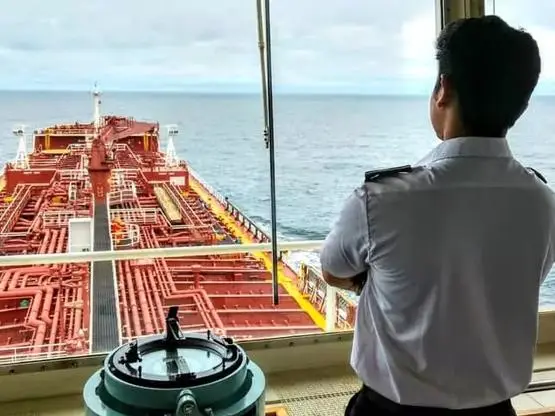
The Chief Officer, also known as the Chief Mate, is the senior deck officer and second-in-command on a merchant ship.
While the Master has overall command and ultimate responsibility for the safety and security of the vessel, the Chief Officer is heavily involved in the ship’s day-to-day deck operations. Cargo handling, deck maintenance, crew supervision, training, safety, inspections and many aspects of shipboard planning fall within the Chief Officer’s area of responsibility.
On tankers, the role becomes even more demanding because cargo operations involve dangerous and sometimes highly toxic products, complex tank systems, inert gas, cargo pumps, tank cleaning, gas monitoring and strict safety procedures.
The international STCW framework defines the Chief Mate role at the management level and requires competence in areas including navigation, cargo handling and stowage, ship operations, maintenance and repair. It also requires a Chief Mate to be capable of assuming the Master’s responsibilities when necessary.
But what does a Chief Officer actually do during a normal day onboard?
The answer is much more than simply supervising the deck crew.
Who Is the Chief Officer?
The Chief Officer is the senior deck officer immediately below the Master in the ship’s command structure.
A simple way to understand the position is this:
The Master has overall command of the ship, while the Chief Officer manages a major part of the vessel’s daily deck, cargo, maintenance and safety operations.
The Chief Officer normally coordinates the deck department and works closely with the Master, Second Officer, Third Officer, Bosun, Able Seafarers and other crew members.
The position also carries significant responsibility for cargo operations. Under the STCW management-level standards, Chief Mates must be competent to plan and ensure safe loading, stowage, securing, care during the voyage and unloading of cargo.
On a tanker, this can involve thousands or tens of thousands of tonnes of petroleum or chemical cargo.
That means a Chief Officer must understand not only how to operate equipment, but also how cargo operations affect:
- Ship stability
- Hull stress
- Trim and draft
- Tank pressure
- Cargo temperature
- Cargo segregation
- Pollution prevention
- Personnel safety
- Terminal requirements
- Loading and discharge rates
What Does a Chief Officer Do?
The exact responsibilities vary according to the ship type, company procedures, Safety Management System (SMS), flag-state requirements and the vessel’s equipment.
However, the Chief Officer commonly has responsibility for the following areas.
1. Cargo Operations
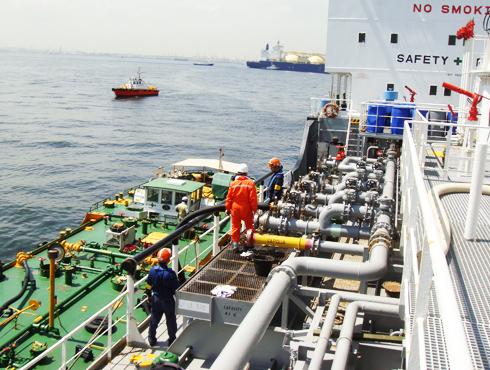
Cargo operations are among the most important responsibilities of a Chief Officer.
Depending on the vessel, this can include:
- Cargo planning
- Loading and discharge
- Ballasting and deballasting
- Cargo tank monitoring
- Cargo pump operations
- Tank cleaning
- Cargo line and valve management
- Cargo temperature monitoring
- Cargo documentation
- Communication with terminals
- Coordination with cargo surveyors
- Cargo calculations
- Stability and stress considerations
On tankers, cargo planning must also consider segregation requirements, cargo compatibility, tank condition, inert gas requirements and the vessel’s maximum permissible loading conditions.
The STCW Code specifically requires management-level competence in planning and executing cargo operations safely and in accordance with applicable regulations and procedures.
2. Deck Maintenance
The Chief Officer is normally responsible for planning and supervising maintenance of the vessel’s hull, deck machinery, cargo equipment and associated systems.
This doesn’t mean the Chief Officer personally repairs every piece of equipment.
Instead, the Chief Officer plans the work, assigns responsibilities, supervises the crew, checks the condition of equipment and ensures that maintenance is properly recorded in the vessel’s Planned Maintenance System (PMS).
A routine maintenance program may include inspections of:
- Pilot ladders
- Mooring ropes
- Mooring winches
- Windlasses
- Anchors and cables
- Cargo cranes
- Cargo hoses and connections
- Cargo pipelines
- Cargo valves
- Tank cleaning systems
- Cargo pumps
- Tank monitoring equipment
- Tank coatings
- Ballast tanks
- Deck fittings
- Safety equipment
3. Crew Management and Training
A Chief Officer is also a manager.
The deck crew needs clear instructions about what has to be done, how it should be done and what safety precautions are required.
The Chief Officer may organize:
- Daily deck work
- Maintenance teams
- Cargo operation teams
- Mooring operations
- Tank cleaning teams
- Safety drills
- Familiarization
- Training for junior officers and ratings
- Toolbox meetings
- Risk assessments and work permits
Good leadership is extremely important.
A Chief Officer who knows everything technically but cannot communicate clearly with the crew can still create serious operational problems.
4. Safety and Accident Prevention
Safety is integrated into almost everything a Chief Officer does.
The Chief Officer may be involved in:
- Risk assessments
- Permit-to-work systems
- Enclosed-space entry
- Hot work
- Working aloft
- Mooring safety
- Cargo safety
- Tank cleaning safety
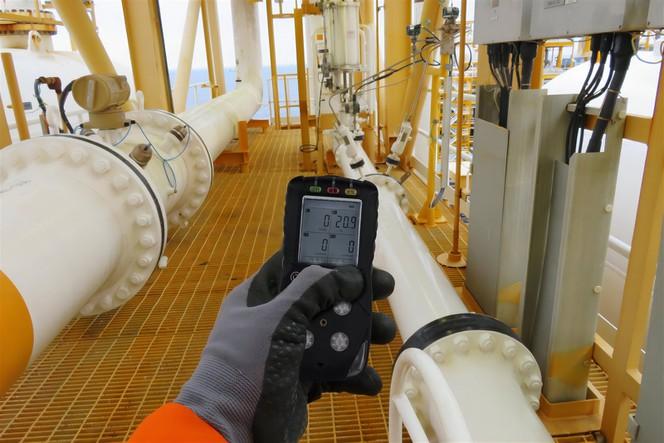
- Gas testing
- Emergency preparedness
- Near-miss reporting
- Accident investigation
- Corrective actions
The Chief Officer also needs to keep the Master informed about important operational issues, deficiencies, accidents, near misses, cargo problems and safety concerns.
5. Ship Security
On many merchant ships, the Chief Officer may also be designated as the Ship Security Officer (SSO), depending on the company’s organization and the vessel’s approved security arrangements.
The ISPS Code requires ships to have appropriate security officers and personnel, but the appointment of the SSO is a company/flag-state matter rather than a universal requirement that the Chief Officer must hold the position. The Master retains ultimate responsibility for ship safety and security.
Security-related duties can include:
- Controlling access to the vessel
- Monitoring visitors
- Checking identification
- Stowaway prevention
- Security rounds
- Security drills
- Searches when required
- Implementing the Ship Security Plan
- Reporting security incidents
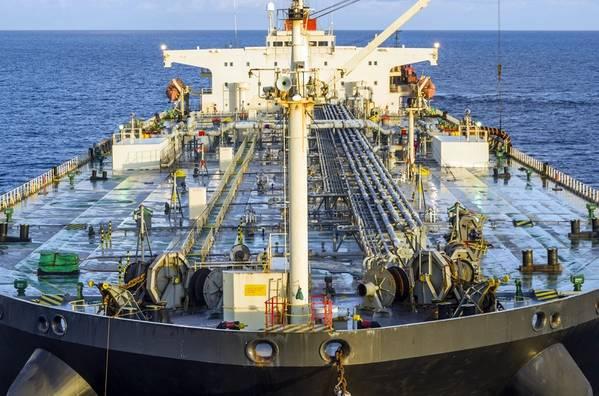
What Does a Chief Officer Do on an Oil or Chemical Tanker?
The tanker environment makes the Chief Officer’s job particularly technical.
An oil or chemical tanker can have sophisticated cargo systems that need continuous monitoring and maintenance.
Here are some examples of the equipment and systems a Chief Officer may be responsible for supervising.
Pilot Ladder Inspection
Pilot ladders are critical equipment because pilots may use them when boarding or leaving the vessel.
They are exposed to seawater, weather and mechanical wear, so their condition must be regularly inspected according to applicable requirements and company procedures.
The Chief Officer may check:
- Steps
- Side ropes
- Spreader arrangements
- Fastenings
- Chafing
- General deterioration
A damaged pilot ladder is not something that can simply be ignored until the next port.
Cargo Cranes
Many tankers have deck cranes for handling cargo hoses, provisions, stores, equipment and other heavy items.
The Chief Officer may supervise inspections of:
- Hydraulic systems
- Oil leakage
- Wire ropes
- Limit switches
- Hooks
- Greasing
- Brakes
- General structural condition
The exact equipment varies between vessels, so the inspection requirements should follow the manufacturer’s instructions, PMS and company procedures.
PV Breaker and Tank Pressure Systems
On oil tankers, pressure/vacuum protection is a critical part of safe cargo operations.
The Chief Officer needs to ensure that relevant pressure/vacuum protection systems are maintained and operational according to the vessel’s procedures.
Depending on the vessel’s design, this may involve monitoring liquid levels in a PV breaker and checking associated valves and systems.
These systems are particularly important because cargo tanks must be protected from excessive pressure or vacuum during loading, discharge and other operations.
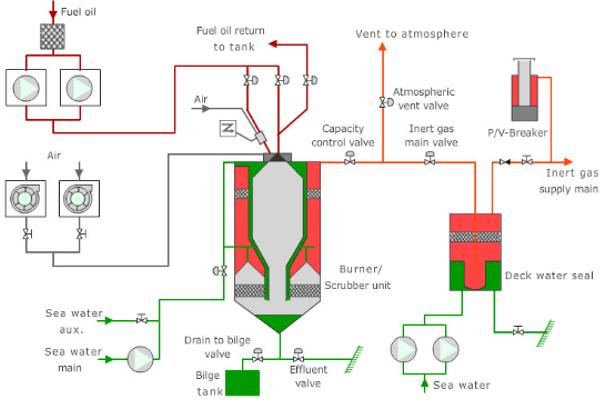
Inert Gas System
Many oil tankers use an inert gas system to reduce oxygen concentration and prevent the formation of a flammable atmosphere inside cargo tanks.
The Chief Officer is closely involved in monitoring the system during cargo operations.
This can include:
- Inert gas pressure
- Oxygen content
- Tank pressure
- Deck water seal or equivalent protection
- Non-return arrangements
- Inert gas main valves
- Alarms and shutdowns
The exact system configuration depends on the vessel.
Cargo Tank Monitoring Systems
Modern tankers normally use fixed tank monitoring equipment to measure cargo levels and other parameters.
The Chief Officer relies on this information during:
- Loading
- Discharging
- Cargo calculations
- Stability calculations
- Cargo monitoring
- Tank inspections
The fixed equipment may be supplemented by portable instruments, such as an approved UTI, depending on the vessel and terminal requirements.
Emergency Bilge or Suction Arrangements
On vessels fitted with a pump room, emergency suction arrangements can be an important part of the ship’s emergency preparedness.
These systems need to be maintained and tested according to the ship’s PMS and procedures.
The Chief Officer needs to know where these systems are located, how they operate and how they would be used during an emergency.
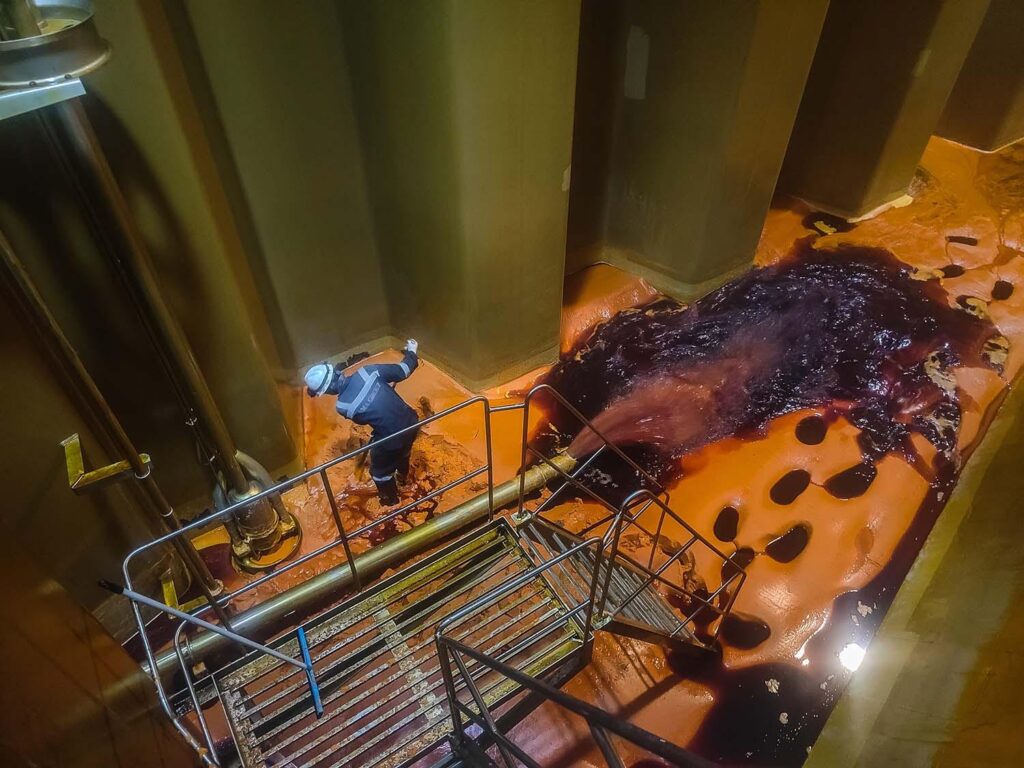
Tank Cleaning
Tank cleaning is another major responsibility on tankers.
A fixed tank cleaning system can use seawater or fresh water supplied through a pump and delivered to tank cleaning machines.
Depending on the cargo and cleaning procedure, hot water may be required.
Some vessels therefore have tank cleaning heaters that use steam from the ship’s boiler system to heat the cleaning water before it reaches the tank cleaning machines.
The Chief Officer has to consider:
- Previous cargo
- Next cargo
- Tank coating compatibility
- Cleaning temperature
- Cleaning chemicals
- Washing duration
- Sludge generation
- Ventilation
- Gas measurements
- MARPOL requirements
- Crew safety
Tank cleaning is not simply a matter of spraying water into a tank. It is a carefully planned operation involving cargo compatibility, safety and environmental considerations.
Gas Detection and Calibration
Gas detection is particularly important on oil and chemical tankers.
Portable and fixed gas detection equipment may be used to monitor parameters such as:
- Oxygen
- Hydrocarbon gases
- Carbon monoxide
- Carbon dioxide
- Other toxic gases, depending on the cargo and equipment fitted
The Chief Officer may be responsible for ensuring that portable gas meters are properly maintained, tested and calibrated according to the manufacturer’s instructions and company procedures.
Fixed gas detection systems also need to be maintained and tested.
This equipment can literally determine whether an atmosphere is safe to enter or work in.
Cargo Tank and Ballast Tank Inspections
Cargo tanks need regular inspection to identify problems such as:
- Coating damage
- Corrosion
- Cracks
- Deformation
- Structural deterioration
- Leakage
- Damaged fittings
Tank coatings can be extremely expensive to repair or replace, particularly on older tankers.
For this reason, early identification of coating damage and corrosion is important.
Ballast tanks also require inspection because they are exposed to seawater and can experience corrosion and structural deterioration over time.
The exact inspection frequency and scope depend on the vessel’s PMS, class requirements, company procedures and applicable regulations.
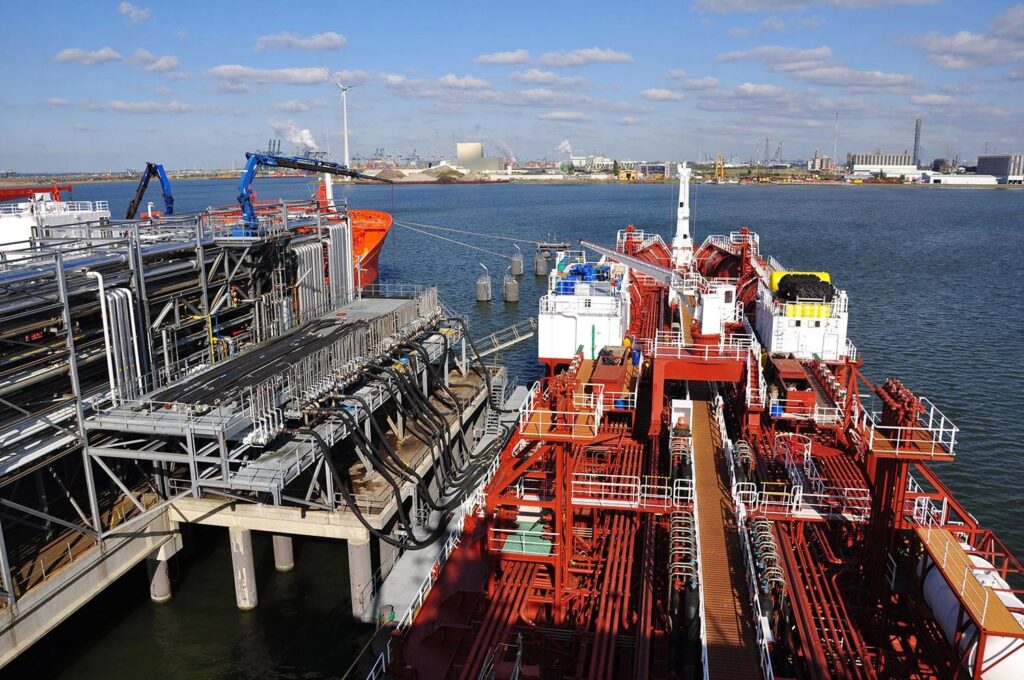
Cargo Pipelines, Valves and Pumps
Cargo must travel through the vessel’s cargo piping system during loading, discharge and internal transfer operations.
The Chief Officer therefore needs to ensure that cargo lines, valves and related equipment are maintained and free from unacceptable leakage or defects.
Cargo pumps also need regular monitoring and maintenance.
On some vessels, the Chief Officer works closely with the engine department because cargo pumps may be hydraulically driven or otherwise connected to systems maintained by the engineering team.
Mooring Ropes, Winches and Windlasses
Mooring equipment is another important part of the Chief Officer’s responsibilities.
A merchant ship can carry numerous heavy mooring lines, each of which can be expensive and subject to considerable loads during berthing.
The Chief Officer and deck crew need to monitor:
- Rope condition
- Chafing
- Broken strands
- Deformation
- Mooring winches
- Hydraulic systems
- Brakes
- Fairleads
- Rollers
- Windlass condition
Anchoring equipment also requires proper maintenance.
The important point is that the Chief Officer does not simply “check the ropes.” The Chief Officer must understand how the entire mooring system behaves under load and ensure that the crew operates it safely.
Does the Chief Officer Stand a Navigation Watch?
Yes.
Although the Chief Officer’s management responsibilities are extensive, the position remains part of the deck officer structure.
On many merchant ships, the Chief Officer stands a 0400–0800 and 1600–2000 navigation watch, although watch schedules can vary according to the vessel’s manning arrangement and company procedures.
During a navigation watch, the Chief Officer is responsible for carrying out the duties of the Officer of the Watch in accordance with the Master’s standing orders, the vessel’s procedures and applicable regulations.
This means that the Chief Officer can move from cargo planning and deck maintenance during the day to navigating a vessel during the night.
That combination is one reason the job is so demanding.
A Realistic Example: A Chief Officer Loading Diesel and Gasoline
Let’s imagine you are the Chief Officer of an oil/chemical tanker proceeding to Hamburg to load approximately 30,000 metric tonnes of cargo, consisting of diesel and gasoline.
The cargoes require proper segregation and a carefully prepared loading plan.
Before Arrival
Before arriving at the terminal, the Chief Officer needs to prepare the cargo plan.
This involves checking:
- Cargo quantities
- Tank allocation
- Cargo segregation
- Stability
- Trim
- Hull stress
- Loading sequence
- Ballast sequence
- Maximum permissible loading rates
- Tank capacities
- Cargo compatibility
The terminal may request vessel information such as manifold dimensions, manifold height, vessel length, parallel body length and inert gas arrangements.
Before cargo operations begin, the Chief Officer also needs to ensure that the relevant cargo equipment is ready.
This can include:
- High-level alarms
- High-high-level alarms
- Tank radar systems
- Cargo valves
- Ballast valves
- Cargo pipelines
- Scuppers
- Manifold arrangements
- Gas detection equipment
- Inert gas systems
At the Loading Terminal
After berthing, the Chief Officer and deck team inspect the vessel and prepare for cargo operations.
The Chief Officer normally meets the terminal representative or loading master.
Together, they establish an operational agreement covering matters such as:
- Loading rate
- Maximum manifold pressure
- Communication procedures
- Emergency shutdown arrangements
- Cargo sequence
- Expected completion time
- Special terminal requirements
The vessel’s Notice of Readiness and other documentation are also handled as required.
A cargo surveyor may then board the vessel.
Depending on the cargo operation, the surveyor may check tank condition and documentation and request information such as:
- Vessel particulars
- Previous cargoes
- Vessel Experience Factor (VEF)
- Tank calibration tables
- UTI information
- Cargo documents
- Previous dry-dock information
- Slop quantities
Once the vessel and terminal are ready, loading can begin.
Starting Cargo Loading
Loading normally begins at an agreed initial rate.
There is a good reason for starting slowly.
At the beginning of a cargo operation, the ship and terminal need to confirm that:
- The correct valve is open
- The correct tank is receiving cargo
- There are no unexpected leaks
- Communication is working
- Pressure is within limits
- Cargo is flowing as planned
Once everything is confirmed, the loading rate may be increased according to the agreed operational limits.
At the same time, the Chief Officer manages the ballast operation according to the loading plan.
This is where cargo planning becomes a real operational task.
The ship is gaining weight in some tanks while losing ballast from others, and stability, trim and hull stresses must remain within safe limits.
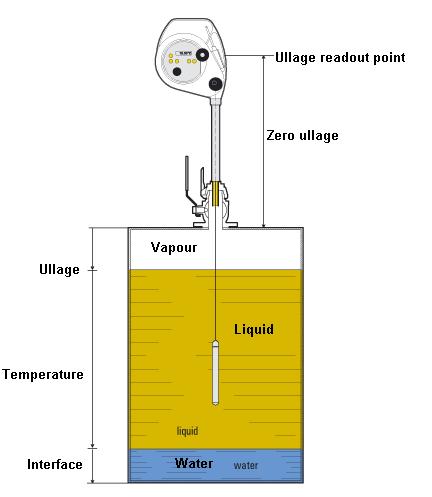
Measuring the Cargo
After loading is completed, the ship’s tanks are measured.
Although fixed tank monitoring systems can provide highly useful readings, cargo surveyors may also use portable equipment such as a UTI according to their procedures.
The ship and terminal figures are compared.
Once the cargo quantities and documentation are agreed, paperwork may include:
- Bill of Lading
- Cargo Manifest
- Quantity Certificate
- Analysis Certificate
- Ullage Report
- Time Sheet
- Other terminal and cargo documents
If there is an operational disagreement, such as a significant quantity discrepancy, unexpected delay or operational restriction, the Master may issue an appropriate protest or reservation.
The exact documentation depends on the cargo, terminal, charterer and contractual arrangements.
Sailing to the Discharge Port
Once loading is completed and all departure requirements are satisfied, the vessel sails toward the discharge port.
But the Chief Officer’s work does not stop.
Before arrival at the next terminal, cargo equipment is checked again.
The Chief Officer may verify:
- Cargo pumps
- Cargo valves
- Cargo lines
- Overfill alarms
- Tank monitoring systems
- Inert gas arrangements
- Ballast systems
- Manifold condition
The vessel then arrives at the discharge port.
Discharging the Cargo
At the discharge terminal, the Chief Officer again meets the terminal representative or loading master.
The ship and terminal agree on operational parameters such as:
- Maximum discharge rate
- Maximum manifold pressure
- Communication methods
- Emergency contacts
- Cargo sequence
- Ballast requirements
After the relevant checks and measurements are completed, discharge begins.
Cargo is discharged while ballast operations may take place simultaneously, depending on the vessel’s cargo plan and stability requirements.
The Chief Officer continuously monitors the operation.
Stripping the Cargo Tanks
One of the final parts of a tanker discharge operation is stripping.
The objective is to remove as much remaining cargo as reasonably possible from the tanks and cargo system.
Some vessels are fitted with highly effective stripping systems that can recover very small quantities of remaining cargo.
On other vessels, cargo may need to be stripped toward a designated tank and then discharged through the cargo system.
This is particularly important on tankers because the remaining cargo can affect:
- Cargo quantity
- Tank cleanliness
- Next cargo compatibility
- Tank inspection
- Environmental compliance
- Commercial claims
Once discharge is complete, the surveyor may inspect the tanks and issue the relevant documentation confirming their condition.
The Chief Officer then prepares the vessel for the next operation.
And eventually, after hours of cargo operations, inspections, documentation and supervision, it is time to return to the bridge or finally get some rest.
Chief Officer Salary in 2026
Chief Officer salaries vary considerably depending on the vessel type, company, flag, nationality, experience, trading area and contract conditions.
There is no single global Chief Officer salary.
However, current 2026 job advertisements provide a useful indication of the market.
Recent listings include:
| Vessel / Position | Average Monthly Salary |
| Chemical tanker Chief Officer | $10,800–$11,550 |
| Oil/Chemical tanker, 38,000 DWT | $7,000–$12,000 |
| Crude oil tanker, 120,000 DWT | $10,500–$11,000 |
| Crude oil tanker fleet | Around $12,000 |
| Chemical tanker vacancy | Around $11,300 |
These are examples from current 2026 vacancies rather than a universal industry salary scale.
A 2026 salary analysis from Maritime Zone reports an average Chief Officer salary of approximately $10,204 per month for June 2026 in its dataset, while also showing that some tanker and gas-sector positions can reach significantly higher levels.
For an experienced Chief Officer on an international tanker, a practical 2026 expectation is therefore often around $10,000–$14,000+ per month, with some specialized vessels and markets paying more.
For example, a current vacancy for a Chief Officer on a 110,000–150,000 DWT crude tanker advertises $12,000 per month, while another current oil/chemical tanker vacancy for a 38,000 DWT vessel advertises $11,000–$12,000 per month.
However, salary alone does not tell the complete story.
A seafarer should also check:
- Contract duration
- Paid leave
- Leave pay
- Bonus
- Tank cleaning allowance
- Overtime
- Insurance
- Pension
- Repatriation
- Travel arrangements
- Tax obligations
- Whether salary is paid only while onboard or continuously
Two Chief Officers earning the same monthly amount can therefore have very different overall compensation packages.
Chief Officer Working Hours
One of the biggest misconceptions about the job is that a Chief Officer simply works a normal “office day” onboard.
In reality, the working day can change dramatically depending on the operation.
During a quiet sea passage, the Chief Officer may have a predictable navigation watch combined with planned maintenance, inspections, paperwork and crew management.
During cargo operations, however, the situation can be completely different.
A Chief Officer may be dealing with:
- Pre-arrival preparation
- Cargo calculations
- Terminal meetings
- Loading or discharge
- Ballasting
- Tank inspections
- Cargo surveys
- Documentation
- Maintenance problems
- Crew supervision
- Safety meetings
- Emergency situations
Port operations can therefore create very long and demanding days.
The Chief Officer also needs to manage rest carefully because international watchkeeping and hours-of-rest requirements apply to seafarers.
Chief Officer vs Captain
The Chief Officer and Master have different responsibilities, although they work closely together.
Master
The Master has overall command and ultimate responsibility for the safety and security of the vessel, crew, cargo and the protection of the marine environment. The STCW framework explicitly recognizes the Master’s ultimate responsibility while requiring the Chief Mate to be able to assume that responsibility when necessary.
Chief Officer
The Chief Officer is the senior deck officer and generally manages a large part of the ship’s daily deck and cargo operations.
In simplified terms:
Master = overall command
Chief Officer = senior deck management and cargo operations
But the Chief Officer is not simply “the person who does everything after the Captain.”
The role is management-focused.
The Chief Officer plans, supervises, coordinates, checks and makes decisions within the area of responsibility while keeping the Master properly informed.
How Do You Become a Chief Officer?
The exact career path depends on the country and flag administration, but the general merchant-navy pathway is:
Deck Cadet → Third Officer → Second Officer → Chief Officer → Master
A mariner normally needs:
- Approved sea service
- Appropriate Certificate of Competency
- Required STCW training
- Medical fitness certification
- Required examinations
- Relevant tanker or ship-type training where applicable
- Experience appropriate to the certificate
The STCW Convention establishes international minimum standards for training, certification and watchkeeping, while individual administrations determine how those requirements are implemented nationally.
Becoming a Chief Officer is therefore not simply a matter of accumulating sea time.
The officer must demonstrate competence at management level.
Is Being a Chief Officer Difficult?
Yes—but the difficulty isn’t only physical.
The biggest challenge is responsibility.
Imagine being responsible for a cargo operation involving tens of thousands of tonnes of petroleum product.
At the same time, you may need to think about:
Cargo + stability + stress + ballast + tank pressure + pollution prevention + crew safety + terminal requirements + maintenance + documentation + emergencies.
And then your navigation watch starts.
That is the reality of the position.
A Chief Officer needs technical knowledge, practical experience, leadership, communication skills and the ability to make decisions under pressure.
The Chief Officer Does Not Work Alone
Despite everything described in this article, there is one important point that should never be forgotten:
The Chief Officer does not perform all of these jobs alone.
There is a deck team behind the Chief Officer.
The officers, Bosun, Able Seafarers and other crew members perform maintenance, inspections, mooring, cargo operations, cleaning and many other tasks.
The Chief Officer’s job is not to personally do every piece of work.
It is to plan the work, organize the team, supervise the operation, identify risks and make sure the job is completed safely and correctly.
That is what makes the Chief Officer a management-level position.
Final Thoughts
The Chief Officer is one of the most demanding positions in the merchant navy.
From the outside, a large tanker may look like nothing more than a huge steel structure carrying cargo across the ocean.
From the Chief Officer’s perspective, however, every part of the ship requires attention.
Cargo tanks need to be inspected.
Pumps need to work.
Valves need to operate.
Mooring ropes need to be maintained.
Tank cleaning systems need to be ready.
Gas detection equipment needs to be reliable.
Ballast needs to be controlled.
Cargo needs to be planned.
The crew needs to be trained.
And when the ship arrives at the terminal, the Chief Officer may be responsible for coordinating an operation involving thousands of tonnes of dangerous cargo.
That is why the Chief Officer’s job is much more than a title.
It is a combination of cargo manager, deck manager, safety leader, supervisor, planner, navigator and decision-maker—all while working as part of a team under the overall command of the Master.
For anyone considering a career at sea, becoming a Chief Officer can be one of the biggest milestones in a deck officer’s career.
And for those already working onboard, they know the reality:
The ship may belong to the company, the cargo may belong to the charterer, but when the operation starts, the Chief Officer has a lot of responsibility on his shoulders.