As the entire world continues to expand digitalization, the maritime industry has also entered the digital age. With the younger generation becoming increasingly dependent on social media and the internet, one of the most important questions for people considering a career at sea today is whether they will have internet access onboard.
So, do modern ships really have internet access? If so, how fast is it? Is it good enough for everyday use? And are there any data limits?do you have to pay for it ?
In the past, when seafarers began a voyage, they could generally only receive messages through satellite communication systems in emergencies or communicate through radio waves. Once a ship left port, staying connected with the outside world was extremely limited.
Today, however, modern merchant ships can provide internet access through satellite communication systems, allowing seafarers to remain connected even when they are thousands of miles away from land.
How Common Is Internet Access Onboard?
The popularity of internet access at sea began to increase significantly after 2015 and has now reached a very high level.
According to the 2019 ICS/ECSA survey, which covered 11,655 ships, approximately 85% of the vessels surveyed provided internet access for crew use. Those vessels represented around 14% of the global fleet at the time.
Today, this figure is believed to be considerably higher, with some estimates suggesting that around 95% of merchant vessels may now provide internet access to their crews.
I personally know hundreds of seafarers working in different ships of companies including European,Asian and American based companies, and based on my experience, only around 2–3 out of every 100 seafarers I know are currently working on ships without crew internet access.
These vessels tend to be older, smaller-tonnage ships, often operating under flags or in regulatory environments where requirements for crew welfare and connectivity may be less demanding.
If we assume that there are approximately 70,000 merchant vessels above 1,500 gross tonnage worldwide, this could mean that around 66,000 ships may now have some form of internet access onboard.
For a newly graduated maritime student preparing for their first contract, or a cadet about to begin their sea training, probably will have internet access onboard.
But having internet access is only one part of the story.
How fast is it? How reliable is it? How much data are you allowed to use? And is it actually good enough for everyday life?
How Fast Is Internet at Sea?
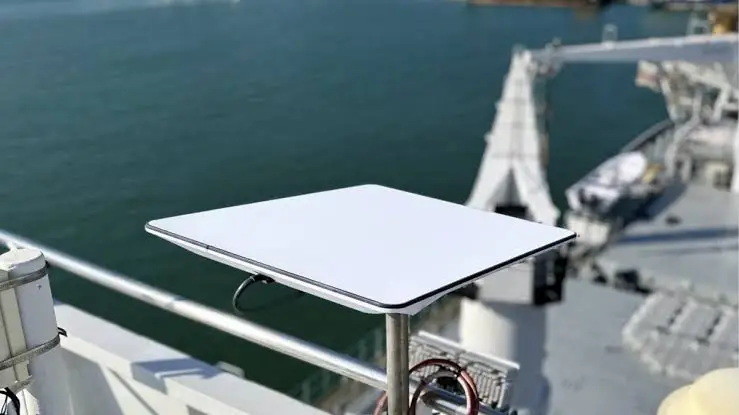
Looking at the world’s merchant fleets, Starlink has become one of the most widely discussed and increasingly popular connectivity solutions.
Satellite internet existed long before Starlink entered the maritime market. However, Starlink has extremely changed the competitive landscape by making high-speed satellite internet considerably more accessible.
For example, older satellite internet systems could cost around $25 for a very limited amount of data up to 100 Mb, while modern Starlink-based systems can provide higher speeds and much greater data allowances.
This can be seen as one of the major changes Starlink has brought to the maritime industry.
As competition increased, seafarers gained access to much better connectivity at a significantly lower cost compared with traditional satellite communication systems.
Today, Starlink is operational across a large part of the world’s oceans and, depending on the vessel’s location, service configuration and network conditions, can provide speeds that are more than sufficient for normal social media and communication.
TikTok, Facebook, Instagram, WhatsApp and many other apps can generally be used without the frustrating experience that was common with older satellite systems.
However, there is one major problem.
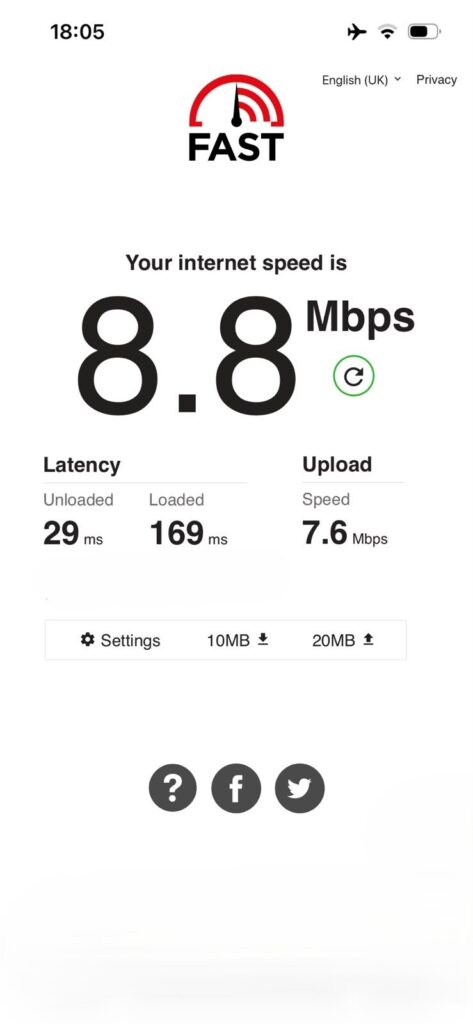
Fast internet can make your data allowance disappear extremely quickly.
How Much Internet Do Seafarers Get?
There is no single standard across the maritime industry.
Every shipping company can have a different policy regarding crew internet. Some companies provide extremely generous or even unlimited access, while others impose strict daily or monthly limits.
For comparison, if you purchase a residential Starlink service for your home, plans such as those available in Europe can offer unlimited data.
🏠 Starlink Residential
| Plan | Speed | Data | Monthly Price* |
| Residential 100 Mbps | Up to 100 Mbps | Unlimited | $55/month |
| Residential 200 Mbps | Up to 200 Mbps | Unlimited | $85/month |
| Residential Max | 400+ Mbps | Unlimited | $130/month |
*Prices are provided for comparison and may vary depending on country and service conditions.
On ships, however, the situation can be very different.
🚢 Starlink Maritime – Global Priority
| Plan | Monthly Data | Starting Price* | Typical Use |
| Global Priority 50 GB | 50 GB | $250/month | Small usage / backup |
| Global Priority 500 GB | 500 GB | $650/month | Small crew / moderate usage |
| Global Priority 1 TB | 1 TB | $1,150/month | Higher usage |
| Global Priority 2 TB+ | 2 TB+ | Higher | Large vessels / heavy crew usage |
*Prices are indicative and may vary depending on the service configuration, country and commercial agreement.
However, shipping companies do not necessarily purchase a plan and simply divide the entire allowance equally among crew members.
Most companies need a significant portion of the available bandwidth for operational purposes. Ships continuously exchange reports, emails, documents and other information with their offices, charterers, agents and other parties.
Therefore, assuming a vessel has a 1 TB monthly allowance, a company might reserve approximately 500 GB for operational and business communications.
If there are 20 crew members onboard, this would leave approximately:
500 GB ÷ 20 crew members = 25 GB per person per month.
Some companies manage this through an IT-controlled system where each crew member receives a daily allowance.
For example, a company could provide 1 GB per day, with the allowance resetting every 24 hours.
This is actually a very effective system because even if a seafarer accidentally consumes their entire daily allowance, they do not lose their entire monthly quota. They simply wait for the next daily reset.
What Can You Do With 1 GB Per Day?
Based on my own experience at sea, 1 GB per day can actually provide a reasonable level of connectivity if it is managed properly.
Depending on video quality and network conditions, you could potentially:
- Make several hours of WhatsApp video calls every day.
- Spend hours browsing X, Reddit or LinkedIn, where video consumption is generally lower.
- Use Instagram for roughly 30–45 minutes.
- Watch around 20 minutes of YouTube in Full HD.
- Stay connected with friends and family through messaging apps.
The important point is to make sure that there are no large background downloads or automatic updates running on your device.
If you disable automatic app updates, cloud backups and other background data-heavy services, 1 GB per day can be surprisingly useful.
Some Companies Offer Unlimited Internet
Of course, there are also highly competitive shipping companies that provide unlimited Starlink access to their crews.
In these cases, a single seafarer can consume more than 100 GB per month without paying anything extra.
With such a connection, you can download and upload videos, use social media freely and, during periods when relatively few people are online, you may even be able to play online games such as Counter-Strike 2 or League of Legends.
For seafarers, this is an enormous improvement compared with the internet experience of previous generations.
Not Every Company Provides Free Internet
Unfortunately, some companies also see crew internet as an additional source of revenue.
Instead of providing internet as part of the crew welfare package, they may sell data to their employees.
In some cases, seafarers can be charged as much as $10 per GB.
This means that the company may pay for the Starlink service while recovering part of the cost directly from the crew through individual data charges.
Because there are thousands of shipping companies operating different types of vessels under different management structures, the range of policies is extremely wide.
You can find everything from almost no internet at all to completely unlimited high-speed Starlink access.
Does Internet Access Have Any Disadvantages?
Despite all of its advantages, onboard internet connectivity also has a negative side.
Some companies have introduced restrictions on internet use on the bridge because of concerns that excessive connectivity could increase the risk of distraction and accidents.
A bridge is a workplace where situational awareness and concentration are critical. Social media notifications, video calls or messages from shore can easily become distractions if they are not managed properly.
There is also another problem.
Having high-speed internet onboard means that a ship’s crew can potentially remain in constant communication with the company’s shore-based office.
Instead of waiting until the next port or communicating only through scheduled reports, crew members can now receive messages, requests and instructions almost instantly.
For seafarers, this can sometimes feel like having the office sitting in your pocket 24 hours a day.
And that is certainly not always a good thing.
The New Reality of Life at Sea
When we consider all of these factors, one thing is clear: being completely disconnected from the outside world is no longer a normal part of modern seafaring.
For today’s seafarers, social media, video calls and instant messaging have become a normal part of life onboard.
A cadet joining their first vessel today is far more likely to be able to speak with their family regularly than a seafarer from previous generations.
This is particularly important for seafarer welfare.
Being able to see your family, speak with your children, follow world events and maintain relationships while working thousands of miles from home can have a significant positive impact on life at sea.
However, internet access should be treated as a tool rather than something that controls your life.
Modern ships need to adapt to the digital world, and internet connectivity is now one of the most important aspects of modern seafarer welfare.
But like everything else onboard, balance is essential.
The internet can help us stay connected with the world, communicate with our loved ones and improve our quality of life at sea.
At the same time, we should never allow it to make us forget why we are onboard in the first place: to work safely, fulfill our responsibilities and return home safely.