Russia and China are expanding shipping activity along the Northern Sea Route as Arctic trade grows and the route becomes an alternative between Asia and Europe.
Russia and China Increase Shipping Activity in the Arctic
Russia and China are increasing their cooperation on the Northern Sea Route (NSR) as the Arctic shipping route becomes more important for international trade.
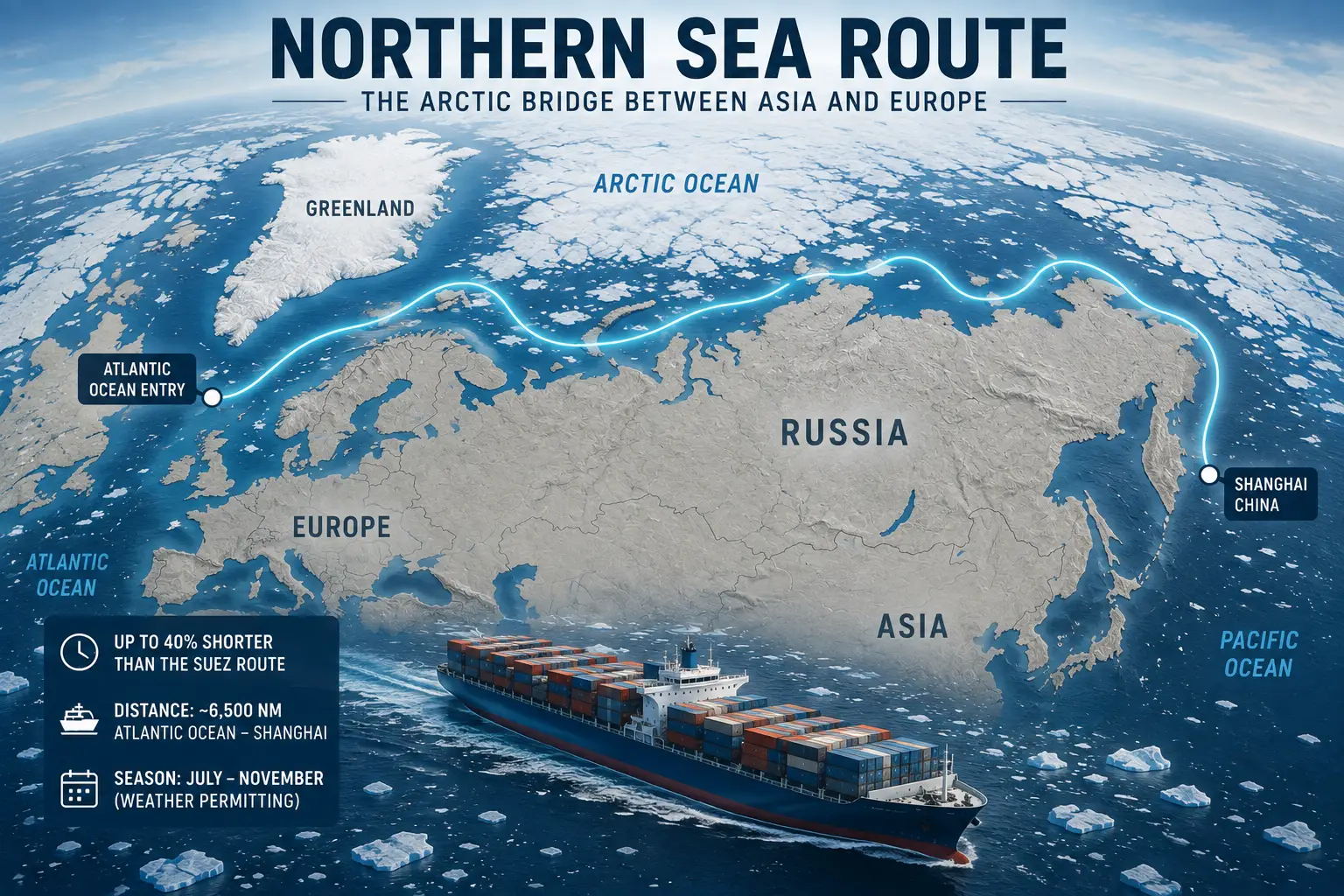
The route runs along Russia’s Arctic coastline and connects the Pacific and Atlantic sides of the Arctic. Russia has been trying to develop the NSR as an alternative shipping route between Europe and Asia, while China sees it as an important part of its plans for Arctic trade.
According to shipping data, China has become the main foreign trading partner using the route since Russia’s invasion of Ukraine. Much of this trade involves Russian oil and LNG cargoes moving toward China.
China Expands Its Arctic Shipping Operations
Chinese shipping companies are now becoming more active on the Northern Sea Route.
At least six Chinese shipping companies are expected to make more than 50 voyages along the route during the current season, using container ships, bulk carriers and multipurpose vessels. Most of these voyages are between China and Russia.
One of the companies, Sea Legend, is also preparing regular seasonal container services between China and Europe. The company is advertising a transit time of around 20 days, which could be significantly shorter than traditional routes through the Suez Canal.
This development is important because the Northern Sea Route has mainly been used for Russian energy exports in the past. Now, China is starting to use the route more directly for international container shipping.
Why Is the Northern Sea Route Important?
The Northern Sea Route can provide a shorter connection between Asia and Europe, but it is very different from normal commercial shipping routes.
Ice conditions can change quickly and the navigation season is still limited. Ships may also require ice-class capabilities and, in some areas, support from icebreakers. Russia controls access to the route through its Arctic infrastructure and regulations.
At the same time, the changing Arctic climate is creating longer periods when some parts of the route can be navigated.
For Russia, the NSR could bring more cargo, port activity and investment into its Arctic region.
For China, it offers another possible route to Europe and access to Russian energy resources.
A New Route for Global Shipping?
The Northern Sea Route is still very small compared with major routes such as the Suez Canal. However, 2026 is becoming an important year for Arctic shipping.
Recent data indicates that cargo volumes on the NSR could exceed 40 million tonnes in 2026, while China-Russia cargo traffic has also increased.
The question now is whether the Northern Sea Route can develop from a mainly seasonal and Russia-focused route into a regular international shipping corridor.
For Russia and China, the answer appears to be yes. For the global shipping industry, however, the Arctic still comes with major challenges including ice, weather, safety, environmental risks and geopolitical uncertainty.