Greek-owned Aframax tanker METRO VENETIAN was hit by an unidentified projectile in the Strait of Hormuz, damaging its engine room and disabling the vessel.
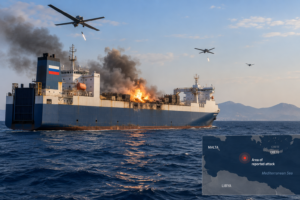
A Greek-owned LR2/Aframax tanker, METRO VENETIAN, was struck by an unidentified projectile in the Strait of Hormuz on 24 August 2026, leaving the vessel disabled after damage to its engine room.
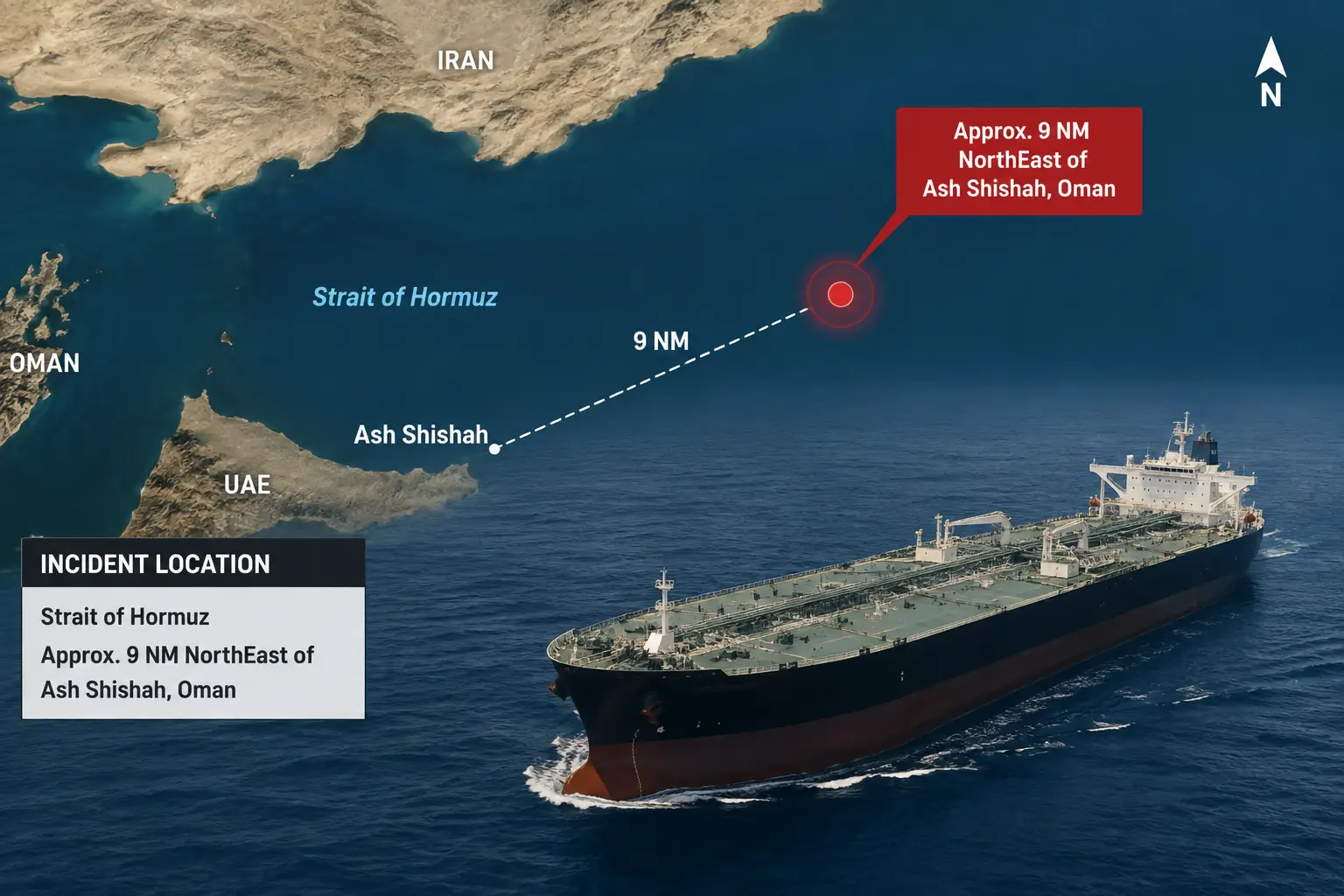
According to information reported by the UK Maritime Trade Operations (UKMTO), the incident occurred approximately 9 nautical miles northeast of Ash Shishah, Oman. The vessel’s master reported that an unknown projectile struck the tanker, causing damage in the engine room and resulting in a loss of propulsion.
No injuries to crew members or marine pollution had been reported following the incident.
METRO VENETIAN Vessel Particulars
| Specification | Details |
| Vessel Name | METRO VENETIAN |
| IMO Number | 1013391 |
| Vessel Type | LR2 / Aframax Tanker |
| Year Built | 2025 |
| Flag | Liberia |
| Length Overall | 249.99 metres |
| Beam | 42.4 metres |
| Deadweight | 114,934 tonnes |
| Classification | DNV |
| Ship Manager | Metrostar Management Corp. |
The vessel is part of the Greek-managed Metrostar fleet. Metrostar’s own fleet information identifies METRO VENETIAN as an LR2 tanker, built in 2025 at Hyundai Vietnam, with a deadweight of approximately 115,000 tonnes.
Engine Room Damage Leaves Tanker Without Propulsion
The projectile reportedly struck the vessel’s engine room, causing damage that left the tanker unable to maneuver under its own propulsion.
For a large commercial tanker, damage to the machinery space can be particularly serious because the main engine and associated systems are essential for propulsion, maneuvering and safe navigation.
The vessel was subsequently moved toward a safe location while authorities and maritime security organizations continued to monitor the situation. At the time of initial reporting, there were no reported casualties or marine pollution.
Another Warning for Commercial Shipping in the Strait of Hormuz
The attack highlights once again the risks faced by commercial vessels operating in and around the Strait of Hormuz.
The waterway is one of the world’s most strategically important shipping routes, carrying a significant share of global oil and energy shipments. Continued attacks and security threats in the region are forcing shipowners, operators and crews to consider increasingly difficult decisions regarding routing, insurance, security measures and operational costs.
The METRO VENETIAN incident is particularly notable because the vessel was built only in 2025. Its relatively young age demonstrates that modern construction and significant investment in a vessel cannot eliminate the risks associated with operating in a conflict-affected maritime region.
For shipowners, an attack can create costs far beyond the immediate physical damage. Possible expenses can include emergency response, towing, repairs, dry-docking, machinery inspections, class surveys, insurance claims, loss of earnings and potential disruption to the vessel’s commercial schedule.
What Happens to METRO VENETIAN Now?
The full extent of the damage will only become clear after a detailed inspection.
Because the reported damage involves the engine room, engineers and surveyors will need to determine the condition of the main propulsion machinery, auxiliary systems, electrical equipment and surrounding structures.
Depending on the extent of the damage, the vessel could require significant repairs and potentially dry-docking before returning to normal commercial service.
At this stage, however, it would be premature to speculate about the vessel’s long-term operational future. The final repair requirements will depend on technical inspections and assessments by the shipowner, class society, insurers and repair specialists.
Voyage From Mombasa Toward India
Available vessel-tracking information has linked METRO VENETIAN with voyages involving Mombasa, Kenya, and Sikka, India. Vessel databases identify the ship as a 2025-built, Liberia-flagged crude oil tanker with a deadweight of 114,934 tonnes.
The latest attack adds another serious incident to the growing security concerns surrounding commercial shipping in the region.
A Difficult Period for the Shipping Industry
The METRO VENETIAN incident is another reminder that maritime security can have a direct financial impact on the global shipping industry.
A modern tanker can represent an investment of hundreds of millions of dollars when the vessel itself, financing, cargo commitments, insurance and associated commercial costs are considered. Yet an attack can suddenly place the vessel, its crew and its commercial operation at risk.
For seafarers, the consequences are even more immediate. A routine voyage can quickly become a serious emergency when a commercial ship enters an area affected by armed conflict.
The METRO VENETIAN attack therefore represents more than damage to a single tanker. It is another warning for shipowners, operators and seafarers that the security environment around the Strait of Hormuz remains highly challenging.
As investigations continue, the condition of the vessel and the full extent of the damage will become clearer. For now, the most important outcome is that the crew was reported safe and no marine pollution was reported following the attack.