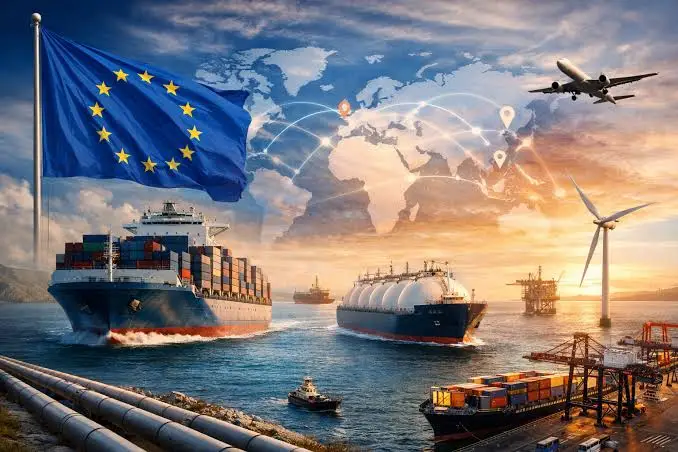
Learn what merchant shipping is, how commercial ships work, different vessel types, cargo operations, navigation systems, and why shipping is the backbone of global trade.
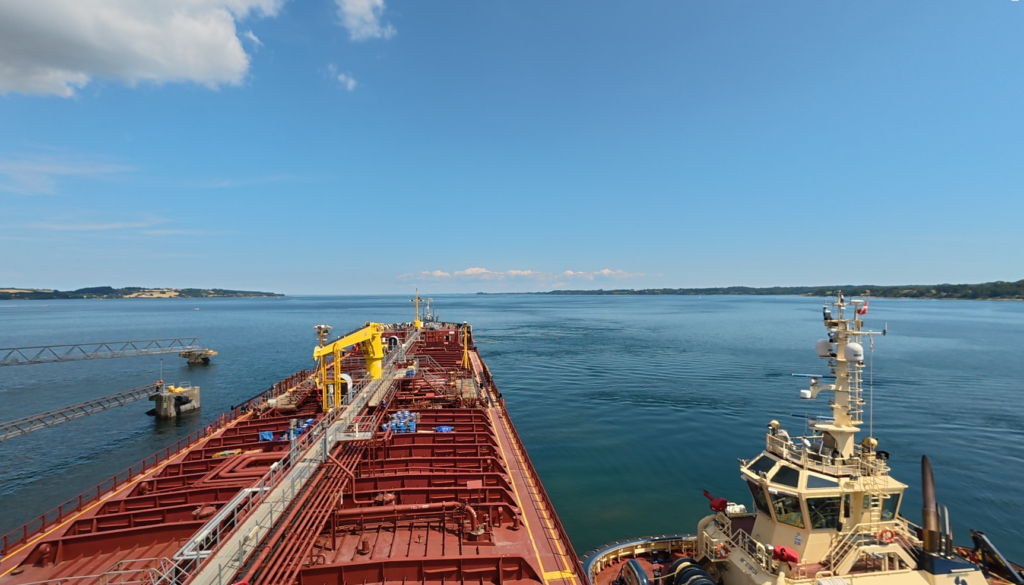
Every product we use in our daily lives has a journey behind it.
The fuel that powers our cars, the food we consume, the raw materials used to build our homes, and even the devices we use every day all depend on one of the oldest industries in human history: merchant shipping.
For thousands of years, humans have searched for the easiest, safest, and most efficient ways to transport goods from one place to another. Among all transportation methods, ships have always provided the greatest advantage: the ability to carry enormous quantities of cargo over long distances with the lowest cost and energy consumption.
Ancient civilizations already understood the power of maritime transportation. The Egyptians used boats on the Nile River thousands of years ago to transport massive stones used in the construction of pyramids. Even with primitive technology, waterways provided the most efficient method to move heavy materials.
Today, this same principle continues on a global scale.
Modern merchant ships transport approximately the majority of global trade by volume, carrying billions of tons of cargo every year across oceans. Without shipping, international trade as we know it would not exist.
A single large tanker can carry hundreds of thousands of tons of crude oil in one voyage. A large container ship can transport tens of thousands of containers connecting continents. Bulk carriers deliver raw materials that keep factories operating around the world.
Shipping is not just an industry.
Shipping is the foundation of the global economy.
Why Is Merchant Shipping So Important?
Many people see ships only as large vessels moving on the ocean, but their real purpose is much bigger.
A ship is essentially a floating transportation system designed to move massive amounts of cargo with maximum efficiency.
For example, a large oil tanker may carry around 300,000 tons of crude oil.
To understand this capacity:
- Density of crude oil: approximately 0.85 tons per cubic meter
- 300,000 tons of oil equals around 350,000 cubic meters
- This represents approximately 350 million liters of oil
- If one car fuel tank holds around 60 liters, this amount could theoretically fill 5,8 millions of vehicles at the same time which means can fill all tanks of cars in Los Angeles,United States.
Transporting this amount of cargo by air or road would be practically impossible and extremely expensive.
Aircraft are fast, but their carrying capacity is limited. Trucks are flexible, but they cannot compete with ships in terms of volume and cost.
A ship can travel thousands of miles carrying hundreds of thousands of tons while consuming relatively low energy per ton of cargo.
This is why maritime transportation remains the most economical and environmentally efficient method for international cargo movement.
What Is a Merchant Ship?
A merchant ship is a commercial vessel designed specifically to transport cargo or passengers for economic purposes.
Unlike naval vessels or private yachts, merchant ships operate as businesses. Their purpose is simple:
Carry cargo from one location to another safely, efficiently, and profitably.
Modern merchant ships are designed around one main principle:
Maximum cargo capacity with minimum operating cost.
As ships become larger, they can carry more cargo with fewer voyages, reducing the transportation cost per unit.
A simple comparison:
Instead of using your own car to transport one bag, imagine using a bus that can carry thousands of bags at the same time.
The bus requires more fuel than your car, but the cost is shared between thousands of passengers.
Ships work with the same logic.
How Big Are Modern Ships?
Ship sizes today are beyond what most people imagine.
The largest container ships can carry more than 20,000 TEU (Twenty-foot Equivalent Units).
A single voyage can transport:
- Cars
- Electronics
- Machinery
- Clothing
- Food products
- Industrial materials
These ships connect manufacturing centers in Asia with consumers in Europe, America, and other regions.
Large bulk carriers can transport around 200,000 tons or more of raw materials such as:
- Iron ore
- Coal
- Grain
- Fertilizers
These materials are essential for industries such as steel production, agriculture, and energy.
Oil tankers transport the energy resources that keep cities, factories, and transportation systems operating.
Without merchant ships, modern civilization would stop functioning.
Why Are Ships More Efficient Than Other Transportation Methods?
The biggest advantage of ships comes from physics.
Ships use buoyancy to stay afloat. The water supports a huge portion of the vessel’s weight, meaning the energy required to move cargo is much lower compared with land transportation.
A plane carrying cargo must overcome the full force of gravity throughout its flight.
A truck must overcome road friction and carry its own weight.
A ship mainly needs propulsion power to overcome water resistance.
This allows ships to transport enormous quantities of cargo with relatively low fuel consumption.
For example:
An aircraft may burn tens of tons of fuel during a flight while carrying only a limited amount of cargo.
A commercial ship may travel thousands of nautical miles carrying tens of thousands of tons of cargo with similar fuel consumption.
For an example from Hamburg to London it takes around 45 minutes by flight and total consumption of 15 tons of Jet-A1 , per ton appr. 1500 usd,same destination can take 20 hours by ship with cost of 30 tons of fuel ,per ton appr.750 usd, so flight can carry max 50 tons but vessel can carry 30.000 tons of cargo with almost same amount of consumption.
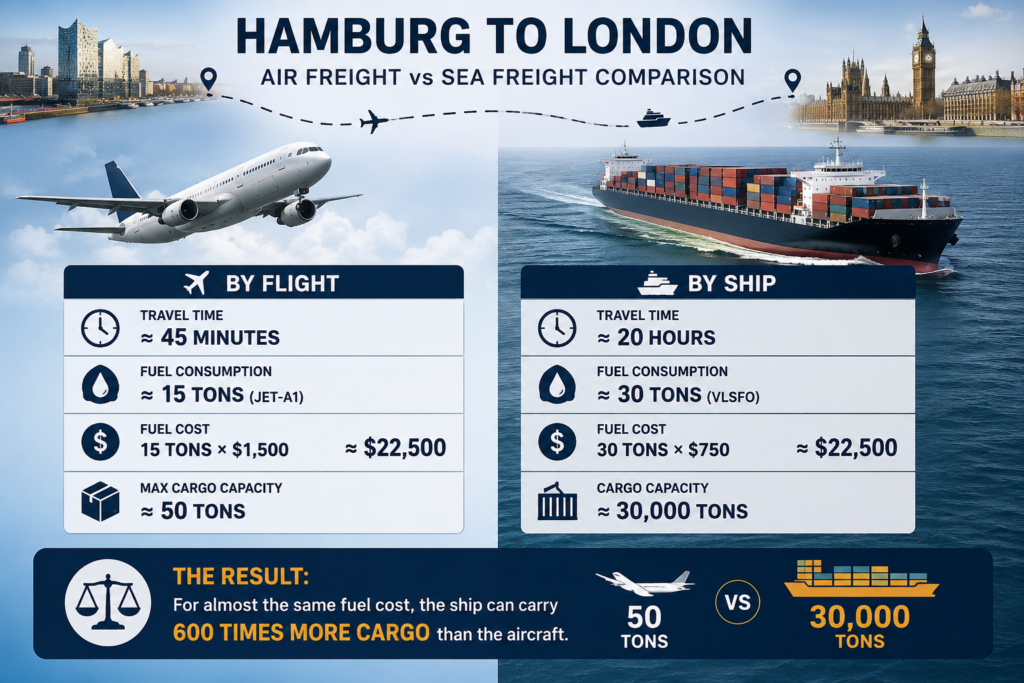
This efficiency is the reason shipping will remain the backbone of global trade for generations.
The Different Types of Merchant Ships
Because global trade involves thousands of different products, the shipping industry developed many specialized vessel types.
Each ship is designed according to the cargo it carries.
The main categories include:
- Bulk carriers
- Oil tankers
- Chemical tankers
- Container ships
- Ro-Ro vessels
- General cargo vessels
- Gas carriers
- Specialized vessels
Every vessel has a specific purpose, and choosing the correct ship type is critical for safe and economical transportation.
Bulk Carriers: The Giants Carrying the World’s Raw Materials
Bulk carriers are among the most important vessels in global trade because they transport the raw materials required for modern civilization.
Unlike container ships that carry packaged goods, bulk carriers transport cargo directly inside large cargo holds.
Typical bulk cargo includes:
- Coal
- Iron ore
- Grain
- Wheat
- Sugar
- Fertilizers
- Copper concentrate
- Aluminum products
- Scrap metal
These materials may not look valuable individually, but they are the foundation of industries worldwide.
For example:
A steel factory cannot operate without iron ore and coal. Agricultural production depends on fertilizers transported by bulk carriers. Food industries rely on grain shipments arriving from different continents.
Bulk carriers are categorized according to their size:
- Handysize: Smaller vessels designed for ports with draft limitations
- Supramax: Medium-sized vessels with flexible trading capability
- Panamax: Ships designed to fit through the original Panama Canal dimensions
- Capesize: Large vessels that transport massive quantities of raw materials
- Very Large Ore Carriers (VLOC): Specialized vessels carrying extremely large amounts of iron ore
Depending on size, age, and condition, a bulk carrier can cost anywhere from several million dollars to over 100 million dollars.
Oil Tankers: Transporting the World’s Energy
Oil tankers are designed to transport petroleum products from production areas to refineries and consumers.
Since oil is one of the most important energy sources in the world, tanker ships play a critical role in maintaining global energy supply.
However, not all tankers are the same.
Different cargoes and trade routes require different ship designs.
The main tanker categories include:
- VLCC
- Suezmax
- Aframax
- MR Tankers
- Chemical Tankers
VLCC (Very Large Crude Carrier)
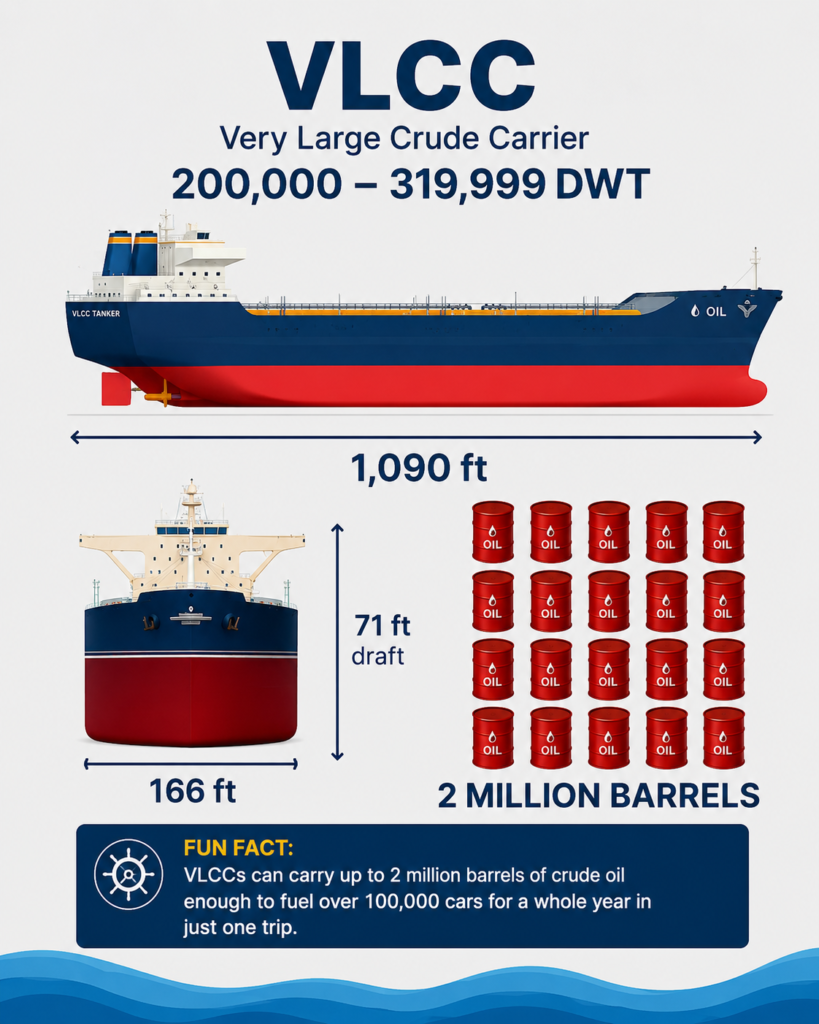
VLCCs are among the largest commercial vessels ever built.
Their main purpose is transporting crude oil from oil-producing countries to large refineries.
Typical characteristics:
- Capacity: approximately 200,000–320,000 tons of cargo
- Length: around 300 meters or more
- Mainly used for long-distance international voyages
These vessels usually carry unrefined crude oil, which is later processed inside refineries to produce:
- Gasoline
- Diesel
- Jet fuel
- Lubricants
- Other petroleum products
Because of their enormous capacity, VLCCs provide one of the lowest transportation costs per ton of oil.Since the hormuz strait crisis increased daily rate of these tankers massively increased in 2026 February to May, now on the market highest rate is 400.000 usd for a day of renting price of VLCC tanker.
Suezmax and Aframax Tankers
Not every port can accept the largest tankers.
Many terminals have limitations regarding:
- Water depth
- Loading equipment
- Port infrastructure
For this reason, smaller tanker categories were developed.
Suezmax Tankers
The name comes from the Suez Canal.
These ships are designed to carry the maximum size allowed through the canal.
Typical capacity:
- Around 120,000–200,000 tons of cargo
They are commonly used for crude oil transportation between major oil-producing and consuming regions.
Aframax Tankers
Aframax vessels are smaller than Suezmax tankers.
Typical capacity:
- Around 70,000–120,000 tons
Their advantage is flexibility.
They can access more ports compared with larger vessels, making them valuable for regional oil transportation.Generally a VLCC brings cargo from UA to US and can not enter to port due to draft restriction then these tonnages go to anchorage conduct STS operation with VLCC then come to discharge in port.
MR Tankers: The Flexible Workhorses of Petroleum Transportation
MR stands for Medium Range tanker.
These vessels are among the most common and versatile ships in the tanker industry.
Typical capacity:
- Approximately 30,000–50,000 tons
Unlike crude oil tankers, MR tankers often transport refined petroleum products such as:
- Diesel oil
- Gasoline
- Jet fuel
- Fuel oil
- Vegetable oils
- Biofuels
Their size provides a major advantage:
They can access thousands of ports around the world where larger tankers cannot operate.
This makes them extremely valuable for charterers and cargo owners.
For example, an MR tanker can transport fuel from Europe to Africa, Asia to Europe, or South America to China.
Their flexibility makes them one of the most important ship types in modern petroleum logistics.To be honest these are the best tankers you can work on, firstly worload is less compare to bigger or smaller ones and your system is not so complex , pumps are framo and all lines on deck , less technical issues , if you like port visits and less problems with long stay compare to chemical tankers and less job including tank washing,this is the vessel you should work on.
Chemical Tankers: The Specialists of the Maritime Industry
Chemical tankers are some of the most technically advanced vessels in shipping.
Their purpose is transporting liquid chemicals safely across oceans.
Unlike crude oil, chemical cargoes often have:
- Higher value
- Greater risks
- More complex handling requirements
Chemical cargoes include:
- Alcohols
- Acids
- Solvents
- Fertilizer products
- Paint materials
- Additives
- Pharmaceutical chemicals
- Industrial raw materials
Examples include:
- Methanol
- Ethanol
- Styrene Monomer
- Fatty Acid Methyl Ester (FAME)
- Vegetable oils
- Various chemical derivatives
Why Are Chemical Tankers Smaller?
A common question is:
“If chemicals are valuable, why not transport them on huge tankers?”
The answer is efficiency.
Chemical products are usually produced in smaller quantities compared with crude oil.
A refinery may produce millions of tons of crude oil products, but specialized chemicals are often manufactured in smaller batches for specific industries.
Therefore, using a 300,000-ton tanker would be inefficient.
Chemical tankers usually range from:
- 2,000 DWT
- 10,000 DWT
- 20,000 DWT
Some chemical tankers can earn higher revenue than much larger vessels because they transport extremely valuable cargoes.
For example:
A tanker carrying 30,000 tons of fuel oil may transport cargo worth millions of dollars.
However, a chemical tanker carrying only a few thousand tons of a specialized chemical product may carry an equal or higher cargo value.
This is why chemical shipping requires advanced knowledge, strict procedures, and highly trained crews.
Ro-Ro Vessels: Floating Car Parks
Ro-Ro means Roll-On/Roll-Off.
These ships are designed to transport vehicles with wheels.
Instead of loading cargo using cranes, vehicles simply drive onto the vessel through large ramps.
Ro-Ro vessels carry:
- Cars
- Trucks
- Buses
- Construction machinery
- Agricultural equipment
- Military vehicles
Inside the ship are multiple vehicle decks with different heights.
Some decks are designed for:
- Passenger cars
- SUVs
- Trucks
- Heavy machinery
A large car carrier can transport thousands of vehicles during one voyage.
For example, transporting a luxury SUV internationally may generate significant revenue per vehicle, and thousands of vehicles together create a highly profitable voyage.
Because of their specialized design and complex internal structure, Ro-Ro vessels are expensive to build but essential for the global automotive industry.
General Cargo Vessels: The Flexible Transporters
General cargo vessels are designed to transport a wide variety of goods that do not fit into standard categories.
They may carry:
- Machinery
- Railway equipment
- Industrial components
- Project cargo
- Large construction materials
Many industries depend on these vessels because some cargoes are too large, heavy, or unusual for container transportation.
For example:
Aircraft components, including parts manufactured for major aviation companies, may be transported by specialized general cargo vessels.
Their flexibility allows them to serve ports that larger ships cannot reach.
Specialized Ships: When Cargo Requires a Unique Solution
The shipping industry constantly changes according to global demand.
As new industries develop, new vessel designs appear.
Examples include:
- LNG carriers for liquefied natural gas
- LPG carriers for liquefied petroleum gas
- Livestock carriers
- Fruit carriers
- Banana carriers
- Wine carriers
- Heavy-lift vessels
Every cargo has different requirements.
The ship must be designed around the cargo, not the other way around.
This is one of the reasons merchant shipping remains such a complex and fascinating industry.
Understanding Ship Design: How Is a Ship Built?
Although ships have different purposes, most vessels share the same fundamental components:
- Hull
- Machinery spaces
- Deck areas
- Accommodation
- Cargo spaces
- Bridge
Each part has a specific function that allows the vessel to operate safely.
The Main Structure of a Ship: Understanding How a Vessel Is Designed
A ship may look like a simple floating structure from the outside, but inside it is an extremely complex engineering system.
Every part of a vessel has a specific purpose. The design must consider:
- Cargo capacity
- Stability
- Safety
- Strength
- Fuel efficiency
- Crew living conditions
- Environmental regulations
A modern ship is not only built to float. It must survive extreme weather conditions, carry thousands of tons of cargo, operate continuously for months, and protect the lives of everyone onboard.
Hull: The Foundation of Every Ship
The hull is the main body and structural foundation of the vessel.
It is the part that provides:
- Buoyancy
- Structural strength
- Protection for cargo and machinery
- Hydrodynamic efficiency
Unlike a simple steel box, a ship’s hull is carefully designed with complex shapes and reinforced structures to withstand enormous forces from waves, cargo weight, and the movement of the vessel.
A ship at sea is constantly exposed to pressure.
Imagine a vessel sailing through heavy weather where waves can reach 10–12 meters in height. Every wave creates massive forces trying to bend, twist, and stress the steel structure.
For this reason, ships are constructed using special marine-grade steel with carefully calculated:
- Frames
- Longitudinal strength members
- Keels
- Bulkheads
- Reinforced areas
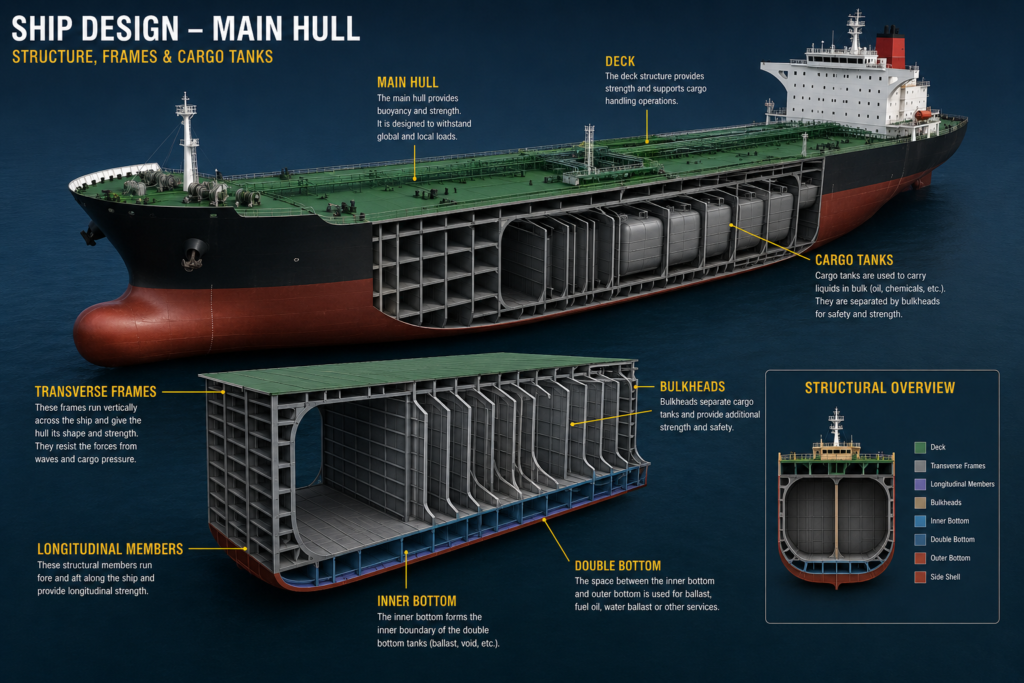
The keel is often described as the backbone of the ship because it provides the main longitudinal strength.
A simplified way to understand ship construction is:
First, engineers create the strongest structural foundation.
Then they build the remaining systems around it.
Just like a building needs a strong foundation before adding floors, a ship requires a strong hull before adding machinery, cargo spaces, and accommodation.
Machinery Space: The Power Center of the Vessel
The machinery space is where the ship’s main propulsion and supporting systems are located.
The most important equipment inside this area is the:
Main Engine
The main engine is responsible for producing the power required to move the vessel.
Unlike cars, which use relatively small engines, commercial ships use enormous marine engines designed to operate continuously for thousands of hours.
A ship engine can operate for months without stopping except for maintenance.
The required engine power depends on:
- Ship size
- Vessel type
- Required speed
- Operating conditions
For example:
A large container ship prioritizes speed because schedule reliability is critical.
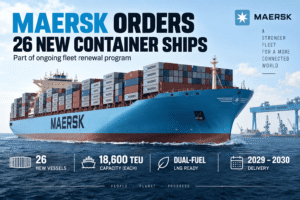
Therefore, it may have a very powerful engine producing tens of thousands of horsepower.For better understanding Maersk Triple E class megaships have 85.000 horsepower engine.
A chemical tanker may prioritize fuel efficiency rather than speed.
For this type of vessel, a smaller but highly efficient engine may be more suitable.
Two-Stroke and Four-Stroke Marine Engines
Commercial ships mainly use two types of diesel engines:
Four-Stroke Engines
Four-stroke engines operate using a similar principle to automobile engines.
The cycle consists of:
- Intake
- Compression
- Power
- Exhaust
They are commonly used for:
- Generators
- Smaller vessels
- Auxiliary machinery
Two-Stroke Engines
Most large commercial vessels use two-stroke engines.
These engines are completely different from car engines.
Advantages include:
- Extremely high efficiency
- Large power output
- Long operational life
- Ability to directly drive the propeller
The piston movement is slower but much more powerful.
A modern marine engine can have:
- Pistons taller than a person
- Turbochargers larger than a small vehicle
- Individual components weighing several tons
These engines are specifically designed for moving enormous ships through difficult ocean conditions.
How Does a Ship Actually Move?
Producing engine power is only the beginning.
The engine must transfer this power into movement.
This happens through the propulsion system.
The basic process:
Main Engine → Shaft → Propeller → Thrust → Ship Movement
The engine rotates a long shaft connected to the propeller.
The propeller pushes water backward.
According to Newton’s Third Law:
Every action has an equal and opposite reaction.
The water pushed backward creates a force that moves the ship forward.
Types of Ship Propellers
Commercial vessels mainly use two types of propellers.
Fixed Pitch Propeller (FPP)
A fixed pitch propeller has permanent blade angles.
To change speed:
- Engine RPM increases
- Propeller rotates faster
- Ship moves faster
This system is simple, reliable, and commonly used.
Controllable Pitch Propeller (CPP)
A controllable pitch propeller allows the blade angle to change.
The engine may maintain a constant RPM while the propeller adjusts the blade position.
Advantages:
- Better maneuverability
- Faster response
- Improved control during port operations
CPP systems are common on vessels requiring frequent maneuvering.
Generators: The Ship’s Electrical Supply
The main engine moves the ship, but many other systems require electricity.
This power is produced by generators.
Generators supply electricity for:
- Accommodation
- Navigation equipment
- Cargo pumps
- Lighting
- Communication systems
- Refrigeration
- Safety equipment
A ship is basically a floating city.
Even when the vessel is not moving, electrical systems must continue operating.
Boilers: Producing Heat for Ship Operations
Many ships also have boilers.
A boiler produces steam used for various purposes, especially onboard tankers.
Applications include:
- Heating cargo
- Heating fuel oil
- Hot water production
- Machinery systems
Some cargoes become too viscous at low temperatures.
For example, heavy fuel oil may require heating before it can be pumped or burned.
Without heating systems, cargo operations could become impossible.
Rudder: Controlling the Direction of the Ship
A ship needs a steering system to change direction.
This is the role of the rudder.
The rudder is located behind the propeller.
When the rudder changes position:
- Water flow from the propeller changes direction
- A force is created on the rudder
- The ship changes course
However, large ships do not turn like cars.
Due to their enormous size and momentum, turning a vessel requires planning and time.
Bow Thruster: Helping During Maneuvering
Large ships have limited maneuverability at low speed.
To improve control in ports, many vessels use bow thrusters.
A bow thruster is a small propeller installed at the forward part of the ship.
It helps:
- Move the bow sideways
- Assist during berthing
- Improve maneuvering ability
However, bow thrusters are effective only at low speeds.
They are mainly used during port operations and not during normal ocean passages.
Accommodation: Life at Sea
The accommodation area is where the crew lives.
Modern vessels provide:
- Private cabins
- Officer and crew mess rooms
- Recreation areas
- Gym facilities
- Internet access
- Common spaces
Life onboard can last several months, so crew welfare is extremely important.
Unlike older ships where several people shared cabins, many modern vessels provide single-person accommodation.
This gives seafarers:
- Privacy
- Rest after working hours
- Personal space during long voyages
Although life at sea is challenging, modern ships provide much better living conditions compared with previous generations.
The Bridge: The Ship’s Command Center
The bridge is the navigation and control center of the vessel.
It is similar to the cockpit of an aircraft.
From the bridge, officers:
- Navigate the vessel
- Monitor traffic
- Communicate with other ships
- Plan routes
- Control speed
- Conduct maneuvering operations
The bridge contains advanced navigation systems that allow ships to safely cross oceans.
Modern Ship Navigation Systems: How Ships Find Their Way Across the Oceans
A ship may be thousands of miles away from land, surrounded only by water, with no visible landmarks to guide the crew.
So how does a vessel safely travel from one continent to another?
The answer is a combination of advanced navigation technology, professional knowledge, and careful planning.
Modern ships are equipped with highly sophisticated systems that allow officers to monitor:
- The vessel’s position
- Surrounding traffic
- Water depth
- Weather conditions
- Planned route
- Potential dangers
However, technology is only a tool.
A safe voyage still depends on the experience, decision-making, and attention of the crew.
The main navigation systems onboard commercial ships include:
- ECDIS
- Radar
- AIS
- Echo Sounder
- Gyro Compass
- Magnetic Compass
- Autopilot
ECDIS: The Electronic Chart System
ECDIS stands for:
Electronic Chart Display and Information System
It is one of the most important navigation systems onboard modern vessels.
Before electronic navigation, seafarers used traditional paper charts.
These charts required constant manual updates whenever there was:
- A change in navigation warnings
- New underwater hazards
- Buoy position changes
- Port information updates
Officers had to apply corrections manually using official publications such as Notices to Mariners.
Today, ECDIS has transformed navigation.
Electronic charts can be updated digitally, allowing officers to receive the latest information quickly and accurately.
What Can ECDIS Show?
ECDIS provides essential information such as:
- Ship position
- Planned route
- Safety depth
- Water depth
- Navigation warnings
- Restricted areas
- Buoy positions
- Traffic information
Before every voyage, officers prepare a detailed passage plan using ECDIS.
This plan includes:
- Departure point
- Waypoints
- Courses
- Safety margins
- Arrival route
The system continuously monitors the ship’s position and warns the crew if the vessel approaches danger.
For example:
If a vessel accidentally approaches shallow water or crosses a restricted area, ECDIS can immediately provide an alarm.
This makes navigation safer and more efficient.
Radar: The Eyes of the Ship
Radar is one of the oldest but most important navigation systems onboard.
The word radar comes from:
Radio Detection and Ranging
Radar allows the crew to detect objects even when human vision cannot.
This is especially important during:
- Night operations
- Fog
- Heavy rain
- Poor visibility
- Congested waters
Radar sends electromagnetic waves toward the surrounding area.
When these waves hit an object, they return to the radar antenna.
By calculating the return time, the system determines:
- Distance
- Direction
- Movement of targets
What Can Radar Detect?
Radar can identify:
- Other ships
- Land formations
- Islands
- Buoys
- Floating objects
With correct settings, radar can even detect very small targets.
In calm conditions, experienced operators may observe small echoes such as birds or marine life.
However, radar interpretation requires experience.
Poor settings or incorrect understanding can create dangerous situations.
The officer must understand:
- Weather effects
- Sea clutter
- Blind zones
- Target movement
Radar is powerful, but human judgment remains essential.
AIS: The Identity System of Ships
AIS stands for:
Automatic Identification System
AIS allows ships to automatically exchange information with each other and with shore stations.
Every commercial vessel transmits important details, including:
- Ship name
- IMO number
- Position
- Speed
- Course
- Destination
- Vessel type
- Draft information
This system helps ships understand the movements of surrounding vessels.
For example:
If two ships are approaching each other, officers can see:
- Which vessel is changing course
- The expected closest distance
- The other ship’s destination
- The vessel’s identity
AIS greatly improves situational awareness.
However, AIS is not a replacement for radar.
A vessel may have:
- AIS turned off
- Incorrect information entered
- Technical problems
Therefore, officers always use AIS together with radar and visual observations.
Echo Sounder: Measuring the Depth Below the Ship
A ship cannot safely navigate without knowing the depth of water beneath it.
This is the purpose of the echo sounder.
The system works similarly to how dolphins use sound waves.
A sensor located under the vessel sends a sound pulse toward the seabed.
The pulse travels downward, hits the bottom, and returns.
By measuring the time required for the signal to return, the system calculates water depth.
Why Is Depth Measurement Important?
Large vessels may have drafts of more than 10 meters.
In shallow waters, a small error in depth calculation can create a grounding risk.
Echo sounders are especially important during:
- Port approaches
- Channel navigation
- Anchorage operations
- Shallow water passages
Modern systems continuously display depth information on the bridge.
Gyro Compass: The True Direction Finder
A compass is essential because a ship must know its direction at all times.
Modern ships mainly use gyro compasses.
A gyro compass provides:
- True north reference
- Accurate heading information
- Reliable navigation data
Unlike a magnetic compass, a gyro compass is not affected by Earth’s magnetic field.
This makes it more accurate, especially for large steel vessels.
The gyro compass provides information to:
- ECDIS
- Radar
- Autopilot
- Other navigation systems
Magnetic Compass: The Emergency Backup
Although modern vessels use gyro compasses, every ship still carries a magnetic compass.
Why?
Because safety systems require redundancy.
If there is a major electrical failure, the magnetic compass can provide a basic heading reference.
It works using Earth’s magnetic field and does not require electrical power.
Simple systems can become lifesaving during emergencies.
Autopilot: Automatic Steering System
Imagine steering a ship manually for several days during an ocean voyage.
It would be extremely difficult and exhausting.
This is why ships use autopilot systems.
The officer selects a desired course.
The autopilot automatically controls the steering system to maintain that heading.
Advantages include:
- Reduced workload
- Improved fuel efficiency
- More consistent steering
- Better voyage management
However, autopilot is not completely independent.
Officers must always monitor:
- Traffic conditions
- Weather
- System performance
In restricted waters, heavy traffic, or port approaches, ships are usually manually controlled by officers.
The Human Element in Navigation
Although modern ships have advanced technology, navigation is not simply pressing buttons.
A professional navigator must understand:
- Weather patterns
- Ocean currents
- Ship behavior
- Collision regulations
- Equipment limitations
- Emergency procedures
A computer can calculate a route.
But a skilled officer decides whether that route is safe.
Technology supports seafarers.
It does not replace them.
The Purpose of Every Ship: Carrying Cargo
All these systems exist for one main reason:
To transport cargo safely from one destination to another.
A ship without cargo capability cannot generate revenue.
Cargo operations are therefore the heart of merchant shipping.
Especially on tanker vessels, cargo handling requires extreme attention because ships may carry thousands of tons of:
- Flammable liquids
- Toxic chemicals
- Petroleum products
- Dangerous substances
A small mistake can cause:
- Pollution
- Fire
- Explosion
- Loss of life
- Financial damage
For this reason, cargo operations are among the most important responsibilities onboard.
Tanker Cargo Operations: How Thousands of Tons of Liquid Cargo Are Controlled Safely
Among all merchant ships, tankers require some of the most complex cargo operations.
A tanker is not simply a vessel that carries liquid inside tanks.
It is a highly specialized system designed to transport dangerous and valuable cargo safely while protecting:
- The crew
- The vessel
- The environment
- The cargo itself
A modern oil or chemical tanker may carry tens of thousands of tons of petroleum products or chemicals.
Imagine having 30,000 tons of flammable liquid inside a vessel surrounded by nothing but ocean.
The responsibility is enormous.
Every operation must be carefully planned and controlled.
The Cargo Planning Process
Before a tanker starts a voyage, the vessel receives detailed voyage instructions from the company or charterer.
These instructions include:
- Cargo type
- Cargo quantity
- Density
- Loading temperature
- Discharge port
- Special requirements
- Compatibility information
The vessel’s officers must analyze this information and confirm whether the ship can safely perform the operation.
Before loading begins, the cargo officer prepares a:
Cargo Plan
The cargo plan determines:
- Which tanks will be used
- Cargo distribution
- Loading sequence
- Maximum filling levels
- Stability condition
- Stress limitations
The plan must consider the ship’s:
- Draft
- Trim
- Stability
- Structural strength
A tanker cannot simply fill tanks randomly.
Every action affects the vessel.
Loading Operation: Bringing Cargo Onboard
When the ship arrives at the loading terminal, communication begins between:
- Ship officers
- Terminal operators
- Surveyors
- Cargo representatives
Before cargo transfer starts, both sides agree on a:
Ship-Shore Safety Checklist
This confirms important safety points such as:
- Correct cargo connection
- Emergency shutdown procedures
- Communication methods
- Fire protection readiness
- Mooring safety
- Pollution prevention measures
Only after all safety requirements are completed can loading begin.
Cargo Lines and Loading Pressure
Cargo transfer happens through large pipelines connected between the vessel and terminal.
The loading rate depends on:
- Pipe diameter
- Terminal capacity
- Ship system limitations
- Tank pressure
The ship must inform the terminal about its maximum allowable loading rate.
If cargo enters too quickly:
- Pressure can increase
- Cargo lines may fail
- Tank ventilation systems may become overloaded
A simple example:
Imagine filling a closed bottle with liquid while air is trapped inside.
The trapped air creates pressure.
A cargo tank works with the same principle.
If pressure is not controlled, dangerous situations can occur.
Cargo Tanks: The Heart of a Tanker
Unlike bulk carriers that use cargo holds, tankers use enclosed cargo tanks.
These tanks are specially designed to transport liquid products safely.
Depending on the vessel type, tanks may have:
Coated Steel Tanks
Many oil and chemical tankers use special epoxy coatings.
These coatings:
- Protect the steel
- Prevent contamination
- Resist chemical reactions
Stainless Steel Tanks
Chemical tankers carrying highly aggressive cargoes may use stainless steel tanks.
Advantages:
- High corrosion resistance
- Better cargo compatibility
- Longer lifetime
The tank material depends on the cargo requirements.
Tank Cleaning: Preparing for the Next Cargo
One of the most important tanker operations is tank cleaning.
A tanker may carry one cargo today and a completely different cargo on the next voyage.
For example:
A vessel may transport fuel oil and later need to load vegetable oil or chemicals.
The cargo tanks must be cleaned according to strict procedures.
Tank cleaning may involve:
- Fresh water washing
- Sea water washing
- Chemical cleaning
- Ventilation
- Drying
- Inspection
Modern tankers use fixed tank washing machines installed inside tanks.
These machines rotate using water pressure and clean internal surfaces.
The cleaning standard depends on the next cargo requirement.
Some sensitive cargoes require extremely high cleanliness standards.
Cargo Monitoring Systems
A tanker cannot depend on manual measurement for thousands of tons of cargo.
Imagine trying to manually calculate:
- 10 cargo tanks
- 30,000 tons of liquid
- Different temperatures
- Changing levels
This would be impossible.
Therefore, tankers use advanced monitoring systems.
Tank Radar System
Tank radar is an automatic level measurement system.
It uses radar technology installed on the top of cargo tanks.
The system sends signals toward the cargo surface.
By measuring the return signal, it calculates:
- Cargo level
- Volume
- Quantity
The information is displayed in the:
Cargo Control Room (CCR)
From the CCR, officers can monitor:
- Tank levels
- Cargo temperatures
- Tank pressure
- Loading progress
- Discharging progress
Cargo Temperature Monitoring
Temperature is extremely important for tanker operations.
Some cargoes require specific temperatures because:
- They become too thick when cold
- They may react at high temperatures
- Their quality can change
Cargo tanks usually have multiple temperature sensors:
- Bottom level
- Middle level
- Top level
This allows officers to understand the complete condition of the cargo.
Cargo Tank Pressure Control
Every cargo tank has a ventilation system.
Why?
Because liquid cargo creates vapor.
During loading:
- Liquid enters the tank
- Vapor space becomes smaller
- Pressure increases
During discharge:
- Liquid leaves the tank
- Pressure decreases
Without proper pressure control:
- Tank deformation
- Equipment damage
- Cargo release
- Explosion risk
could occur.
Tank pressure is continuously monitored.
Inert Gas System: Preventing Fire and Explosion
One of the most important safety systems on oil tankers is the:
Inert Gas System (IGS)
The purpose of inert gas is simple:
Reduce oxygen inside cargo tanks to prevent combustion.
A fire requires three elements:
- Fuel
- Oxygen
- Ignition source
This is known as the fire triangle.
Remove oxygen, and combustion becomes extremely difficult.
How Does Inert Gas Work?
The inert gas system produces gas with very low oxygen content.
On modern tankers, the oxygen concentration of inert gas is approximately:
Below 5%
In some systems, nitrogen generation can reduce oxygen levels even further.
The gas is sent through:
- Inert gas main line
- Deck water seal
- Isolation valves
- Tank distribution system
into cargo tanks.
This creates a safe atmosphere above the cargo.
Why Is Oxygen Control So Important?
Petroleum vapors can become extremely dangerous when mixed with air.
If oxygen concentration reaches a flammable range and an ignition source appears, an explosion can occur.
By maintaining low oxygen levels:
- Explosion risk decreases
- Cargo operations become safer
- Tank atmosphere remains controlled
This system is especially important during:
- Loading
- Discharging
- Tank cleaning
- Voyage periods
Discharging Cargo: Delivering the Product
After arriving at the discharge port, the process is carefully repeated.
The vessel communicates with the terminal and confirms:
- Discharge plan
- Cargo quantity
- Pumping rate
- Safety procedures
Tankers usually use their own cargo pumps.
These pumps are extremely powerful and designed to transfer thousands of tons of liquid efficiently.
Cargo pumps can be driven by:
- Electric motors
- Hydraulic systems
After completing discharge:
- Tanks are checked
- Cargo figures are calculated
- Documentation is completed
- The vessel prepares for the next voyage
Ballast Operations: Keeping the Ship Safe Without Cargo
A ship cannot operate safely without proper stability.
When a tanker is fully loaded, cargo provides weight and keeps the vessel correctly positioned in water.
But what happens when the cargo is discharged?
The ship becomes lighter.
To maintain safe navigation, ships take seawater into special tanks called:
Ballast Tanks
Ballast water helps control:
- Stability
- Draft
- Trim
- Propeller immersion
- Structural stress
A large tanker may carry thousands of tons of ballast water.
Ballast Operations, Stability, and Environmental Protection: How Ships Stay Safe at Sea
A ship is designed to operate in many different conditions.
It may sail fully loaded with cargo, partially loaded, or completely empty.
However, a vessel cannot simply float safely without proper weight distribution.
One of the most important systems that allows ships to remain stable is the ballast system.
Ballast operations are a fundamental part of ship management because every change in weight affects:
- Stability
- Draft
- Trim
- Structural strength
- Propeller efficiency
- Safety during navigation
What Is Ballast Water?
Ballast water is seawater taken onboard into dedicated tanks to improve the vessel’s condition when cargo weight is insufficient.
When a tanker discharges its cargo, it loses thousands of tons of weight.
Without ballast:
- The ship may rise too high out of the water
- The propeller may not be fully submerged
- Stability may become unsafe
- The vessel may experience excessive movement in waves
By taking ballast water, the ship increases its draft and returns to a safer operating condition.
Where Are Ballast Tanks Located?
Ballast tanks are specially designed spaces separated from cargo areas.
They are usually located:
- Along the sides of cargo tanks
- Below cargo tanks
- In forward and aft sections
Many tankers use a design called:
Segregated Ballast Tanks (SBT)
This means ballast water has completely separate tanks from cargo tanks.
The advantage is:
- No contact between ballast water and oil cargo
- Reduced pollution risk
- Safer environmental operation
Why Is Stability So Important?
Every action onboard changes the ship’s balance.
Loading cargo, discharging ballast, transferring fuel, or moving liquids between tanks can affect:
- List (sideways inclination)
- Trim (difference between forward and aft draft)
- Stability
- Hull stress
A ship is not a rigid object.
It is a flexible steel structure floating in water.
Improper weight distribution can create excessive forces on the hull.
Over time, this can contribute to:
- Structural cracks
- Leakage
- Damage to tanks
- Reduced vessel lifetime
Officers continuously monitor stability calculations during cargo and ballast operations.
Understanding Ship Stress
Large vessels experience different forces while sailing.
The most important structural forces include:
Bending Moments
A ship can bend because of uneven wave support.
Imagine a ship sitting on two waves:
- The bow and stern supported by waves
- The middle section unsupported
This creates bending stress.
The opposite situation can also occur when the middle of the vessel is supported by a wave.
Shear Forces
Shear forces occur when different sections of the ship experience different loads.
Incorrect cargo distribution can increase these forces.
For this reason, cargo loading is not only about filling tanks.
It is about maintaining the correct balance.
Ballast Water and Marine Pollution
Ballast water creates another environmental challenge.
Imagine a ship loading ballast water from one region and later releasing it thousands of miles away.
That water may contain:
- Small organisms
- Bacteria
- Marine species
- Parasites
- Microorganisms
When introduced into a different ecosystem, these organisms can become invasive species.
They may:
- Damage local marine life
- Compete with native species
- Create ecological problems
Because of this risk, international regulations require ships to treat ballast water before discharge.
Ballast Water Treatment Systems (BWTS)
Modern ships are equipped with Ballast Water Treatment Systems.
The purpose is:
Remove or neutralize harmful organisms before ballast water is released.
There are several treatment technologies.
The most common systems include:
- UV treatment systems
- Electrolysis-based systems
UV Ballast Water Treatment Systems
The first method uses:
Ultraviolet Radiation
The process:
- Seawater enters the ship through the sea chest
- Filters remove larger particles
- Water passes through UV chambers
- UV radiation damages microorganisms
UV treatment does not add chemicals into the water.
Advantages:
- Environmentally friendly
- No chemical storage required
- Simple operation
UV systems can eliminate a very high percentage of microorganisms when operated correctly.
Electrolysis-Based Ballast Water Treatment Systems
Another common method uses electrolysis.
The process:
- Seawater passes through filters
- Electrolysis creates active substances
- These substances destroy microorganisms
- Treated water enters ballast tanks
The principle is similar to how chlorine is used to disinfect drinking water.
Advantages:
- Effective against many organisms
- Suitable for large volumes of water
- Provides strong treatment capability
However, the system requires careful monitoring because chemical levels must remain within approved limits.
The Importance of Environmental Regulations
Modern shipping is heavily regulated.
The industry must balance:
- Economic efficiency
- Safety
- Environmental protection
International regulations cover:
- Ballast water management
- Oil pollution prevention
- Air emissions
- Garbage disposal
- Cargo handling
Shipping has changed significantly compared with previous decades.
Modern vessels are designed not only to transport cargo but also to minimize their impact on the environment.
Ship Safety Systems: Protecting Lives at Sea
Safety is the highest priority onboard every commercial vessel.
Whether the ship is:
- An oil tanker
- Chemical tanker
- Container ship
- Bulk carrier
- Ro-Ro vessel
every crew member must be prepared for emergencies.
A ship is a self-contained workplace operating far from immediate assistance.
If an emergency occurs at sea, help may take hours or even days to arrive.
Therefore, ships must be capable of responding independently.
Why Are Safety Systems So Important?
A vessel contains many potential hazards:
- Large machinery
- High temperatures
- Electrical systems
- Heavy equipment
- Fuel
- Chemicals
- Dangerous cargo
Possible emergencies include:
- Fire
- Explosion
- Flooding
- Collision
- Grounding
- Machinery failure
- Man overboard
- Abandon ship situations
International maritime regulations require ships to carry approved safety equipment and conduct regular emergency drills.
Fire Safety Systems Onboard
Fire is one of the greatest risks at sea.
A ship contains many sources of ignition:
- Engines
- Electrical equipment
- Fuel systems
- Hot surfaces
For this reason, ships use multiple layers of fire protection.
These include:
- Fire detection systems
- Fire alarms
- Fire pumps
- Fire hoses
- Fixed firefighting systems
- Emergency shutdown systems
The objective is not only to extinguish fires but to prevent them from spreading.
Life-Saving Appliances
Because ships operate far from land, every vessel must have equipment to protect human life during emergencies.
Examples include:
Lifeboats
Designed to evacuate crew if the ship cannot remain afloat.
Life Rafts
Inflatable survival equipment used during abandonment.
Immersion Suits
Protect people from cold water exposure.
Life Jackets
Provide flotation and survival support.
Regular inspections and drills ensure crew members know how to use this equipment.
Advanced Ship Safety Systems: How Modern Ships Protect Lives During Emergencies
A ship at sea is isolated from immediate assistance.
Unlike a building on land, where firefighters, hospitals, and emergency services may arrive within minutes, a vessel may be hundreds of nautical miles away from the nearest support.
For this reason, ships must be prepared to handle emergencies independently.
Modern commercial vessels use a combination of:
- Communication systems
- Fire protection systems
- Emergency equipment
- Life-saving appliances
- Crew training and procedures
The goal is simple:
Prevent accidents whenever possible, and survive if an emergency occurs.
GMDSS: The Global Maritime Distress and Safety System
One of the most important safety systems onboard is:
GMDSS
Global Maritime Distress and Safety System
GMDSS is an internationally recognized communication system designed to ensure that ships can send and receive emergency information anywhere in the world.
Before GMDSS, ships mainly depended on traditional radio communication and visual signals.
Today, modern technology allows vessels to quickly communicate with:
- Other ships
- Coastal stations
- Rescue coordination centers
- Company offices
- Authorities
How Does GMDSS Work?
GMDSS uses several communication technologies, including:
- Satellite communication systems
- VHF radio
- MF/HF radio
- Emergency position transmitters
- Digital selective calling systems
Each system has a specific purpose.
Satellite Communication
Satellite systems allow ships to communicate even when they are far from land.
They can transmit:
- Distress messages
- Safety information
- Weather updates
- Operational communication
For example, if a vessel experiences a serious emergency in the middle of the ocean, satellite communication can immediately send information about:
- Ship identity
- Position
- Nature of emergency
- Required assistance
VHF Radio Communication
VHF radio is one of the most commonly used communication systems onboard.
It is mainly used for:
- Ship-to-ship communication
- Port communication
- Pilot communication
- Emergency situations
VHF has limited range compared with satellite systems, but it is essential during coastal navigation and port operations.
MF/HF Radio Systems
MF and HF radios provide longer-range communication.
They are especially useful in areas where satellite communication may not be available.
These systems allow vessels to communicate over very large distances.
Emergency Position Indicating Radio Beacon (EPIRB)
The EPIRB is a critical emergency device.
If a ship has to abandon the vessel, the EPIRB can automatically transmit:
- Ship identity
- Emergency signal
- Position information
Rescue authorities can use this information to locate survivors.
Search and Rescue Transponders (SART)
SART devices help rescue teams locate survival craft.
When activated:
- It responds to radar signals
- Creates a visible indication on rescue radar screens
This helps rescuers find:
- Lifeboats
- Life rafts
- Survivors
during difficult conditions.
Fire Protection Systems Onboard
Fire is one of the most dangerous emergencies on any ship.
A vessel contains many possible sources of fire:
- Fuel
- Lubricating oil
- Electrical equipment
- Machinery
- Cargo vapors
Especially on oil and chemical tankers, fire prevention is extremely important because cargo may be:
- Flammable
- Toxic
- Explosive
Fire Detection Systems
Modern ships use automatic fire detection systems.
These systems monitor areas such as:
- Engine rooms
- Accommodation
- Cargo pump rooms
- Storage spaces
Sensors detect:
- Smoke
- Heat
- Flame
When abnormal conditions are detected, alarms are activated immediately.
Fixed Firefighting Systems
Some areas require special firefighting systems because normal water hoses are not suitable.
Examples include:
CO₂ Firefighting System
Used mainly in machinery spaces.
Carbon dioxide removes oxygen from the fire area, stopping combustion.
However, because CO₂ is dangerous to humans, strict procedures must be followed before activation.
Foam Systems
Foam is commonly used for:
- Oil fires
- Fuel fires
- Cargo deck protection
Foam creates a layer that separates fuel from oxygen.
Water Mist Systems
Water mist systems use very small water droplets.
Advantages:
- Rapid cooling
- Lower water consumption
- Effective heat absorption
Emergency Shutdown Systems
On tankers, emergency shutdown systems are extremely important.
During dangerous situations, cargo operations can be stopped immediately.
Examples:
- Closing cargo valves
- Stopping pumps
- Isolating systems
The purpose is to prevent a small problem from becoming a major disaster.
Abandon Ship Procedures
The decision to abandon a ship is one of the most serious decisions at sea.
A vessel is abandoned only when remaining onboard becomes more dangerous than leaving.
Possible reasons include:
- Uncontrollable fire
- Severe flooding
- Structural failure
- Sinking risk
Every crew member must know:
- Emergency signals
- Muster station location
- Lifeboat procedures
- Personal duties
Lifeboats: The Last Line of Survival
Lifeboats are designed to keep people alive after leaving the vessel.
Modern lifeboats include:
- Engines
- Navigation equipment
- Emergency supplies
- Food and water
- Communication equipment
- Protection from weather
They are regularly inspected and tested.
Crew members perform drills to ensure everyone understands their responsibilities.
Man Overboard Safety
A person falling into the sea is one of the most urgent emergencies onboard.
Immediate actions include:
- Raising alarm
- Throwing lifebuoys
- Marking the person’s position
- Turning the vessel
- Coordinating rescue operations
Time is critical because survival depends on:
- Water temperature
- Weather conditions
- Visibility
- Response speed
Emergency Drills: Training Saves Lives
Equipment alone cannot guarantee safety.
People must know how to use it.
Therefore, ships conduct regular drills, including:
- Fire drills
- Abandon ship drills
- Man overboard exercises
- Security drills
During these exercises, crew members practice:
- Communication
- Equipment use
- Emergency roles
- Decision-making
A trained crew reacts faster and makes better decisions during real emergencies.
The Human Factor: The Most Important Safety System
Despite advanced technology, the most important safety system onboard is still:
The human being.
A modern ship can have:
- Powerful engines
- Advanced navigation
- Automated systems
- Emergency equipment
But poor decisions can still create dangerous situations.
Professional seafarers must combine:
- Knowledge
- Experience
- Discipline
- Teamwork
- Continuous learning
Safety culture is built by every person onboard.
Life at Sea: More Than Just a Job
Merchant shipping is not only about machines and cargo.
It is also about people.
Thousands of seafarers around the world spend months away from home to keep global trade moving.
They operate ships through:
- Storms
- Long voyages
- Difficult conditions
- Remote areas
Behind every product transported around the world, there are crews working silently at sea.
Final Thoughts: Why Merchant Shipping Will Always Matter
Merchant shipping is one of humanity’s oldest industries, but it remains one of the most important.
From ancient boats transporting stones along rivers to modern vessels carrying hundreds of thousands of tons across oceans, the purpose has remained the same:
Move goods safely and efficiently from one place to another.
Ships connect countries, support economies, provide energy, transport food, and supply industries.
Without merchant shipping:
- Factories would stop
- Energy supplies would decrease
- International trade would collapse
The ocean is not an empty space between continents.
It is the highway of global civilization.
With more than a decade of experience working at sea, my goal is to explain this world from the inside — beyond the images shown in the news and movies.
Here, we look at maritime reality.