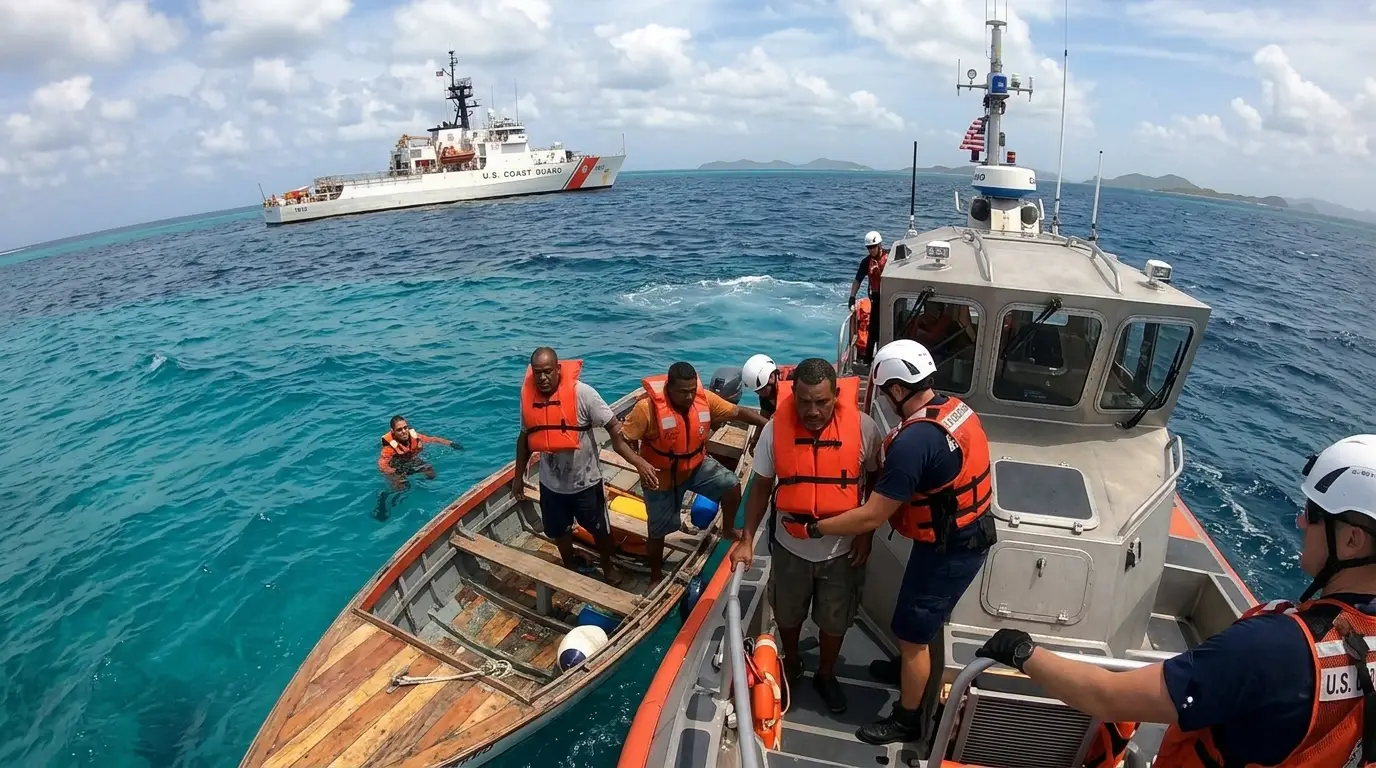
Three Costa Rican fishermen have been rescued alive after spending nearly a week adrift in the Caribbean. A 911 call helped Panama locate their boat.
Three Costa Rican fishermen who had been missing for almost a week have been found alive in the Caribbean waters of Panama after their small fishing boat was reportedly left drifting at sea.
The fishermen disappeared after leaving the Limón area of Costa Rica on September 21, 2026. They were eventually located approximately 20 nautical miles north of Cuango, in Panama’s Colón province, following an emergency call that helped authorities narrow down their location.
The successful rescue was carried out by Panama’s Servicio Nacional Aeronaval (SENAN) after the organization received an emergency alert through the 911 system.
All three men were found alive and were reported to be in stable condition.
The Fishing Trip That Turned Into an Emergency
According to reports from Costa Rican media, the three fishermen left from the Los Cocos area of Limón aboard a small artisanal fishing boat.
The vessel, identified by local reports as El Cosmo, was an approximately 8-meter-long fishing panga. The men were reportedly planning to fish in waters near Manzanillo, close to the Costa Rica-Panama border.
The trip did not go as planned.
Reports indicate that the boat experienced an engine failure while at sea, leaving the fishermen unable to return to the Costa Rican coast under their own power.
With the vessel no longer able to make way, ocean currents gradually carried the boat toward Panamanian waters.
When the boat failed to return as expected, concerns grew among the fishermen’s relatives and a search operation was launched.
A Phone Call Became the Key to the Rescue
One of the most important developments in the case came from a mobile phone.
While drifting offshore, the fishermen repeatedly attempted to switch on their phone in the hope of finding a mobile signal.
Eventually, the phone connected to a Panamanian network.
One of the men was then able to contact the 911 emergency service in Panama.
The call was reportedly brief, with the phone battery close to running out. However, the emergency contact provided authorities with crucial information that helped initiate a targeted search in the area.
For people lost at sea, even a very short communication can make a major difference.
A phone does not need to provide continuous communication to become useful to search-and-rescue authorities. A brief connection can potentially provide enough information to begin narrowing down the search area.
Panama Launches Search and Rescue Operation
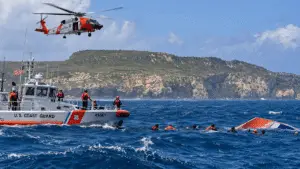
Following the emergency alert, SENAN activated a search operation in the Panamanian Caribbean.
The operation included the P-230 patrol vessel and a fixed-wing aircraft, while more than 20 personnel from different SENAN units participated in the search.
According to Panamanian reports, personnel from the Naval Command, Air Command, Search and Rescue Department and the Third Aeronaval Region were involved.
The search eventually located the missing fishing boat approximately 20 nautical miles north of Cuango, in Colón Province.
When rescuers reached the vessel, all three fishermen were still alive.
Who Were the Rescued Fishermen?
Costa Rican reports identified the three men as:
- Omar Dunkley Salazar, the captain
- Erick Hernández Madriz
- Dexter González Presida
The reported ages of the three men were 39, 41 and 44. They were residents of the Limón area and were described by relatives as longtime friends.
After being located, the fishermen were taken toward the Almirante Cristóbal Colón Aeronaval Base.
They received pre-hospital medical attention from SENAN paramedics and Panama’s emergency medical personnel before being taken to a medical facility for further evaluation.
Nearly a Week Exposed to the Sea
The fishermen reportedly spent several days aboard the small open fishing boat without being able to return to shore.
Their relatives described the men as being exposed to sun, rain, heat and cold during their time adrift.
The situation was particularly difficult because the vessel was a small artisanal fishing boat rather than a larger commercial vessel equipped with extensive communication, navigation and emergency systems.
The engine failure therefore left the crew dependent on their remaining supplies, their ability to obtain a communications signal and the possibility of being detected by search-and-rescue forces.
Costa Rica and Panama Worked Together
The rescue also highlighted the importance of cross-border maritime search and rescue cooperation.
Costa Rican authorities had been conducting searches after the fishermen were reported missing. The country’s Coast Guard and the Limón station coordinated with Panamanian authorities as the search area expanded toward Panama.
Once the emergency call reached Panama, SENAN was able to focus resources on the Panamanian side of the Caribbean.
The operation involved maritime and aerial assets, allowing authorities to search a much larger area than would have been possible using a single patrol vessel.
Why Communications Matter in a Maritime Emergency
The incident is another example of how communication equipment can become critical during a maritime emergency.
A disabled vessel can drift many nautical miles from its original position depending on wind, current and sea conditions.
For a small fishing boat, determining its exact position can become extremely difficult when the engine is disabled and communication is lost.
In this case, the fishermen’s attempts to obtain a mobile signal eventually provided a vital connection to emergency services.
The incident also demonstrates why crews operating small vessels should consider carrying reliable emergency communication equipment, life-saving equipment and independent means of determining their position.
A Successful Ending After Days of Uncertainty
After almost a week of uncertainty, the three fishermen were finally located alive.
The rescue brought an end to a search that had begun after their departure from Costa Rica on September 21.
Their survival was followed by medical evaluation in Panama, while arrangements were being made for their eventual return to Costa Rica.
The case serves as a reminder that mechanical failure can quickly become a serious maritime emergency, particularly when a small vessel is operating far from immediate assistance.
It also shows the importance of emergency communications and cooperation between maritime authorities when a vessel crosses or drifts toward international waters.