Saudi Arabia is restoring an important alternative route for its crude exports while oil shipments through the Strait of Hormuz are also showing signs of recovery.
The developments come as tanker operators continue to face security concerns in and around the Gulf, with producers using pipelines, conventional tanker loading and ship-to-ship (STS) transfers to keep crude moving to international markets.
Saudi Arabia Restarts East-West Pipeline Exports
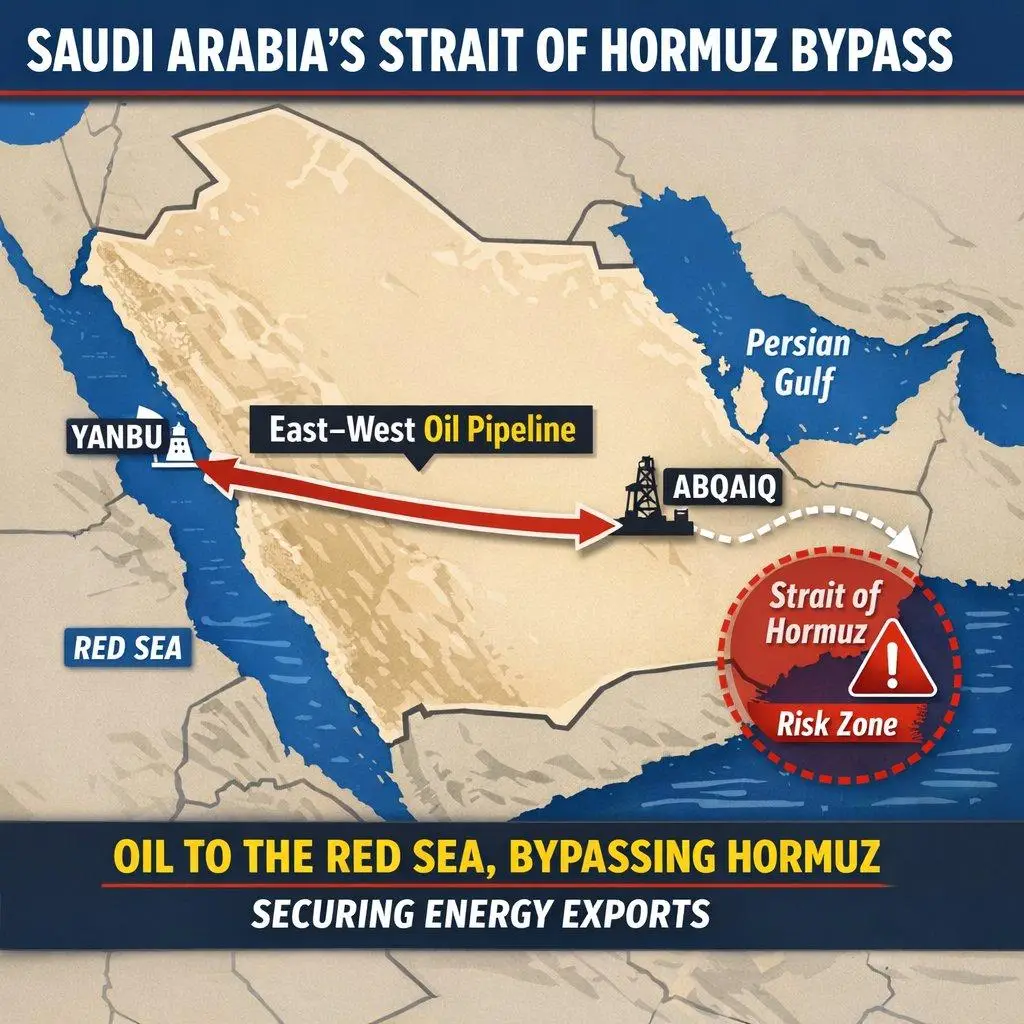
Saudi Arabia has resumed oil exports through its East-West Pipeline after repairs following drone attacks earlier in September.
The pipeline can transport up to approximately 7 million barrels per day and provides Saudi Arabia with a route to the Red Sea coast that avoids the Strait of Hormuz. Around 3.5 million barrels per day is currently being transported through the system, according to information attributed to Bloomberg.
Some of this crude is being directed toward Yanbu, allowing exports to reach international markets without passing through the Gulf chokepoint.
The restart gives Saudi Arabia additional flexibility at a time when security concerns continue to affect shipping in the region. However, the Red Sea route also faces security risks linked to attacks on energy infrastructure.
Oil Tanker Shipments Through Hormuz Also Increase
At the same time, crude shipments through the Strait of Hormuz have begun to recover.
Seven VLCCs (Very Large Crude Carriers) loaded approximately 14 million barrels of crude at Saudi Arabia’s Ras Tanura terminal.
Saudi crude flows through Hormuz reportedly averaged around 2.9 million barrels per day in September.
The figures indicate that, despite continuing security concerns, some tanker operators and oil producers have gradually increased their use of the traditional Gulf export route.
For the maritime industry, the development is significant because the Strait of Hormuz remains one of the world’s most important passages for crude oil and other energy shipments.
Ship-to-Ship Transfers Increase Around Oman
Another important development has been the increase in ship-to-ship (STS) oil transfers around Oman.
STS operations allow crude to be transferred between tankers at sea before continuing toward the final destination. In recent weeks, these operations have become an important part of how some companies manage transportation risks in the region.
Crude volumes involved in STS operations around Hormuz reached approximately 2.5 million barrels per day in September, compared with around 1.4 million barrels per day in August.
The increase means more tanker activity outside conventional terminal-to-terminal voyages.
However, STS operations can add complexity and cost to the transportation chain. Tanker owners and charterers must consider additional operational requirements, insurance costs, security risks and elevated war-risk premiums.
Hormuz Traffic Remains Below Normal Levels
Although oil shipments are recovering, overall commercial traffic through the Strait of Hormuz has not returned to its previous level.
Before the latest security crisis, around 125 large commercial vessels were reported to pass through the strait each day. Current traffic remains significantly lower.
Some tanker operators are also taking additional precautions when operating in the region.
The combination of higher insurance costs, security concerns and increased war-risk premiums continues to influence voyage planning and vessel deployment.
There have also been reports of vessels navigating with their AIS transmissions switched off, although AIS gaps can have different causes and should not automatically be interpreted as evidence of suspicious activity.
What This Means for Tanker Shipping
For the tanker market, the situation is creating a complicated operating environment.
Saudi Arabia is currently using several methods to maintain crude exports:
- The East-West Pipeline provides an alternative route to the Red Sea.
- Gulf terminals such as Ras Tanura continue to load large crude tankers.
- VLCCs are carrying substantial volumes of Saudi crude.
- STS operations around Oman are being used more frequently.
- Tanker operators continue to assess security risks before entering the Strait of Hormuz.
For ship operators, the situation remains closely connected to voyage planning, security assessments, war-risk insurance, bunker costs and freight rates.
The Impact on Tanker Crews
The changing pattern of oil transportation also has direct implications for tanker crews.
Voyages in the region can involve additional security briefings, revised passage plans, increased communication with company security departments and closer monitoring of developments ashore.
For vessels operating near high-risk areas, bridge teams may also need to pay particular attention to:
- Updated navigational warnings
- Company security instructions
- AIS and communications procedures
- Safe anchorage and STS requirements
- Piracy and armed-attack precautions
- War-risk insurance requirements
- Changes to the vessel’s planned route
The exact procedures depend on the vessel, company and applicable security requirements.
Oil Flows Recover, But the Maritime Situation Remains Uncertain
The latest developments show two trends happening at the same time.
Saudi Arabia has restored part of its alternative export capacity, while crude shipments through Hormuz and STS activity around Oman have also increased.
For the global tanker industry, this means crude continues to move despite the disruption, but the routes and operating methods used to transport it are changing.
The Strait of Hormuz remains a critical chokepoint for global energy transportation, and tanker operators continue to balance commercial requirements with security and operational risks.
As Saudi oil exports recover, the next question for the shipping industry will be whether overall vessel traffic through Hormuz can return closer to normal levels.