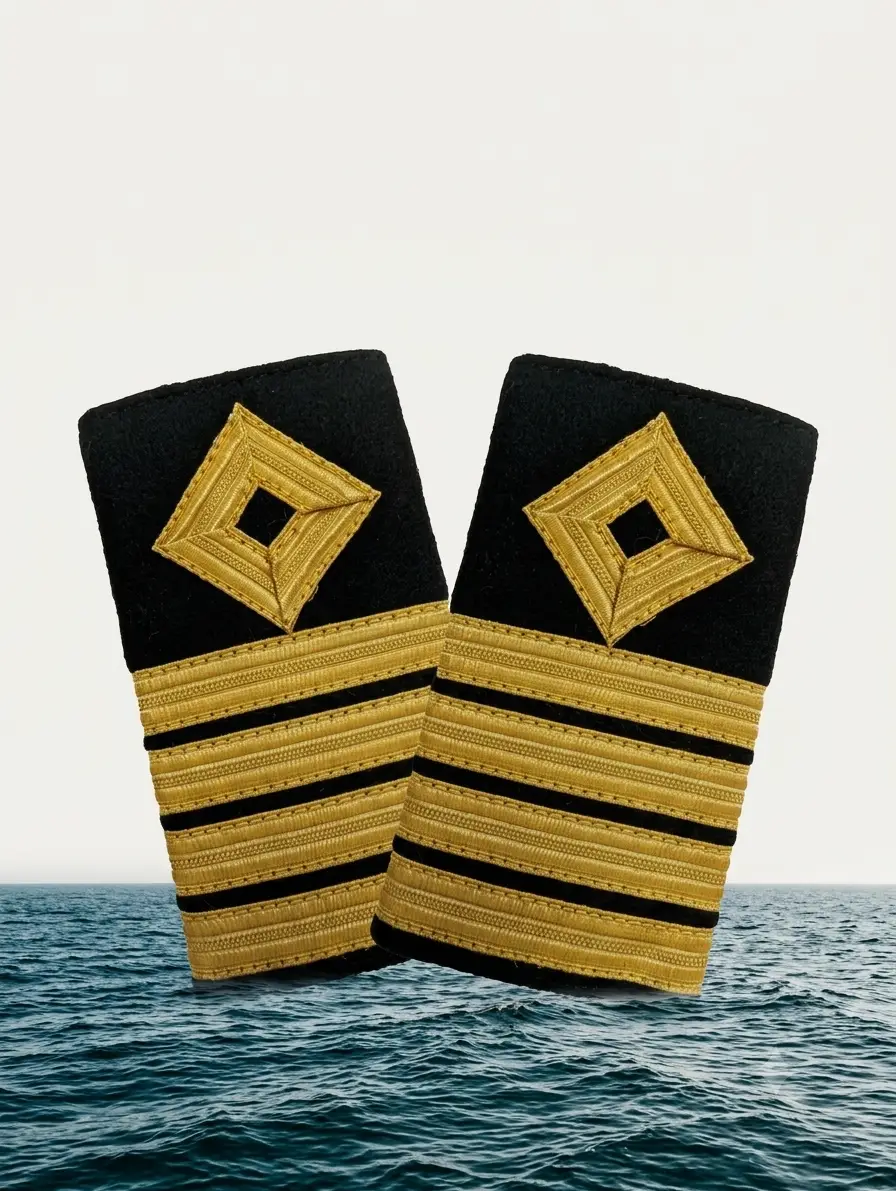
Who is the Captain.
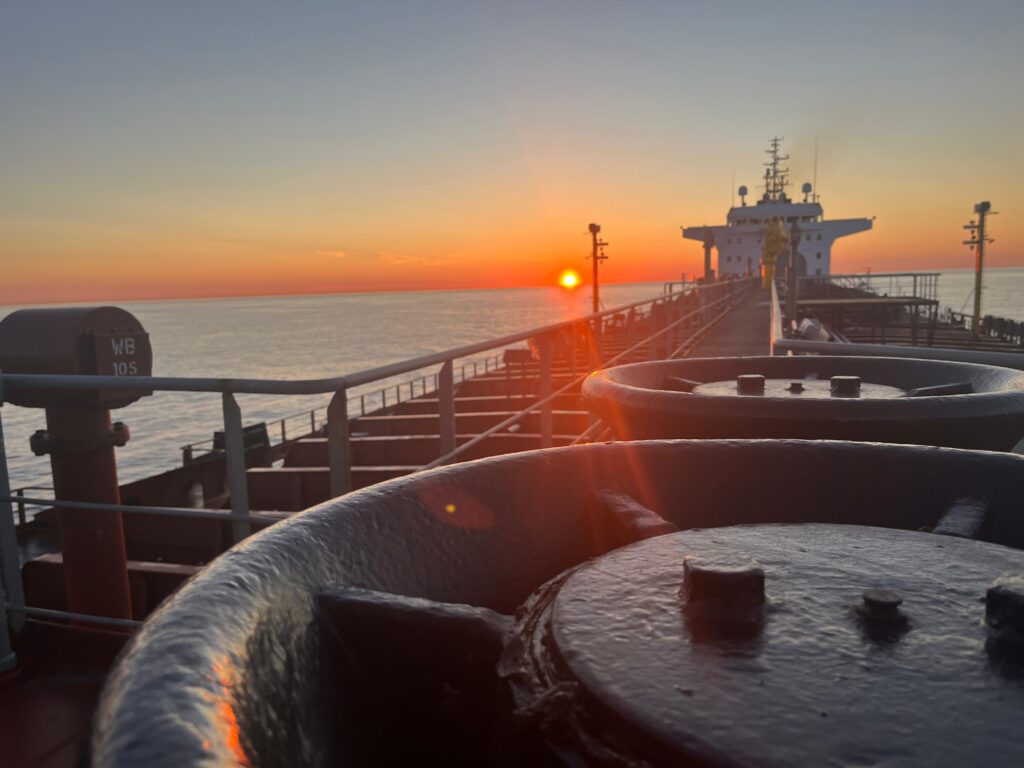
Many people imagine a ship captain standing on the bridge, giving orders while sailing across the ocean also movies often show captains as the absolute authority on board who make every decision independently.
The reality is quite different.
Modern merchant shipping has changed dramatically over the past two decades. Today, a captain remains the highest authority on board, but many decisions are closely monitored by shipping companies through strict Safety Management Systems (SMS), regulations, and shore-based management. In many situations, the captain acts as the link between the vessel and the company’s office, ensuring that every operation complies with international regulations and company procedures.
Although the captain is the person ultimately responsible for the vessel, a ship operates because of the teamwork of every crew member on board.
In this article, we will explore the real responsibilities of a merchant ship captain, what a typical working day looks like, and how much captains earn in today’s shipping industry.
What Are the Duties of a Ship Captain?
The captain (also called the Master) is the highest-ranking crew on board and carries ultimate responsibility for the vessel, its crew, cargo, and the protection of the marine environment.
1. Leading the Crew
A captain is responsible for leading everyone on board, from deck officers and engineers to ratings and catering staff.
Leadership is far more than simply giving orders. A good captain creates discipline, maintains morale, resolves conflicts, and ensures that every crew member understands their responsibilities.
Ultimately, the captain is responsible for creating a safe and professional working environment.
2. Supervising Voyage Planning
Although the navigation officers prepare the voyage plan, the captain reviews and approves it before departure.
The captain must verify that:
- Navigation routes are safe
- Weather conditions have been considered
- Environmental regulations are followed
- Required publications are updated
- The voyage complies with company policies
If an accident occurs, the captain is responsible for the decisions made during the voyage.
3. Communication with the Company
A captain is the official representative of the shipowner.
Every important matter involving cargo operations, crew issues, port authorities, inspections, or emergencies is normally communicated through the captain.
Accurate communication is essential because incorrect information can lead to delays, financial losses, or legal problems.
4. Implementing the Safety Management System (SMS)
Every merchant vessel operates under an approved Safety Management System.
The captain ensures that company procedures are followed correctly and that all required documentation is completed.
This includes:
- Maintenance records
- Safety meetings
- Risk assessments
- Permit-to-work systems
- Emergency drills
- Internal audits
In many ways, a modern merchant ship functions like a floating company office.
5. Improving Safety Procedures
A captain does not simply follow company procedures.
If a procedure is ineffective or creates unnecessary risks, the captain can recommend improvements through safety reports or the Master’s Review.
These recommendations help shipping companies improve safety across their entire fleet.
6. Reporting Accidents and Emergencies
Any accident, near miss, pollution incident, equipment failure, or security issue must be reported immediately to the Designated Person Ashore (DPA).
The captain works closely with shore management to resolve emergencies while protecting the crew, vessel, cargo, and environment.
7. Monitoring Planned Maintenance
Every vessel follows a Planned Maintenance System (PMS).
The captain oversees maintenance activities carried out by deck and engine departments, ensuring that critical equipment remains operational.
Typical maintenance includes:
- Crane greasing
- Winch inspections
- PV valve overhauls
- Lifeboat servicing
- Firefighting equipment inspections
- Navigation equipment testing
The captain monitors maintenance progress and explains any overdue jobs to the company.
8. Training the Crew
A well-trained crew can prevent accidents and save lives.
The captain ensures that all crew members participate in regular training, including:
- Fire drills
- Abandon ship drills
- Oil spill response
- Enclosed space rescue
- Lifeboat launching
- Emergency generator operation
Modern inspections such as SIRE 2.0 place significant emphasis on crew competence, making continuous training more important than ever.
9. Ship Security
The captain is also responsible for implementing the Ship Security Plan in accordance with the ISPS Code.
This includes:
- Controlling visitor access
- Monitoring restricted areas
- Preventing unauthorized boarding
- Conducting security drills
- Preparing for piracy risks
- Responding to security threats
Nowadays vessels also carry security alert systems that can notify authorities in emergency situations.
10. Safe Navigation and Maneuvering
The captain has overall responsibility for the safe navigation of the vessel.
Although local pilots assist during port arrivals and departures, the captain remains responsible for the vessel’s safety throughout the maneuver.
Good communication between the bridge team, pilot, tugboats, and port authorities is essential.
11. Cargo Documentation
The captain signs numerous legal documents during cargo operations, including:
- Bills of Lading
- Cargo Manifest
- Notice of Readiness (NOR)
- Letters of Protest
- Statements of Facts
- Time Sheets
These documents have significant commercial and legal importance.
A Typical Day in the Life of a Ship Captain
Imagine your vessel is arriving in Rotterdam to load cargo.
The day begins around 0900 when the captain takes command on the bridge during the final approach. After contacting Vessel Traffic Services (VTS)in that case Maas Approach, the vessel is instructed to proceed to the anchorage because no berth is currently available.
Once the ship reaches the anchorage, the captain completes the End of Sea Passage Checklist and submits the Notice of Readiness (NOR) to the charterers, confirming that the vessel has arrived and is ready to load cargo.
Several hours later, the berth becomes available.
The anchor aweigh, the vessel proceeds to the pilot station, embarks the pilot, and safely berths alongside.
Cargo loading begins after all inspections and documentation are completed.
During loading, officers monitor cargo operations while the captain communicates continuously with the terminal, agents, charterers, and the shipping company.
After loading is completed, cargo calculations are verified, documents are signed, and the vessel departs for Southampton UK.
Upon arrival, the entire process is repeated for cargo discharge before the voyage is officially completed.
While this appears easy on paper, the captain spends the entire voyage making decisions, answering emails, communicating with the office, supervising operations, solving crew issues, preparing for inspections, and ensuring compliance with international regulations.
How Much Does a Ship Captain Earn?
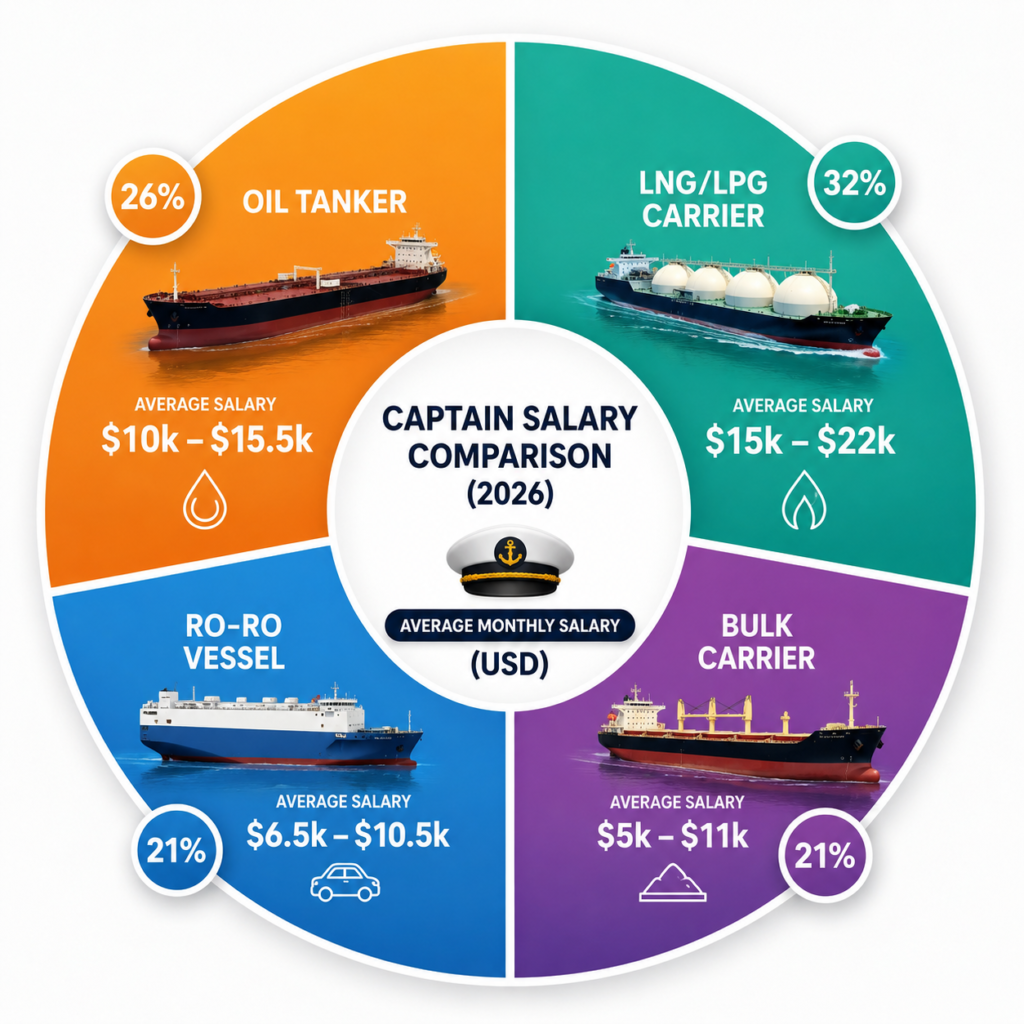
Average monthly salaries in 2026 vary depending on vessel type, company, trading area, and experience.
| Vessel Type | Average Monthly Salary |
| Bulk Carrier | USD 5,000–11,000 |
| Ro-Ro Vessel | USD 6,500–10,500 |
| Oil & Chemical Tanker | USD 10,000–15,500 |
| LNG/LPG Carrier | USD 15,000–22,000 |
These figures are approximate industry averages.
Why Do Captain Salaries Differ So Much?
Many people wonder why captains performing the same rank receive very different salaries.
Several factors influence a captain’s earnings:
- Type of vessel
- Cargo carried
- Trading area
- Size of the vessel
- Company reputation
- Years of experience
- English proficiency
- Specialized training
- Difficulty of recruitment
For example, captains working on LNG carriers or large chemical tankers usually earn significantly more than those working on small coastal cargo vessels. This is because these ships require advanced technical knowledge, stricter safety procedures, and experience operating in highly regulated environments.
Shipping companies compete for experienced captains who have demonstrated strong leadership, excellence
Although the profession offers attractive salaries, it also carries enormous responsibility and pressure. In today’s shipping industry, captains are expected not only to navigate safely but also to manage people, comply with international regulations, communicate effectively with shore management, and make critical decisions under challenging conditions.
Behind every successful voyage is a captain who balances experience, leadership, and responsibility to ensure that both the ship and her crew arrive safely at their destination.